What a Check Engine Light Diagnostic Costs
Shops that post a price online charge a median of $100 for a check engine light diagnostic. Across the 504 independent shops we found with a posted diagnostic fee, the middle half sit between $80 and $150. That fee pays for a technician's time to find out why the light is on. It is not the repair. The repair quote comes after.
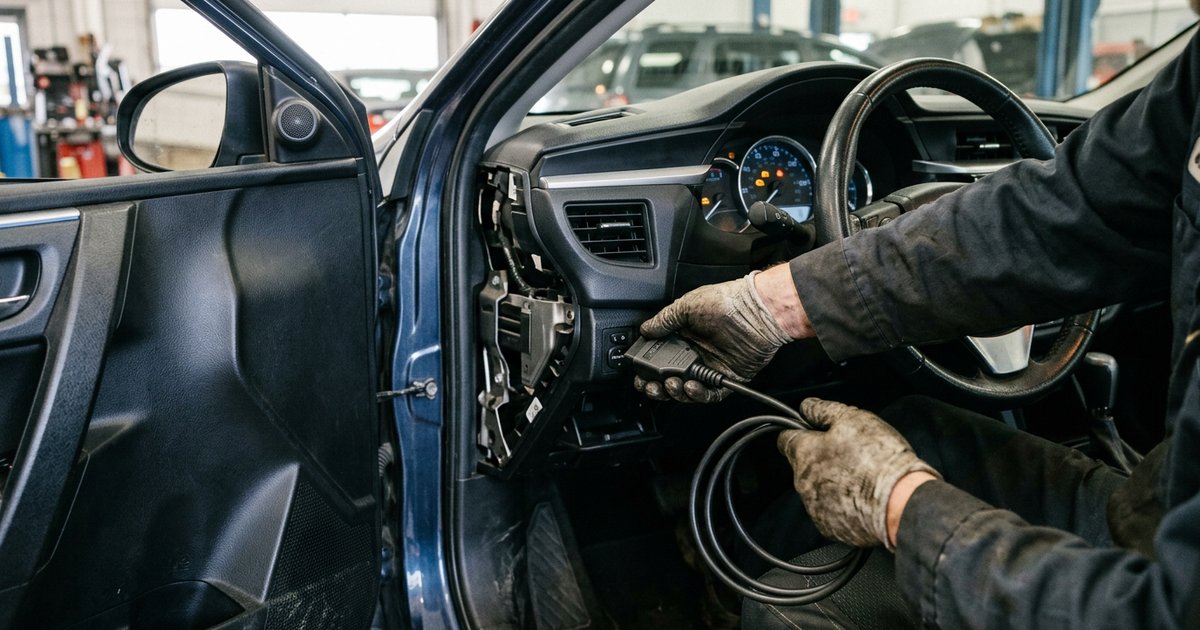
A real diagnostic visit goes well past the code. The tech plugs a scan tool into the port under your dash and pulls the stored trouble codes. Then the work that earns the fee starts. A good tech looks at freeze frame data, which is a snapshot of what the engine was doing the moment the code set. They watch live data while the engine runs, check for pending codes and look up known problems for your make and model. Then they test the part or system the code points at, because a code almost never says replace this part. It says this circuit is reporting something odd.
What you should walk out with is a named cause, a price to fix it and a clear call on how soon it has to be done. If all you got was a code number and a shrug, you paid shop prices for what a parts store scan gives away.
Fees at the top of the range have reasons behind them. European cars and late model vehicles with many computer modules take more time and more specialized tools. A basic code on a simple older car sits at the bottom. Many shops credit the fee toward the repair if you approve the work there, but policies differ, so ask before you hand over the keys.
One more thing to settle up front. If the light comes and goes, the tech may need extra time or may need to keep the car. Get a number for that before the work starts.
What the Light Is Telling You
Every gas car sold in the United States since 1996 has an OBD II system. The computer watches sensors all over the engine, exhaust and fuel system. When a reading stays out of range long enough, it stores a code and lights the dash. That is all the light means. It tells you a fault exists. It does not tell you how big the fault is.
The way the light looks matters more than most owners realize. A steady light means the computer stored a fault and the car can usually keep running while you book a visit. A flashing light means an active misfire, where fuel is going unburned into the exhaust. That raw fuel can overheat and ruin the catalytic converter, which is one of the most expensive parts on the car. Flashing is the one to treat as urgent.
So what is the most common cause of a check engine light? Ask any working mechanic and you will hear the same short list. A loose or worn gas cap and small leaks in the fuel vapor system come up all the time. So do worn spark plugs and failing ignition coils, tired oxygen sensors and dirty airflow sensors. The catalytic converter is further down the list, and it is usually a result of something else going wrong first.
A light that comes on while the car seems fine is still a real fault. The computer sees things you cannot feel yet. Many emissions problems cost you fuel economy long before they cost you power.
Can a light go off by itself? Yes. If the cause was a one time event like a loose gas cap, the computer reruns its tests over several drives and may turn the light off. The code stays in memory, though, and a repeat is a sign the problem is still there.
What Goes Wrong With Diagnostics
Of 23,409 public shop reviews we counted, 966 name a diagnostic, and 19.0 percent of those are 1 or 2 stars. Diagnostics make up 4.1 percent of all the reviews we counted, so this is a job that comes up often and goes badly more often than owners would like.
The complaints repeat. The first is paying a fee and getting nothing but a code number back. The second is the parts cannon, where a shop swaps a sensor, then a coil, then another sensor, hoping one of them clears the light, and bills for each guess. The third is a long upsell list handed over with no ranking of what is urgent and what can wait. The fourth is the light coming back a week later because the first repair treated a symptom.
Owners talk about this a lot in public. In Reddit threads about check engine and diagnostic problems, the median dollar figure people mention is $900. That tells you what people expect a surprise on this light to cost, and it is why a clear quote matters before any parts are bought.
You can protect yourself with a few plain questions. Ask what tests the fee covers. Ask whether the shop will tell you the cause in writing, with the code numbers and what was tested. Ask whether the fee is credited if you approve the repair. And ask the shop to confirm the repair worked by clearing the code and driving the car, not just by turning the light off.
A shop that answers all of that without getting defensive is a shop that probably does real diagnosis. A shop that says it will just start replacing things and see is the one that shows up in the angry reviews.
Why Prices Vary and How to Read a Quote
The fee spread from $80 to $150 comes down to three things. The first is the shop's labor rate. Shops that post a rate charge a median of $129 an hour across 207 shops, and a diagnostic is really a block of that labor sold at a flat price. The second is the car. Basic scan tools read basic codes on most vehicles, but late model and European cars may need factory level software and extra time. The third is how deep the shop goes. A quick code read costs less than a full test of the circuit with a meter or a scope.
After the diagnostic comes the repair quote, and that is where the real money sits. Read it line by line. It should name the part, the labor and the cause it fixes. If a quote lists several parts under one code, ask which one the tests pointed at and which are just a maybe.
Be careful with the phrase it could be. A fair diagnosis ends with a confident cause or a clear next test, such as a smoke test for a vacuum leak or a compression check for a misfire. Both are reasonable. An open ended replace and see approach is not.
Also ask how the repair gets verified. A good shop clears the code, drives the car through a full set of conditions and checks that the monitors are ready and no code returns. That last step matters for anyone facing an emissions test soon, because readiness monitors need to finish before the car can pass.
If the quote is large, a second opinion is worth the second diagnostic fee. Bring the written findings from the first shop and the second tech can start from there, which often shortens the job.
How to Save Money on a Check Engine Light
Start with the free stuff. Tighten the gas cap until it clicks, and drive normally for a few days. If the cap was the cause, the light may go out on its own. Many parts stores will read your code for free, which gives you a starting clue. Treat it as a clue and nothing more. A code number is not a diagnosis, and a parts counter will happily sell you the part the code seems to name.
Do not clear the code before a shop visit. Clearing it erases the freeze frame data the tech uses to see what the engine was doing when the fault set, and it resets the readiness monitors. You will pay for more time and may need extra driving before the car can pass an emissions test.
Pick a shop that explains. Ask what the fee covers, whether it is credited toward the repair and whether you get the findings in writing. Then approve only the repair that matches the diagnosis. If the shop finds extra items, ask them to rank the list by what is urgent, what is coming and what can wait.
Do not park a flashing light for a month to save money. A misfire fixed early is often a plug or a coil. A misfire left alone can ruin a catalytic converter, and that is the bill that turns a small repair into a big one.
Finally, think about a mobile mechanic. Plenty of check engine work, such as plugs, coils, sensors and gas cap or vapor leaks, can be done in your driveway, and you skip the tow or the trip. For a stalled or flashing light car, that can save real money and time.
Signs you need this repair
- Check engine light on and steady
- Check engine light flashing or blinking
- Light on but the car drives fine
- Rough idle, hesitation or a shaking feeling at a stop
- Worse fuel economy with no other explanation
- A smell of fuel or rotten eggs from the exhaust
- Loss of power when climbing or passing
- Light that comes and goes
More Questions Drivers Ask
Does the diagnostic fee go toward the repair?
At many shops it does, if you approve the repair there, but policies vary. Ask before you leave the car. A shop that credits the fee is telling you it expects to earn the repair on its merits. Get the answer in writing on the estimate.
Is a free code read at a parts store the same as a diagnostic?
No. A free read gives you the code number. A diagnostic tests the system the code points at to find the actual failed part. The free read is a good starting clue, and the paid diagnostic is what keeps you from replacing parts that were never broken.
Should I clear the code before taking the car to a shop?
No. Clearing it erases the freeze frame data the tech needs and resets the readiness monitors. It also hides the problem without fixing it, and the light usually returns. Leave it alone and let the shop read what the car stored.
Can a check engine light make me fail an emissions test?
Yes. In most places a lit check engine light is an automatic fail on any car with an OBD II system. Fix the cause, then drive the car long enough for the readiness monitors to finish before you retest.
Related Repair Guides
More Engine Repair Costs
Sources and further reading
Primary sources behind this page. Federal safety, emissions and consumer-protection references, worth reading before you authorize any repair.
- EPA onboard diagnostics information What OBD II systems monitor and why a lit light matters for emissions.
- EPA vehicle emissions information Federal background on vehicle emissions and the equipment that controls them.
- FTC auto repair basics Your rights on estimates, authorization and disputed repair bills.
Need Work Done? Get a Free Quote.
Tell us what the car is doing. A local mechanic calls you back, most requests get a call back the same day. No fee, no obligation.