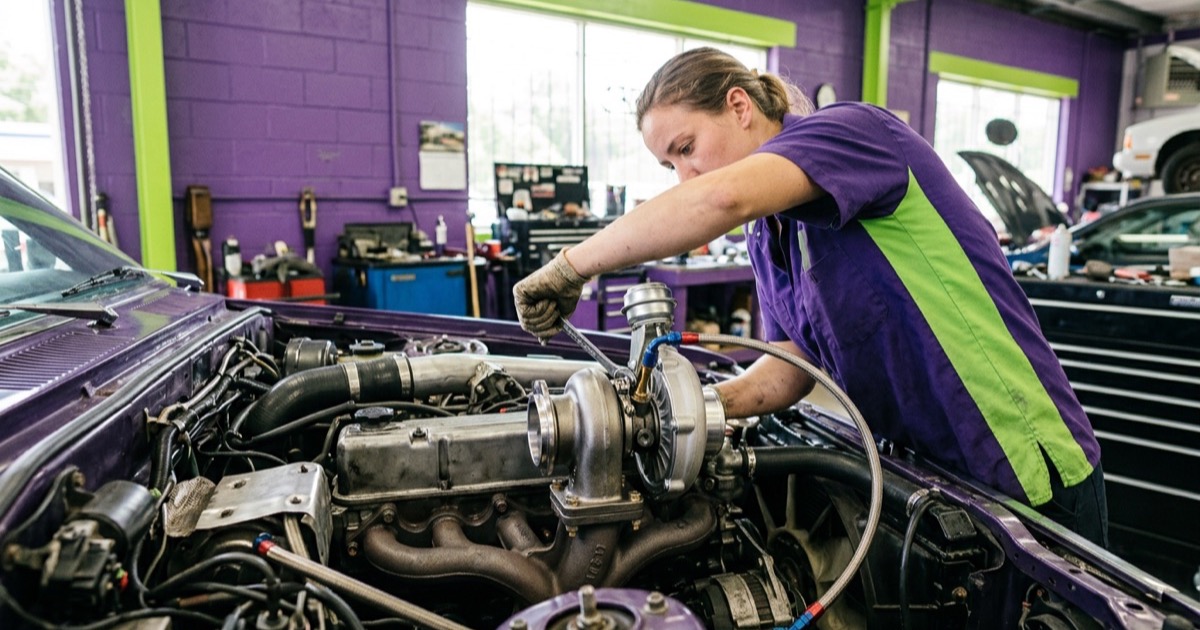
What the Job Is and What You Are Paying For
A turbo has two wheels on one shaft. Hot exhaust spins the turbine wheel. The compressor wheel on the other end packs fresh air into the engine. The shaft spins well over 100,000 times a minute and floats on a thin film of engine oil.
A turbo replacement removes the old unit from the exhaust manifold and intake pipes, unbolts the oil feed, oil drain and coolant lines, and installs the new turbo. Many jobs also need new exhaust studs and nuts, because the old ones rust and break.
A proper job includes new gaskets on every joint, a new oil feed line or at least a new banjo bolt filter screen, fresh oil and filter, and a check of the intercooler and pipes for oil. The new turbo is primed with oil before the first start.
The parts price changes a lot by type. A remanufactured turbo costs less than a new one and is fine from a good supplier. A factory turbo from the dealer costs the most. The national range on this page covers one turbo on a common turbo four cylinder or V6.
Why Turbos Fail and Why That Matters
Turbos almost never fail on their own. Something kills them, and if that something is not fixed, the new turbo dies too.
Oil is the number one cause. Old oil, the wrong oil, low oil, or a clogged oil feed line starves the bearings. Sludge from skipped oil changes is the classic killer.
Heat is the second cause. Shutting off a hot engine right after hard driving can cook the oil in the turbo. Most modern turbos have water cooling to help, but long hard pulls still add wear.
Dirt is the third. A torn air filter, a loose intake pipe, or a leftover piece of the old turbo can chip the compressor wheel.
A clogged oil drain is the fourth. If oil cannot drain out of the turbo, it gets pushed past the seals. That looks like a bad turbo but is really a crankcase pressure or drain line problem.
A good shop finds the cause before it bolts on a new turbo. Ask them to tell you what they found.
Why the Price Varies So Much
Where the turbo sits is the biggest factor. On some engines it is right on top at the front, about a three hour job. On others it hides at the back of the engine, under the intake, or inside the V of a V6 or V8. Those can double or triple the labor.
The number of turbos matters. Twin turbo engines have two, and some shops replace both if one failed from an oil problem.
The part tier matters. A remanufactured turbo from a good rebuilder can save a lot over a factory part. Very cheap online turbos are a gamble, and many shops will not warranty them.
Integrated designs cost more. Some small engines put the turbo and the exhaust manifold in one casting, so you replace both together.
The shop matters too. Dealers charge the highest rate and use factory parts. Independents often offer remanufactured units. A mobile mechanic can do the easy top mounted versions in a driveway, but jobs that need a lift or major teardown belong in a shop.
What Usually Gets Done at the Same Time
A few add ons protect the new turbo and are worth paying for. Others are upsells.
Worth it every time is an oil and filter change, a new oil feed line or a new feed line screen, and new gaskets and studs. A clogged feed line is a top reason new turbos fail early.
Worth it if oil got past the old seals is cleaning the intercooler and charge pipes. Oil left in the intercooler can get sucked into the engine and cause smoke or even damage. On some trucks a new intercooler is cheaper than cleaning.
Worth checking is the PCV system and crankcase breather. High crankcase pressure pushes oil past turbo seals.
Worth it if near due is the air filter. A cheap filter protects an expensive turbo.
Usually an upsell is a bigger aftermarket turbo, a performance tune, or replacing a wastegate actuator that tests fine.
- Oil change and filter: always
- New oil feed line or screen: always
- Gaskets, studs and nuts: always
- Intercooler and pipe cleaning: if oil got past the seals
- PCV and breather check: worth doing
- Bigger turbo or tune: usually skip
Make Sure It Is Really the Turbo
Many low boost problems are not the turbo at all. Check the cheap things first.
A boost leak is common. A split intake hose, a loose clamp, or a cracked intercooler lets boost escape. You hear a whoosh and the car feels flat. A smoke test finds it.
A stuck wastegate or a bad boost control solenoid can cause low boost or overboost codes. These parts often cost a fraction of a turbo.
Oil in the intake pipes does not always mean a bad turbo. A PCV system pushes a small amount of oil vapor into the intake by design. A little film is normal. Puddles are not.
Blue smoke can also come from worn valve seals or rings. A shop can check turbo shaft play by hand. Some side to side play is normal. In and out play, or wheels that rub the housing, is not.
Ask the shop to show you the shaft play, the damaged wheel, or the oil in the pipes before you approve the job.
Questions to Ask Before You Approve the Quote
A turbo quote should be specific. These questions help you get a turbo that lasts.
- What failed on the old turbo, and what caused it?
- Is the new turbo new, remanufactured or used, and who made it?
- Does the price include a new oil feed line, gaskets, studs and an oil change?
- Will you clean or replace the intercooler and pipes if oil got in them?
- Do I have one turbo or two, and are you replacing both?
- Will you prime the turbo with oil before the first start?
- What is the warranty, and does it require proof of the oil change?
- Can a mobile mechanic reach my turbo, or does it need a lift?
How to Make the New Turbo Last
Use the oil your owner manual calls for, and change it on time. For turbo engines, the severe service schedule is often the right one if you tow, drive short trips, or live where it is hot.
Let the engine idle for 30 seconds to a minute after hard driving or towing before you shut it off. That lets the oil carry heat away.
Go easy for the first minute after a cold start. Cold oil is thick and moves slowly.
Keep the air filter clean and the intake pipes tight.
A turbo that gets clean oil and a calm cool down can easily last 150,000 miles or more.
Signs you need this repair
- Loud whine or siren sound that rises with engine speed
- Big loss of power and slow acceleration
- Blue or gray smoke from the exhaust, worst under boost
- Check engine light with low boost or underboost codes
- Oil puddles in the intake pipes or intercooler
- Rising oil use with no outside leak
- Grinding or rattle from the turbo area
Cost by vehicle type
| Vehicle | Typical range | Notes |
|---|---|---|
| Compact / economy car | $1,010 to $2,595 | Small turbo four cylinders often have the turbo built into the exhaust manifold. The part is moderate in price, and labor is often 3 to 5 hours. |
| Midsize sedan / small SUV | $1,130 to $2,880 | Midsize turbo fours price close to compacts, often around $1,500 to $2,500 at an independent shop. Some have the turbo low at the back of the engine, which adds time. |
| Full-size truck / large SUV | $1,365 to $3,455 | Twin turbo V6 trucks have two turbos, and a failure on one often leads shops to replace the pair. Labor runs long, often 6 to 10 hours or more for both. |
| Luxury / European | $1,710 to $4,315 | Twin turbo German V8s often put both turbos inside the V under the intake, which is a long, costly job. Parts and labor can pass $4,000 to $6,000. |
| Hybrid | $1,245 to $3,170 | Some hybrids pair a small turbo with an electric motor. The turbo job itself is similar, but the shop must follow high voltage safety steps near the inverter and orange cables. |
| Electric vehicle | Electric cars have no exhaust and no turbocharger, so this repair does not apply. | |
| Diesel / heavy duty | $1,630 to $4,125 | Diesel trucks often use variable geometry turbos that can stick from soot. A new or remanufactured diesel turbo can cost $1,500 to $3,500, and some trucks need the cab lifted or a lot of parts removed. |
Ranges assume national-average labor rates ($95, $140/hr) and quality aftermarket parts.
Cost by state
State ranges reflect typical independent-shop labor rates for a midsize vehicle.
Common questions
How much does it cost to replace a turbo?
Most common turbo cars land around $1,100 to $2,900 at an independent shop. Easy top mounted turbos on small engines sit at the low end. Twin turbo V6 and V8 engines, luxury cars, and diesels often cost $3,000 to $6,000 or more.
Can I drive with a bad turbo?
You can drive gently for a short trip if the only sign is low power. Stop driving if you see heavy smoke or hear a loud grinding, because a broken wheel can send pieces into the engine. A diesel with oil leaking into the intake can run away, which is dangerous.
How long do turbos last?
Many last 150,000 miles or longer with good oil and on time changes. Turbos that fail early usually suffered from old oil, low oil, a clogged feed line, or dirt getting past the air filter.
Is a remanufactured turbo as good as new?
A remanufactured turbo from a reputable rebuilder is usually a good value. It gets a new bearing set, seals and a balanced shaft. Avoid the cheapest unbranded units online, because many shops will not warranty them.
Why did my new turbo fail so fast?
The most common reason is that the cause of the first failure was not fixed. A clogged oil feed line, a blocked drain, high crankcase pressure, or debris left in the intake can kill a new turbo in weeks.
Is it worth replacing a turbo on an old car?
Often yes, if the engine itself is healthy and the car is worth more than the repair. Have a compression test done first. Putting a new turbo on a worn engine that burns oil wastes money.
How much does a turbo cost at a dealer?
Dealers usually charge more than an independent shop because they use factory parts and bill a higher hourly rate. A dealer turbo job on a common turbo four can pass $3,000, so get an independent quote to compare.
Related Repair Guides
More Engine Repair Costs
Sources and further reading
Primary sources behind this page. Federal safety, emissions and consumer-protection references, worth reading before you authorize any repair.
- fueleconomy.gov engine technologies DOE and EPA explanation of how turbocharging with a smaller engine saves fuel.
- fueleconomy.gov maintenance guide Guidance on oil and air filter maintenance that protects engine parts like the turbo.
- ASE certified technicians Find shops with ASE certified engine performance technicians before you approve a turbo job.
Need Work Done? Get a Free Quote.
Tell us what the car is doing. A local mechanic calls you back, most requests get a call back the same day. No fee, no obligation.