
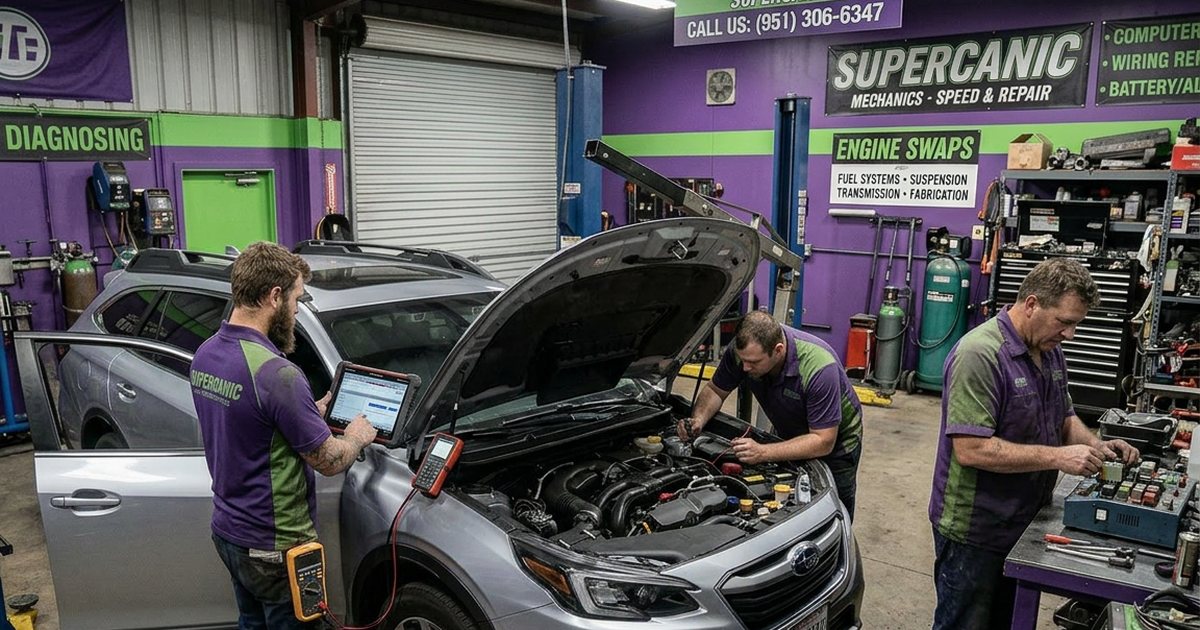
What the alternator does, and how it fails
The alternator is a belt-driven generator bolted to the engine. Once the engine is running, it produces all the electricity the car uses — headlights, ignition, fuel pump, infotainment, everything — and recharges the battery for the next start. The battery's real job is just starting the engine; after that, the alternator carries the load.
Alternators fail in a handful of predictable ways. The bearings that let the pulley spin wear out and start to whine or growl. The carbon brushes that feed current to the spinning rotor wear down until contact gets flaky, causing intermittent charging. The diodes that convert the alternator's AC output to DC can burn out one at a time, cutting output and sometimes draining the battery overnight. And the voltage regulator — usually built into the alternator — can fail high or low, either undercharging the battery or cooking it with too much voltage.
Most alternators last 100,000 to 150,000 miles. Heat, a leaking valve cover dripping oil onto it, or deep water crossings all shorten that.
Get it tested before you pay for it
Here's the thing every honest mechanic will tell you: about half the "bad alternators" that roll into a shop turn out to be something cheaper. A worn-out battery that won't hold a charge, a corroded ground strap, loose battery terminals, or a glazed and slipping serpentine belt all produce the exact same symptoms — dim lights, hard starts, a dead battery in the morning.
A proper charging-system test takes fifteen minutes and most parts stores and shops do it free. With the engine running, a healthy alternator holds the system between 13.5 and 14.8 volts, and it should stay in that window with the headlights, blower, and rear defroster all switched on. A reading below 13 volts under load points at the alternator; a reading that's fine at the alternator but low at the battery points at a bad cable or ground.
Do not skip this step. An alternator is one of the most commonly misdiagnosed and needlessly replaced parts on a car, and no refund policy gives you back the labor.
New, remanufactured, or used?
You'll be offered three tiers. A new alternator from a reputable brand (or the dealer) costs the most but everything inside it — bearings, brushes, diodes, regulator — is fresh. On a vehicle you plan to keep, it's usually worth the difference.
A remanufactured (reman) alternator is a used core that's been rebuilt: new bearings and brushes at minimum, plus whatever else tested bad. Quality varies enormously by rebuilder. A good reman from a name brand with a lifetime warranty is a perfectly sound choice and saves $50 to $150. A bargain-bin reman is a coin flip — shops see them fail out of the box often enough that many refuse to install customer-supplied ones.
A used alternator from a junkyard costs the least and is exactly as worn as the miles on the donor car. It's a reasonable move on an old vehicle you're nursing along, and a bad bet on anything you rely on daily. Whatever you choose, warranty terms matter more than the sticker price — a lifetime-warranty reman that fails in year three costs you labor, not parts.
What the job should include
The replacement itself is simple in principle: battery disconnected, serpentine belt released, wiring unplugged, mounting bolts out, new unit in, everything torqued and reconnected.
A thorough shop adds two checks that matter. First, the belt and tensioner get inspected — a cracked, glazed belt or a weak tensioner will make the new alternator underperform and can be the reason the old one seemed to fail. Since the belt is already off, replacing it adds only the cost of the part. Second, the battery gets load-tested after the swap. A failing alternator often takes the battery down with it: weeks of chronic undercharging sulfates the plates, and a battery that's been deeply discharged a few times may never recover. Driving away with a fresh alternator and a half-dead battery is how you end up stranded twice for the same problem.
The shop should also verify charging voltage with the engine running before handing back the keys. On some newer vehicles the alternator is computer-controlled and the reading won't sit at a steady 14 volts — that's normal, but the tech should know the difference.
Why the price varies so wildly
Alternator replacement quotes range from under $350 to well over $1,000, and the spread comes down to two things: where the alternator sits and what badge is on the hood.
On many four-cylinder cars and most trucks, the alternator is right on top of the engine — a 30-to-45-minute swap that any competent tech knocks out before lunch. On some transverse V6 minivans and sedans, it's buried low between the engine and firewall or under the intake, and getting it out means removing shields, hoses, sometimes an engine mount or a CV axle. Same part, three times the labor.
Luxury and European vehicles roughly double the parts cost, and some add wrinkles: water-cooled alternators, alternators driven off unusual accessory layouts, or charging systems that need a scan tool to register the new unit. High-output alternators for diesels, tow packages, or upfitted work trucks also cost significantly more than a base unit. When comparing quotes, make sure everyone is pricing the same tier of part — a $200 gap between quotes is often just new-versus-reman.
How to save money on this repair
Start with the free charging-system test so you're not buying an alternator to fix a $20 ground cable. If the alternator really is the problem, get quotes on both a quality reman and a new unit — on an older car the reman with a lifetime warranty is usually the smart money.
Have the serpentine belt done at the same time if it's due; you're paying nothing extra in labor since it comes off anyway. Compare a mobile mechanic quote against shop quotes — on vehicles with top-mounted alternators this is an ideal driveway job and mobile labor often runs cheaper. And if the battery tests marginal after the swap, replace it now rather than gambling: a weak battery overworks the new alternator, and batteries are cheaper on your schedule than on a tow truck's.
Signs you need this repair
- Battery or charging-system warning light on the dash, sometimes flickering before it stays on
- Headlights and interior lights that dim at idle and brighten when you rev the engine
- A whining or growling noise from the front of the engine that changes with RPM
- A dead battery — especially a new battery that dies again within days or weeks
- Burning rubber smell from a belt slipping on a seized or dragging alternator pulley
- Electrical accessories acting up: slow power windows, flickering dash, radio cutting out
- The engine stalling while driving as system voltage drops too low to run the ignition and fuel pump
Cost by vehicle type
| Vehicle | Typical range | Notes |
|---|---|---|
| Compact / economy car | $250 to $730 | Usually mounted up top with easy access — one of the cheaper alternator jobs, often near the low end of the labor range. |
| Midsize sedan / small SUV | $275 to $800 | Four-cylinder models are straightforward. Transverse V6 versions of the same car can bury the alternator low against the firewall and double the labor. |
| Full-size truck / large SUV | $330 to $950 | Roomy engine bays make access easy, but trucks with heavy towing or plow packages often run high-output alternators that cost more to replace. |
| Luxury / European | $410 to $1,175 | Expect roughly double the parts cost, and many require the computer to relearn or code the new alternator. Water-cooled alternators on some models add complexity. |
| Hybrid | $305 to $880 | Most hybrids have no conventional alternator — a DC-DC converter steps high-voltage battery power down to charge the 12V system. Charging problems on a hybrid are a different (and often pricier) diagnosis. |
| Electric vehicle | EVs use a DC-DC converter instead of an alternator to charge the 12V battery. | |
| Diesel / heavy duty | $395 to $1,130 | Heavy-duty diesels run large high-output alternators — some trucks run two. Parts cost sits at the top of the range or above it. |
Ranges assume national-average labor rates ($95, $140/hr) and quality aftermarket parts.
Cost by state
State ranges reflect typical independent-shop labor rates for a midsize vehicle.
Common questions
Can I drive with a bad alternator?
Briefly, and only on battery power. With the alternator dead, the battery alone runs the whole car — typically 30 minutes to an hour before everything shuts down, less at night with the headlights on. Turn off every accessory you can and drive straight to the shop or straight home. Don't plan a normal week around it.
How long does an alternator last?
Most go 100,000 to 150,000 miles, or roughly 7 to 12 years. Heat is the main killer, so hot climates and lots of idling with high electrical load (plows, light bars, big stereos) shorten the life. An oil leak dripping onto the alternator will also take it out early.
Should I buy a new or remanufactured alternator?
On a car you're keeping long-term, new from a reputable brand is worth the extra $50–$150. On an older vehicle, a name-brand reman with a lifetime warranty is the value pick. Avoid the cheapest reman on the shelf — out-of-box failure rates on bargain rebuilds are high enough that many shops won't install them.
I just replaced my battery and it died again. Why?
This is the classic sign of a bad alternator — the new battery was never being recharged, so it ran down in days. It can also be a parasitic drain (something staying on after shutdown) or a corroded connection. A charging-system test sorts out which in about fifteen minutes, and it's usually free.
Should I replace the serpentine belt at the same time?
If it's cracked, glazed, or more than about five years old, yes. The belt has to come off to swap the alternator anyway, so you pay only for the part — typically $25 to $75 — instead of a separate labor charge later. A tired belt can also make a healthy alternator undercharge, so it's cheap insurance.
Can a mobile mechanic replace an alternator at my home?
Usually, yes — and since a car with a dead alternator shouldn't be driven far, mobile service is a genuinely good fit here. Top-mounted alternators are an easy driveway job with hand tools. The exceptions are vehicles where the alternator is buried low or behind major components; a good mobile tech will tell you up front if yours is one of them.
How much does it cost to replace an alternator?
Two things set the price. One is the part, which can be new, rebuilt, or used. The other is labor. On some engines the alternator sits on top and comes off fast. On others it hides behind parts and takes hours. Ask for the part type and the labor time in writing before you agree.
Related Repair Guides
More Electrical Repair Costs
Sources and further reading
Primary sources behind this page. Federal safety, emissions and consumer-protection references, worth reading before you authorize any repair.
- NHTSA recall & complaint lookup Check any symptom against open recalls and technical service bulletins before paying for a repair.
- FTC auto repair basics Your rights on estimates, authorization and disputed repair bills.
- SAE International The engineering body behind fluid, fastener and diagnostic standards.
Need Work Done? Get a Free Quote.
Tell us what the car is doing. A local mechanic calls you back, most requests get a call back the same day. No fee, no obligation.