
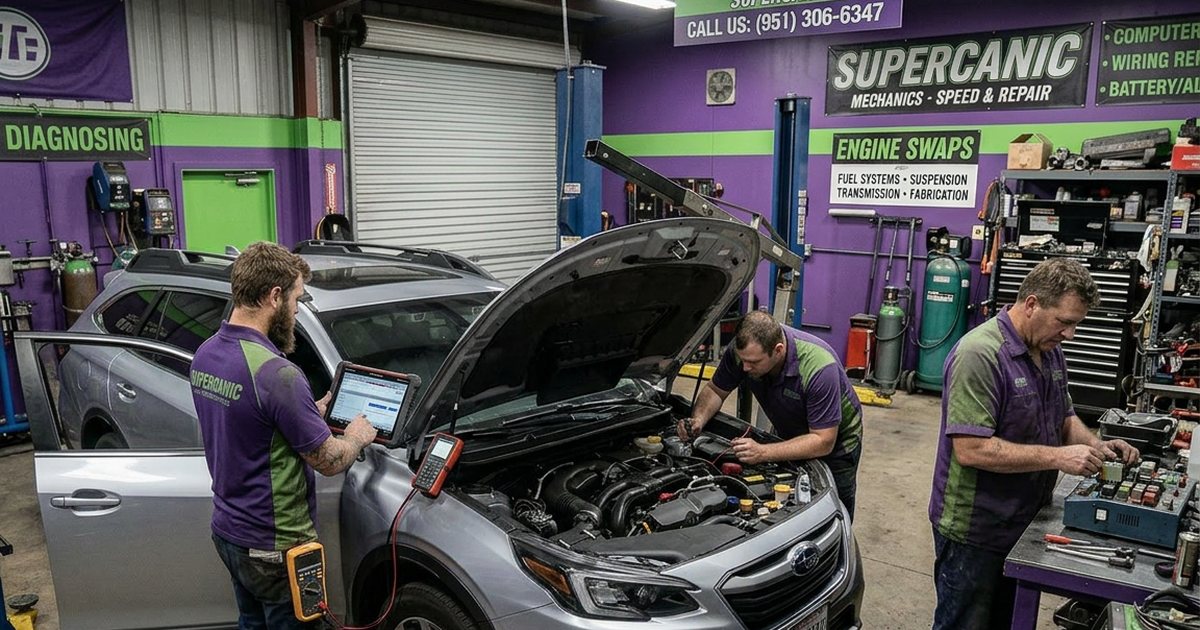
How car batteries die — and why yours probably has less life left than you think
A 12V battery is a wear item, not a lifetime part. The lead plates inside slowly sulfate and shed material with every charge and discharge cycle, and after three to five years there simply isn't enough healthy plate surface left to deliver the current a starter demands. Very few batteries make it past year six.
Heat is the real killer, not cold. Hot climates and hot engine bays accelerate the chemical breakdown inside the battery — a battery in Phoenix might last three years while the same battery in Minnesota lasts six. Cold weather just delivers the verdict: a cold engine needs more cranking power at the exact moment a weakened battery can produce the least, which is why batteries always seem to die on the first freezing morning.
Short trips finish off the rest. Starting the engine takes a big gulp of energy, and it takes 20 to 30 minutes of driving to put it back. If most of your trips are ten minutes or less, the battery lives in a permanently undercharged state, which sulfates the plates faster and can cut its life in half. Cars that sit for weeks at a time suffer the same slow drain from always-on electronics.
Flooded vs AGM — and why some batteries cost twice as much
A standard flooded battery is the traditional design: lead plates in liquid acid. It's cheap, it works, and for an older vehicle with no start-stop system it's all you need. Expect $120 to $180 for a quality one.
AGM (absorbed glass mat) batteries hold the acid in fiberglass mats pressed against the plates. They handle deep discharges and rapid recharge cycles far better, they're spill-proof, and they're the reason they cost $200 to $350. They aren't an upsell for the sake of it — vehicles with start-stop systems, which shut the engine off at every red light, restart the engine dozens of times per drive and will destroy a flooded battery in a year or two. If your car came with AGM, it must be replaced with AGM.
The reverse mistake matters too: putting an expensive AGM in an old car with a basic charging system gains you almost nothing. Match the replacement to what the vehicle was designed for, not to the most expensive thing on the shelf.
What a proper battery replacement includes
The first step is testing, not replacing. A slow crank or a dead morning can also be a failing alternator, a parasitic drain, or corroded cables — and a new battery fixes none of those. A conductance test on the battery plus a charging system check takes five minutes and tells you whether the battery is actually the problem. Any shop that quotes you a battery without testing first is guessing with your money.
The replacement itself should include the correct group size (the physical dimensions and terminal layout the tray was designed for) with cold cranking amps that meet or exceed the factory spec, cleaning the terminal clamps and cable ends down to bright metal, a dab of protective grease on the connections, and the hold-down clamp properly secured. A loose battery bouncing in its tray cracks internally and dies early — a missing hold-down is one of the most common things a mechanic finds on a car with 'bad luck' with batteries.
On many newer vehicles — nearly all European makes, and a growing number of others — the job also includes registering or coding the new battery to the body computer. The car tracks battery age and adjusts its charging voltage accordingly; if you skip registration, it keeps charging the new battery like an old one, overcharging it and shortening its life. This step needs a scan tool, and it's the main reason a battery swap on a BMW costs more than the same swap on a Corolla.
Memory savers, relearns, and other quirks of modern cars
On older vehicles, disconnecting the battery cost you nothing but your radio presets. On modern cars, it can reset window auto-up limits, throttle body calibration, idle learn values, and radio security codes — a few European models can even set fault lights that need a scan tool to clear.
A careful installer avoids most of this with a memory saver: a small device that backfeeds power through the OBD port or a 12V socket while the battery is out, keeping the computers alive. It's a two-minute step that saves a half hour of relearn procedures afterward.
If the battery is swapped without one, don't panic when the idle is odd or a window stops one-touching. Most systems relearn on their own within a few drive cycles, and window limits usually reset by holding the switch up for a few seconds at full closed. But if a warning light stays on, get it scanned — a low-voltage event during the swap can occasionally set codes that won't clear themselves.
Why the price varies so much
The battery itself is most of the spread. A basic flooded battery for a compact car runs $120 to $160; a large AGM for a European luxury car or a diesel truck runs $250 to $400. Cold cranking amp requirements, group size, and brand all move the number.
Access is the second factor. A battery sitting in plain view under the hood is a 15-minute job. One buried under the trunk floor, under the back seat, or behind the front fender liner can take close to an hour, and trucks with two batteries take longer still. Registration and coding on newer cars adds scan tool time.
Where you buy matters as much as what you buy. Big-box auto parts stores often install a battery free or nearly free with purchase — genuinely a good deal for simple under-hood batteries. Dealers charge the most, particularly on European cars, though sometimes justifiably since they handle the coding. Independent shops and mobile mechanics land in between, and a mobile mechanic has a unique advantage here: they come to the dead car. If your car won't start in your driveway, a mobile tech can test, jump, and replace the battery on the spot — no tow bill, which by itself can cost more than the labor.
How to save money on this repair
Test before you buy. Most auto parts stores test batteries and charging systems for free, and many mobile mechanics include testing in a service call. If the alternator is the real problem, a new battery just buys you a week before you're stranded again — and now you've paid for both.
Check your warranty before paying full price. Batteries carry free-replacement periods (typically 2 to 4 years) followed by pro-rated coverage. If your three-year-old battery came with a 3-year free replacement warranty, the swap might cost you nothing — but you'll need the receipt or the purchase in the store's system, so keep battery receipts in the glovebox.
Compare installed prices, not battery prices. A $180 battery installed free beats a $150 battery plus $60 labor. For simple under-hood batteries, big-box store installation is hard to beat; for trunk-mounted, coded, or dual-battery setups, get a quote from an independent or mobile mechanic before defaulting to the dealer. And if the car is already dead, price a mobile mechanic against a tow-plus-shop visit — the mobile option usually wins by the cost of the tow alone.
Signs you need this repair
- Slow, labored cranking when you start the engine, especially on cold mornings
- A rapid clicking sound instead of the engine turning over
- Headlights or interior lights dim or flicker at idle or during cranking
- Battery or charging system warning light on the dash
- A swollen, bulging battery case or rotten-egg smell under the hood
- Electronics acting glitchy — random warning lights, resets, or a radio that loses its presets
- The battery is more than 4 years old, even with no symptoms yet
Cost by vehicle type
| Vehicle | Typical range | Notes |
|---|---|---|
| Compact / economy car | $130 to $350 | Small flooded batteries, easy access under the hood — this is the cheapest version of the job, often $120–$180 installed. |
| Midsize sedan / small SUV | $150 to $390 | Routine job. Newer models with start-stop need an AGM or EFB battery, which adds $60–$120 to the parts price. |
| Full-size truck / large SUV | $180 to $475 | Bigger batteries with higher cold cranking amps cost more, and some trucks tuck the battery in tight against the fender. |
| Luxury / European | $230 to $595 | Battery registration or coding is required so the car adjusts its charging strategy — skip it and the new battery dies early. Often a trunk-mounted AGM at $250–$400 for the battery alone. |
| Hybrid | $165 to $430 | The 12V battery is small and often an AGM in the trunk or rear quarter. It doesn't crank the engine, but the car won't boot up without it. |
| Electric vehicle | $170 to $450 | Usually a small 12V AGM. When it dies the car may not unlock or power on at all, even with a full main pack. Some EVs need specific procedures to avoid faults during replacement. |
| Diesel / heavy duty | $215 to $565 | Many diesel trucks run TWO batteries in parallel, and they should be replaced as a pair — mixing an old and new battery drags the new one down. |
Ranges assume national-average labor rates ($95, $140/hr) and quality aftermarket parts.
Cost by state
State ranges reflect typical independent-shop labor rates for a midsize vehicle.
Common questions
How long does a car battery last?
Three to five years for most drivers. Hot climates push that toward three; cool climates and regular highway driving push it toward five or six. Short-trip driving and letting the car sit for weeks shorten it significantly. Past year four, have it tested at every oil change — it's free and takes minutes.
Can I replace a car battery myself?
On many cars, yes — it's disconnect negative first, positive second, swap, reconnect in reverse. But check three things before you commit: where the battery lives (trunk and under-seat batteries complicate the job), whether your car needs battery registration (most newer European cars do, and that needs a scan tool), and whether you can lift 40 to 60 pounds out of a tight engine bay. Also dispose of the old one properly — parts stores take cores and usually refund a deposit.
Why does my new battery need to be 'registered' to the car?
Newer vehicles — nearly all BMW, Mercedes, Audi, and VW models, plus a growing number of others — track battery age and adjust charging voltage as the battery wears. Registration tells the computer a fresh battery is installed so it resets that strategy. Skip it and the car overcharges the new battery as if it were old, which can kill it in a year or two and may trigger start-stop faults.
What's the difference between an AGM battery and a regular one?
A regular flooded battery holds its acid as liquid; an AGM holds it in fiberglass mats, which makes it far more tolerant of deep discharge and constant restart cycles. Start-stop vehicles require AGM (or EFB) — a flooded battery in one will fail fast. AGM costs roughly twice as much, which is fair given what it survives. Never downgrade from AGM to flooded to save money.
Does jump starting damage anything?
Done correctly, no — connect positive to positive, then the negative clamp to bare metal on the dead car's engine, not the battery post. The real risks are hooking cables up backwards (which can fry modules on both cars) and treating jumps as a routine. A battery that needs jumping more than once is telling you it's done; every deep discharge damages it further, and repeated jump-and-drive cycles overwork the alternator.
What kills car batteries fastest?
Heat, short trips, and sitting. Heat breaks down the internals chemically — it's why batteries in hot climates last barely three years. Trips under 15 minutes never fully recharge the battery, leaving it chronically undercharged. And a car parked for weeks slowly drains through its always-on electronics until the battery sits flat, which sulfates the plates. Leaving the battery fully discharged even once can take a permanent chunk out of its capacity.
My car won't start at home — do I have to tow it to get a new battery?
Usually not. A mobile mechanic can come to your driveway, test the battery and charging system, and install the correct battery on the spot — often for less than the cost of a tow plus a shop visit. Auto parts stores will also test a battery for free if you can get the car jumped and driven there, but don't shut the engine off until you're parked where you want to be.
What does a car battery replacement cost?
The battery type is the biggest factor. Newer cars with start stop systems often need an AGM battery, which costs more. Some cars also need the computer told about the new battery. A mobile mechanic can often do the swap at your home. Ask if the price includes testing the charging system and disposing of the old battery.
Related Repair Guides
More Electrical Repair Costs
Sources and further reading
Primary sources behind this page. Federal safety, emissions and consumer-protection references, worth reading before you authorize any repair.
- NHTSA recall & complaint lookup Check any symptom against open recalls and technical service bulletins before paying for a repair.
- FTC auto repair basics Your rights on estimates, authorization and disputed repair bills.
- SAE International The engineering body behind fluid, fastener and diagnostic standards.
- DOE Alternative Fuels Data Center: electric vehicles Federal reference on EV drivetrains, batteries and charging.
Need Work Done? Get a Free Quote.
Tell us what the car is doing. A local mechanic calls you back, most requests get a call back the same day. No fee, no obligation.