
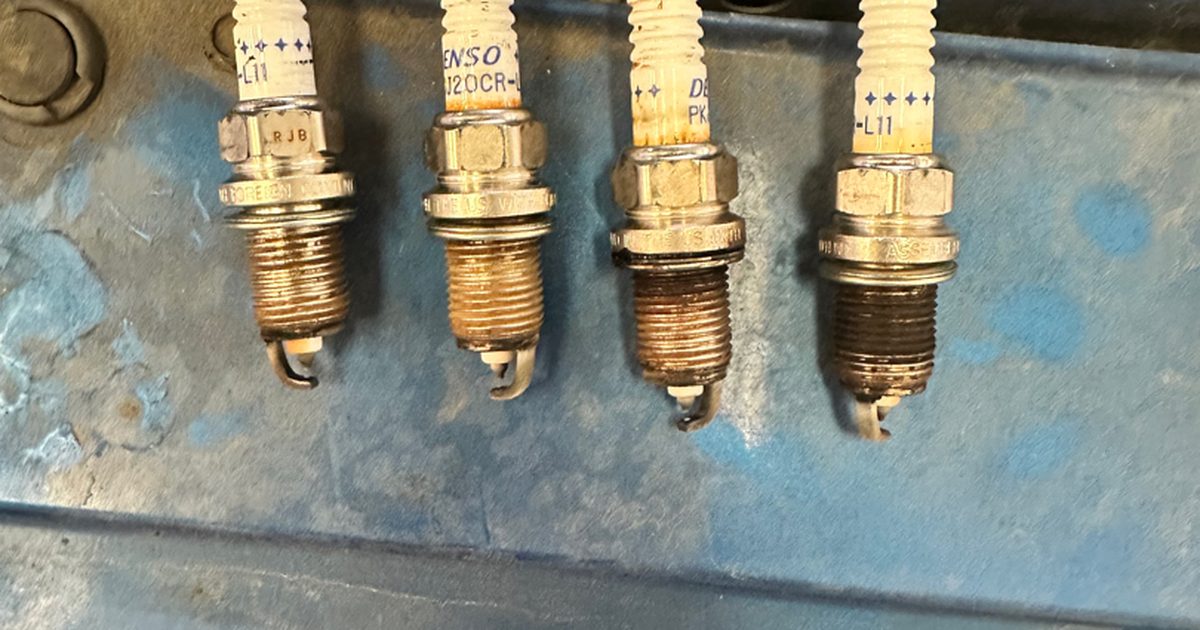
What an oil change actually includes
A proper oil change is more than draining and refilling. The service should include: the correct amount of oil meeting your engine's exact specification, a new oil filter (never reuse the old one), a new crush washer or gasket on the drain plug so it seals without being over-tightened, and a reset of the oil-life monitor or maintenance reminder.
Most shops also top off the other fluids — washer fluid, coolant reservoir if it's low — and do a quick visual check while the car is up in the air. That last part matters more than people realize: the ten minutes a car spends on the lift during an oil change is when leaks, torn CV boots, worn brakes, and dry-rotted tires get caught early, while they're still cheap.
What should not be part of a routine oil change: a laundry list of flushes and additives. A healthy engine on a normal interval needs oil and a filter, full stop.
Conventional vs. synthetic blend vs. full synthetic
Conventional oil is refined straight from crude. Synthetic blend mixes some synthetic base stock into conventional oil. Full synthetic is built from heavily processed or chemically engineered base stocks with a carefully designed additive package.
Full synthetic won this fight, and it wasn't close. It flows better on cold starts (when most engine wear happens), resists breaking down at high temperatures, keeps turbochargers alive, and holds up long enough to support modern 7,500 to 10,000 mile intervals. Most engines built in the last decade — especially anything turbocharged or direct-injected — require it outright.
The price gap has also collapsed. Full synthetic used to cost double; now it's often $15 to $25 more per service than a blend, and because it safely runs a longer interval, the cost per mile is usually lower than cheap oil changed more often. Unless you drive a high-mileage older engine whose owner specifically prefers conventional, full synthetic is the default answer.
How often do you really need it?
The 3,000-mile oil change is a myth that outlived its usefulness by about thirty years. It made sense for carbureted engines running 1970s oil. Modern engines on full synthetic are engineered for 5,000 to 10,000 mile intervals, and most owner's manuals say so in plain print.
If your car has an oil-life monitor, trust it — the good ones actually calculate oil condition from engine temperature, run time, RPM, and trip length, not just miles. When it says 20 percent, start planning; don't run it to zero repeatedly.
One honest caveat: 'severe service' is more common than it sounds. Lots of short trips where the engine never fully warms up, extreme heat or cold, towing, dusty roads, or stop-and-go commuting all age oil faster. If that describes your driving, use the shorter end of the manual's range. And regardless of miles, change the oil at least once a year — oil degrades sitting in the pan, not just circulating.
Why the price varies so much
Two oil changes that look identical on the invoice can be $45 apart, and it usually comes down to three things.
Oil capacity: oil is sold by the quart, and engines vary wildly. A 1.5L compact takes about 4 quarts; a 5.7L truck V8 takes 7 or 8; a heavy-duty diesel can swallow 13. More quarts, more money — simple as that.
Oil specification: 'full synthetic' is not one product. A common 0W-20 meeting basic API standards is cheap and everywhere. European approval oils — VW 502 00, BMW Longlife-01, Mercedes 229.5, Porsche A40 — cost noticeably more per quart, and using the wrong one can damage the engine or void a warranty. This is the main reason a BMW oil change costs $120 while a Corolla costs $60.
Who does it: quick-lube chains price the base service low and make it back on upsells. Independent shops charge a bit more and typically do a more careful job. Mobile mechanics come to your driveway, often for shop-comparable prices, and you can watch the whole thing. Dealers usually cost the most, though service-package pricing sometimes beats expectations.
What a good tech checks while they're under there
The oil change is the most frequent look a trained set of eyes gets at the underside of your car, and a good tech uses it. While the oil drains, they're scanning for: oil and coolant leaks at the pan, valve cover, and hoses; the condition of the drain plug threads (a stripped pan is a real repair); torn CV axle boots flinging grease; brake pad thickness through the wheel spokes; tire wear patterns that hint at alignment problems; and the state of the serpentine belt and battery terminals up top.
None of that should cost extra, and none of it should turn into pressure. The value is early warning — a $12 CV boot caught today versus a $400 axle six months from now. If your shop hands you a short list of observations with photos and no hard sell, keep that shop.
How to save money without getting burned
The $19.99 coupon oil change is real, but read the fine print: it's usually conventional oil (which your engine may not even allow), covers only 5 quarts, and exists to get your car on the lift so someone can sell you a cabin filter at triple retail and a flush you don't need. Decline politely, or better, skip the game entirely.
Better plays: buy the manufacturer's service package if you have a dealer you trust, ask an independent or mobile mechanic for their full-synthetic price out the door, or supply your own oil and filter and pay labor only — many shops and most mobile techs are happy to install customer-supplied fluids.
The DIY math is honest but thin: a jug of quality full synthetic plus a good filter runs $30 to $50, so you're saving maybe $25 to $40 per change in exchange for 45 minutes, a floor jack, and a trip to recycle the old oil. Worth it if you enjoy the work; not a life-changing saving if you don't. Whatever you choose, never save money by stretching the interval — that's the one corner that always costs more than it saves.
Signs you need this repair
- The oil pressure or oil-life warning light comes on — pressure lights mean stop driving now
- Oil on the dipstick looks black, gritty, or smells burnt instead of amber and smooth
- The engine sounds louder or tappier than usual, especially on cold starts
- The maintenance reminder or oil-life monitor has been sitting at 0 percent for a while
- A burning oil smell after driving, or faint blue smoke from the exhaust
- You honestly can't remember when the last oil change was — that's a symptom too
Cost by vehicle type
| Vehicle | Typical range | Notes |
|---|---|---|
| Compact / economy car | $60 to $145 | Small engines hold 3.5 to 4.5 quarts, so these are the cheapest oil changes on the road — often at the bottom of the price range. |
| Midsize sedan / small SUV | $65 to $160 | Typical 4.5 to 6 quart capacity keeps most sedans squarely in the middle of the range with common, inexpensive filters. |
| Full-size truck / large SUV | $75 to $190 | A 5.3L or 5.7L V8 takes 7 to 8-plus quarts, so the same service costs noticeably more than a compact — it's mostly just more oil. |
| Luxury / European | $95 to $235 | European makes require approval-spec oils (VW 502 00, BMW Longlife-01, MB 229.5) that cost more per quart, and capacities run 6 to 9 quarts. Expect the top of the range or above. |
| Hybrid | $70 to $175 | Hybrid engines run fewer hours per mile, but oil still degrades with time and short heat cycles — follow the time-based interval (usually every 6 to 12 months) even at low mileage. |
| Electric vehicle | Electric vehicles have no engine oil to change — one of the biggest EV maintenance savings. | |
| Diesel / heavy duty | $90 to $225 | Heavy-duty diesels hold 10 to 15 quarts of diesel-rated oil plus a large filter, which pushes a routine change to $100 to $200. |
Ranges assume national-average labor rates ($95, $140/hr) and quality aftermarket parts.
Cost by state
State ranges reflect typical independent-shop labor rates for a midsize vehicle.
Common questions
How often do I really need an oil change?
For most modern cars on full synthetic: every 5,000 to 10,000 miles or once a year, whichever comes first — check your owner's manual, not the sticker on the windshield. The old 3,000-mile rule is decades out of date. If your car has an oil-life monitor, it's more accurate than any fixed number.
Is full synthetic really worth the extra money?
Yes, and for most newer engines it isn't optional — turbocharged and direct-injected engines typically require it. It protects better on cold starts, survives heat, and runs longer intervals, so the cost per mile usually ends up lower than cheap oil changed more often.
Can I switch back to conventional after using synthetic?
Mechanically, yes — the old warning that switching 'shocks' an engine is a myth, and the oils are fully compatible. But there's rarely a reason to. If your engine's spec calls for synthetic, stay on it; downgrading to save $20 risks warranty and wear on an engine designed around better oil.
Why does my European car cost more for an oil change?
Two reasons: capacity and specification. European engines often hold 6 to 9 quarts, and they require manufacturer-approval oils like VW 502 00 or BMW Longlife-01 that cost more per quart than generic synthetic. Add cartridge filters and underbody panels that take time to remove, and $100 to $150 is normal.
Are quick-lube places okay to use?
For a basic oil change on a common car, usually fine — the horror stories are the exception. Protect yourself with three habits: confirm they're using oil that meets your engine's exact spec, check the dipstick before you drive off, and treat every upsell as optional homework, not an emergency. If they can't tell you what spec they put in, go elsewhere.
Is a mobile oil change actually a thing?
Yes, and it's one of the best jobs to have done at home. It needs ramps or a low-profile jack, a drain pan, and 30 minutes — no lift required. Mobile techs bring the correct spec oil and filter, haul away the used oil, and their pricing is usually competitive with shops once you count your time.
What happens if I skip oil changes?
The oil oxidizes, picks up fuel and combustion acids, and thickens into sludge that clogs the passages feeding the crankshaft, camshafts, and turbo. Modern engines with tiny oil passages and variable valve timing are especially unforgiving. A neglected $60 service is the leading cause of $4,000 to $8,000 engine replacements.
What goes into the price of an oil change?
The oil type and how much your engine holds set most of the price. Full synthetic costs more than conventional. A quality filter and any shop fees count too. A mobile mechanic may add a travel fee but save you the trip. Ask for the total with oil, filter, and tax so you can compare.
Related Repair Guides
More Maintenance Repair Costs
Sources and further reading
Primary sources behind this page. Federal safety, emissions and consumer-protection references, worth reading before you authorize any repair.
- fueleconomy.gov maintenance guide DOE and EPA guidance on how maintenance affects fuel economy and engine life.
- FTC guide to federal warranty law Magnuson-Moss: why independent service cannot void your factory warranty.
- FTC auto repair basics Your rights on estimates, authorization and disputed repair bills.
Need Work Done? Get a Free Quote.
Tell us what the car is doing. A local mechanic calls you back, most requests get a call back the same day. No fee, no obligation.