What the Job Is and What the Price Covers
Every bit of air your fan blows into the cabin passes through this filter first. It is a pleated paper or fabric panel, about the size of a thin book. It catches leaves, bugs, road dust and pollen before they reach the vents and the AC evaporator.
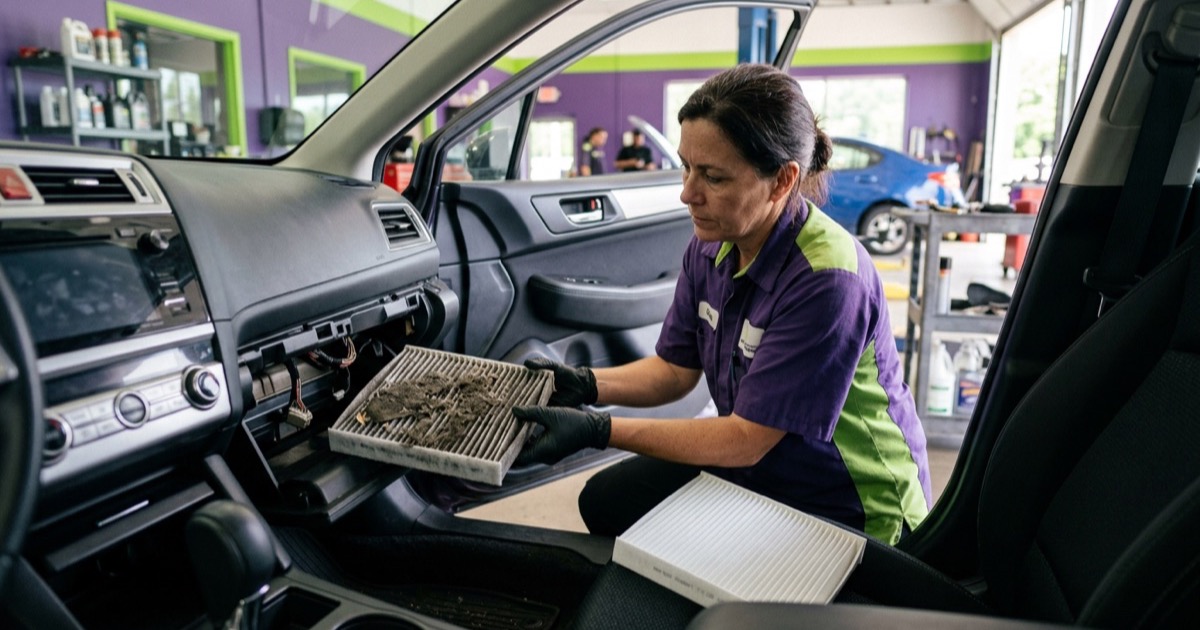
A standard service covers opening the filter housing, pulling the old filter, clearing out loose leaves and debris from the housing, and installing a new filter with the airflow arrow pointing the right way. That is it. It should take a tech five to twenty minutes on most cars.
The price range on this page reflects the part plus that short labor time. If a quote is far above it, ask what else is included.
Some cars have no cabin filter from the factory, but have a slot for one. Others have two filters side by side. Check the owner's manual or ask the shop to show you before you buy parts.
Basic, Charcoal or High-Efficiency Filters
There are three common tiers. A basic particulate filter traps dust and pollen. It is the cheapest and works fine for most drivers.
A charcoal or activated carbon filter adds a layer that absorbs odors and some exhaust fumes. It is worth the extra few dollars if you sit in heavy traffic or behind diesel trucks a lot.
High-efficiency filters, sometimes sold with ratings close to home HVAC filters, catch finer particles like smoke. They help in wildfire areas and for people with allergies. Some restrict airflow a little more, so buy one made for your exact car.
Brand matters less than fit. A well-made filter that seals the housing does more than a fancy filter that leaves gaps around the edges. If the filter flops loose in the slot, it is the wrong size.
Why the Price Varies
The filter itself is the main swing. A basic filter for a common car is cheap. A charcoal filter or a large filter for a luxury car or EV can cost three times as much.
Access is the next factor. Behind the glove box is quick. Under the cowl, or behind dash trim, can take longer.
Shop type makes the biggest difference in markup. Quick-lube shops and dealers often add this to an oil change at a high flat price. Independent shops usually charge less. A mobile mechanic can do it in a driveway in minutes, and it is easy to add to any other mobile visit.
Watch for upsells at the counter. Some shops show you a dirty filter that is not even from your car. Ask them to bring your old filter out still in its spot, or pull it yourself and look.
What Often Gets Done at the Same Time
Because the job is so small, add-ons can quickly cost more than the filter. Here is how to sort them.
- Worth it: clearing leaves and debris from the housing and cowl drains
- Worth it if due: the engine air filter, which is a different part with a different job
- Worth it if there is a musty smell: an evaporator cleaning treatment
- Usually skip: an AC system flush or recharge with no cooling problem
- Usually skip: paying top price to add this to an oil change when you can swap it at home
Is a Dirty Filter Really the Problem?
Weak airflow from the vents has a few common causes. A clogged cabin filter is the cheapest and most likely, so check it first.
If a new filter does not fix weak airflow, the blower motor or its resistor may be failing. If air comes out of the wrong vents, a blend door actuator is a common cause. If the air is strong but not cold, the problem is in the AC system, not the filter.
A musty smell that stays after a new filter usually means mold on the AC evaporator. That calls for a cleaning treatment, not another filter.
How Often to Change It
Many owner's manuals call for a new cabin filter every 15,000 to 30,000 miles, or about once a year. Follow your manual first.
Change it sooner if you drive on dirt roads, live with heavy pollen or wildfire smoke, park under trees, or notice a smell or weak airflow. A filter full of wet leaves can grow mold in weeks.
A quick look tells you a lot. A new filter is white or light gray. If yours is dark, packed with debris, or smells musty, it is time.
Rodents are another reason to check it. Mice like to nest in the cowl and the filter housing, especially on cars that sit. A nest there can cause a bad smell and block airflow, and a tech should clear it out before the new filter goes in.
Questions to Ask Before You Approve the Quote
Cabin filter quotes are small, but markups can be huge. These questions keep it honest.
- Can you show me the old filter before you replace it?
- Is the new filter basic, charcoal or high-efficiency?
- What brand is it, and is it made for my exact car?
- How much is the part and how much is labor?
- Did you clear debris from the housing and the cowl drains?
Signs you need this repair
- Weak airflow from the vents even on high fan speed
- Musty or sour smell when you turn on the AC or heat
- Windows fog up and take a long time to clear
- More dust on the dashboard than usual
- Allergy symptoms that get worse in the car
- Whistling noise from the dash when the fan is on
Cost by vehicle type
| Vehicle | Typical range | Notes |
|---|---|---|
| Compact / economy car | $30 to $95 | Almost always behind the glove box. Filters are cheap and the swap takes about ten minutes. |
| Midsize sedan / small SUV | $35 to $100 | Usually behind the glove box, with a standard size filter. A shop should bill no more than a quarter hour of labor. |
| Full-size truck / large SUV | $40 to $120 | Most trucks also use a glove box filter, though a few put it under the cowl. Dusty work sites clog it faster, so check it more often. |
| Luxury / European | $50 to $145 | Many European cars use two filters, or a larger charcoal filter under the cowl or hood. Parts cost more and labor can run closer to half an hour. |
| Hybrid | $35 to $110 | Same filter and same location as the gas version of the car in most cases. Some hybrids also have a separate battery cooling filter that is often missed. |
| Electric vehicle | $40 to $115 | EVs use cabin filters the same way, and several brands use large high-efficiency filters that cost more. Some need trim removed, which adds a few minutes. |
| Diesel / heavy duty | $45 to $140 | Heavy duty trucks use the same kind of filter, often in the glove box. Diesel soot and dusty sites mean it may need changing more often. |
Ranges assume national-average labor rates ($95, $140/hr) and quality aftermarket parts.
Cost by state
State ranges reflect typical independent-shop labor rates for a midsize vehicle.
Common questions
How much does a cabin air filter replacement cost?
Most cars run about $35 to $100 at a shop, including the filter and a few minutes of labor. Doing it yourself costs just the filter, usually $15 to $45. Luxury cars and EVs with large or charcoal filters cost more.
How much does the dealer charge for a cabin air filter?
Dealers often charge $70 to $150 or more for the same job. Much of that is markup on a part that takes a few minutes to swap. Ask for the part and labor split, or buy the filter and do it yourself.
How often should I change my cabin air filter?
Most cars need a new cabin filter every 15,000 to 30,000 miles, or about once a year. Change it sooner if you drive on dusty roads, deal with wildfire smoke, or notice a smell or weak airflow.
Can I replace a cabin air filter myself?
Yes, on most cars it takes about ten minutes with no tools. Open the glove box, unclip the stops so it swings down, and slide the filter out. Put the new one in with the airflow arrow pointing the right way.
Is a cabin air filter the same as an engine air filter?
No. The engine air filter cleans air going into the engine. The cabin air filter cleans air going into the passenger area. They are different parts in different places, and both need replacing on their own schedule.
Can a dirty cabin air filter affect the AC?
Yes. A clogged filter cuts airflow, so the AC feels weaker and the blower motor works harder. It will not drain refrigerant, but it can make a working system feel like it is failing.
Why does my car smell musty when I turn on the AC?
The most common cause is mold on the AC evaporator, often helped along by a dirty cabin filter. Start with a new filter. If the smell stays, an evaporator cleaning treatment usually fixes it.
Do electric cars have cabin air filters?
Yes. EVs have cabin air filters just like gas cars, and some use larger high-efficiency filters. They still need replacing on schedule, even though the car never needs an oil change.
Related Repair Guides
Sources and further reading
Primary sources behind this page. Federal safety, emissions and consumer-protection references, worth reading before you authorize any repair.
- AirNow: Wildfires Federal air quality guidance for smoke events, when a fresh cabin filter matters most.
- EPA: Wildfire Smoke Course EPA background on smoke particles and how filtration reduces exposure.
- fueleconomy.gov: Keeping Your Vehicle in Shape DOE and EPA guidance on following your owner's manual maintenance schedule.
Need Work Done? Get a Free Quote.
Tell us what the car is doing. A local mechanic calls you back, most requests get a call back the same day. No fee, no obligation.