Bulb or Assembly: What You Are Actually Buying
There are two very different jobs hiding under the name headlight replacement. Know which one you need before you take a quote.
A bulb replacement is just that. The old bulb comes out of the back of the housing and a new one goes in. Halogen bulbs cost about $10 to $40 each. HID bulbs, also called xenon, cost about $40 to $150 each. Labor ranges from a few minutes to over an hour based on how hard the bulb is to reach.
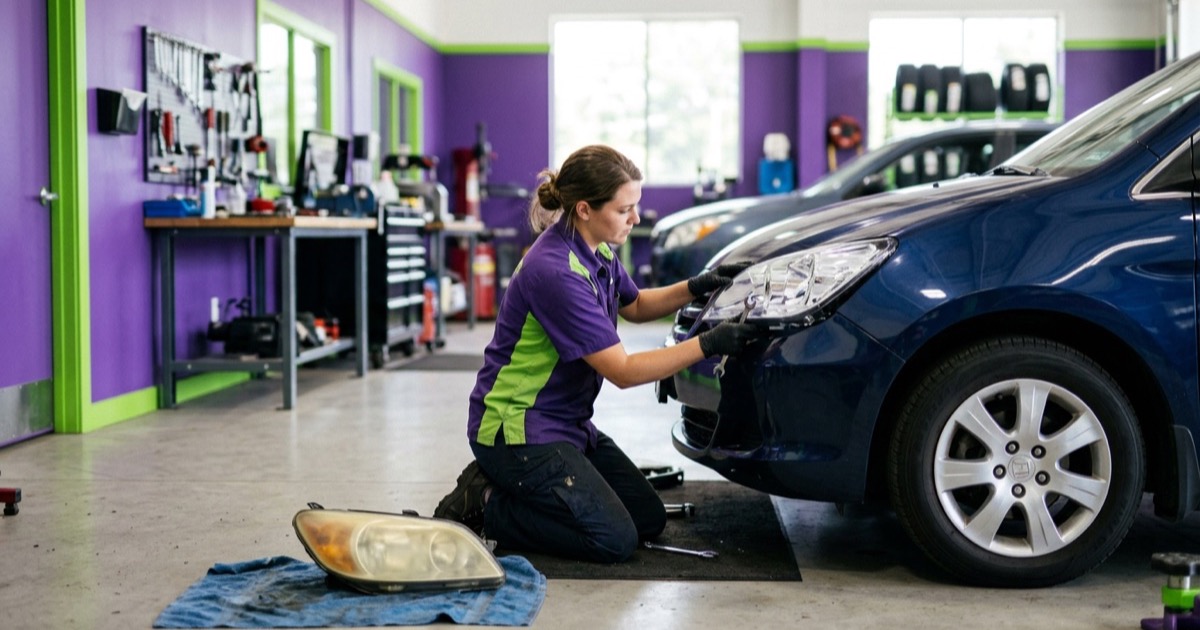
An assembly replacement means the whole headlight unit comes off the car. That includes the lens, the housing, the reflector or projector, and on many newer cars the LED modules and control electronics. You need an assembly when the lens is cracked, the housing has broken mounting tabs, water has gotten inside, or the car has LED lights that cannot be serviced.
A quality aftermarket assembly for a common halogen car can be $80 to $200. Factory LED assemblies can run $500 to $1,500 or more each. That is why one shop can quote $60 and another can quote $900 for what sounds like the same job.
The price on this page covers one side. If both lights need work, roughly double the parts and add a bit less than double the labor.
Halogen vs HID vs LED
Halogen is the oldest and cheapest type. It uses a glowing filament like an old house bulb. Halogen bulbs burn out every few years and slowly get dimmer before they quit.
HID or xenon lights make a bright white arc inside a gas filled bulb. They need a ballast, a small box that boosts voltage to start the arc. When an HID light flickers, turns pink or purple, or will not light, the bulb is the usual suspect, but the ballast or igniter can fail too.
LED headlights use light emitting diodes built into the assembly. They last a very long time, but when one fails, you usually replace the whole headlight. Some cars sell the LED module or driver separately, which can save money.
A common question is whether you can put LED bulbs in a halogen housing. Plug in LED bulbs are sold everywhere, but a halogen reflector is designed around a filament in one exact spot. A bulb that puts the light in the wrong place can scatter glare into oncoming drivers' eyes. Federal lighting rules require that replacement lighting equipment meet the same standard as the original, so most of these kits are sold for off road use only.
Why the Price Varies So Much
The headlight type is the biggest factor, as shown above. After that comes access.
On some cars the bulb twists out from behind the light with the hood open. On others, especially many newer compact and midsize cars, the battery, air intake or washer bottle sits right behind the light. On some, the only way in is through the wheel well liner or by pulling the bumper cover. That can turn a five minute bulb into an hour of labor.
Assemblies almost always need more work. Many are held by bolts behind the bumper cover, so the cover has to be loosened or removed.
Aiming is part of a good job. After an assembly goes in, the lights must be aimed so they light the road and do not blind oncoming drivers. Some shops include it. Others charge for it separately.
Then comes the shop. Dealers charge the most and use factory parts. Independents often offer quality aftermarket or certified assemblies. Quick lube shops and parts stores often do simple bulb swaps for a small fee. Mobile mechanics handle bulbs and most assemblies in a driveway.
What Usually Gets Done at the Same Time
Some extras are worth it. Some are not.
Worth it in most cases is replacing halogen bulbs in pairs. Both bulbs are the same age, and the second one is usually close to failing. Pairs also keep the color and brightness even.
Worth it after any assembly is a headlight aim. A light pointed too high blinds other drivers. One pointed too low cuts your seeing distance at night.
Worth it if the lenses are cloudy is a lens restoration on the side you are keeping. Sanding and resealing a yellowed lens can bring back a lot of light for a fraction of the cost of a new assembly. If one side gets a new clear assembly, the other may look much worse by comparison.
Worth checking is the connector. A melted or brown headlight plug is common on halogen cars and can kill a new bulb. A new pigtail costs little.
Usually an upsell is replacing both assemblies when only one is cracked, unless the other is badly faded.
- Halogen bulbs: replace both sides at once
- Headlight aim: do it after any assembly replacement
- Lens restoration: worth it on a cloudy lens you are keeping
- Headlight connector: replace if melted or brown
- Second assembly: only if it is cracked, leaking or badly faded
Make Sure It Is Really the Bulb or Light
A dead headlight is not always a dead bulb. Check the simple causes before paying for parts.
If both headlights quit at once, it is rarely two bulbs. Look at the fuse, the headlight relay, the headlight switch or the body control module.
If one light works on high beam but not low beam, the low beam bulb is usually out. On cars with one bulb for both beams, the bulb or connector is the most likely cause.
If a new halogen bulb burns out in a few months, check the connector for heat damage, look for water inside the housing, and make sure nobody touched the glass of the bulb with bare fingers. Skin oils make hot spots that shorten bulb life.
If an HID light flickers or cuts out over bumps, the bulb is the most common cause, then the ballast. Swapping left and right bulbs is a quick test. If the problem moves with the bulb, the bulb is bad.
If an LED headlight shows a warning on the dash or one section is dark, a scan tool can often tell whether the LED module or the driver has failed. Some are sold separately from the housing.
Questions to Ask Before You Approve the Quote
Headlight quotes can hide big differences. These questions help you compare apples to apples.
- Is this a bulb replacement or a full assembly replacement?
- Is my light halogen, HID or LED?
- If HID, did you test whether it is the bulb or the ballast?
- If it is an assembly, is the part factory, certified aftermarket or generic?
- Does the part meet federal lighting standards for road use?
- Do I need the bumper cover removed, and is that in the labor?
- Is headlight aiming included?
- Should we do both bulbs so they match?
Can a Mobile Mechanic Do It?
Yes, for nearly all bulb jobs and most assembly jobs. A mobile mechanic can pull a bumper cover in a driveway and swap an assembly with hand tools.
The one part that is easier at a shop is precise aiming. A shop with a level floor and an aiming tool can set the beams exactly. A good mobile tech can aim against a wall at night using the factory marks and a tape measure, which works well when done carefully.
Cars with adaptive headlights that need coding after replacement need a tech with the right scan tool. Ask before you book.
Signs you need this repair
- One headlight is out on low beam, high beam or both
- Headlight flickers, especially over bumps
- HID light turns pink or purple or takes long to light up
- Headlight is noticeably dimmer or more yellow than the other side
- Fog or water drops inside the headlight lens
- Cracked lens or broken mounting tabs after a minor bump
- Dash warning for a headlight or lighting system fault
Cost by vehicle type
| Vehicle | Typical range | Notes |
|---|---|---|
| Compact / economy car | $45 to $545 | Many compacts still use halogen bulbs, and the bulb job is often quick and under $60 at a shop. Some need the battery or air box moved to reach the driver side. |
| Midsize sedan / small SUV | $50 to $605 | Midsize sedans span halogen, HID and LED by trim level. A halogen bulb is cheap, but many models need the bumper cover loosened or the fender liner pulled to change a bulb, which adds labor. |
| Full-size truck / large SUV | $55 to $720 | Trucks usually have good access from the top and use halogen on base trims. Upper trims with LED projector headlights can cost $400 to $1,000 or more per side for the assembly. |
| Luxury / European | $70 to $900 | Many German cars use adaptive LED or HID assemblies with leveling motors and control modules. Factory assemblies can run $800 to over $2,000 per side, and some need coding with a scan tool after install. |
| Hybrid | $55 to $665 | Hybrids price like their gas models. Many use LED low beams from the factory even on mid trims, which means assembly replacement rather than a bulb when they fail. |
| Electric vehicle | $55 to $695 | Most EVs use full LED headlights, so a failure usually means a new assembly. Many also have a light bar or daytime light strip built into the same unit. |
| Diesel / heavy duty | $65 to $860 | Heavy duty trucks use the same lights as their lighter models. Bulb access is usually easy, and aftermarket assemblies are widely available. |
Ranges assume national-average labor rates ($95, $140/hr) and quality aftermarket parts.
Cost by state
State ranges reflect typical independent-shop labor rates for a midsize vehicle.
Common questions
How much does it cost to replace a headlight?
A halogen bulb usually costs about $30 to $100 per side installed. A full headlight assembly usually costs about $200 to $600 per side at an independent shop. LED and adaptive assemblies on newer or luxury cars can run $800 to well over $1,500 per side.
Can I drive with one headlight out?
Legally, no. Every state requires two working headlights at night and in low visibility. You can also be stopped for it. Fix it within a few days, and avoid night driving until then.
Should I replace both headlight bulbs at the same time?
Yes, for halogen and HID bulbs. The other bulb is the same age and usually close to failing, and new bulbs on both sides give matching color and brightness. LED assemblies are an exception, since they rarely fail together.
Why is headlight bulb replacement so expensive on my car?
Because of access. On many newer cars, the battery, air box or bumper cover is in the way, and the shop has to remove it to reach the bulb. The bulb may cost $20, but the labor can be an hour.
Can I put LED bulbs in my halogen headlights?
You can physically fit them, but most plug in LED kits are not approved for road use in halogen housings. They often scatter glare at oncoming drivers. If you want brighter lights, a quality halogen bulb or a full assembly made for LED is the safer choice.
Do I need to get my headlights aimed after replacement?
Yes, after any assembly replacement. A new assembly can sit slightly different from the old one. A bulb swap usually does not change aim, but a quick check is still smart.
Is it worth replacing a cloudy headlight or restoring it?
Try restoration first. A proper sand, polish and UV seal job often brings back most of the light for much less than a new assembly. Replace it if the inside is hazy, the reflector is burned, or the lens is cracked.
Why do my headlight bulbs keep burning out?
The usual causes are touching the bulb glass with bare fingers, water inside the housing, a heat damaged connector, or high charging voltage. Skin oils make hot spots on halogen glass. A tech can check the connector, the housing seal and the charging voltage in a few minutes.
Related Repair Guides
More Electrical Repair Costs
Sources and further reading
Primary sources behind this page. Federal safety, emissions and consumer-protection references, worth reading before you authorize any repair.
- FMVSS 108 Lamps, Reflective Devices and Associated Equipment (eCFR) The federal headlight standard, including rules for replacement lamps and aim.
- IIHS headlight research Independent safety testing that shows how much headlight type and aim change how far you can see at night.
- ASE certified technicians Look for ASE certified electrical technicians before you approve a quote.
Need Work Done? Get a Free Quote.
Tell us what the car is doing. A local mechanic calls you back, most requests get a call back the same day. No fee, no obligation.