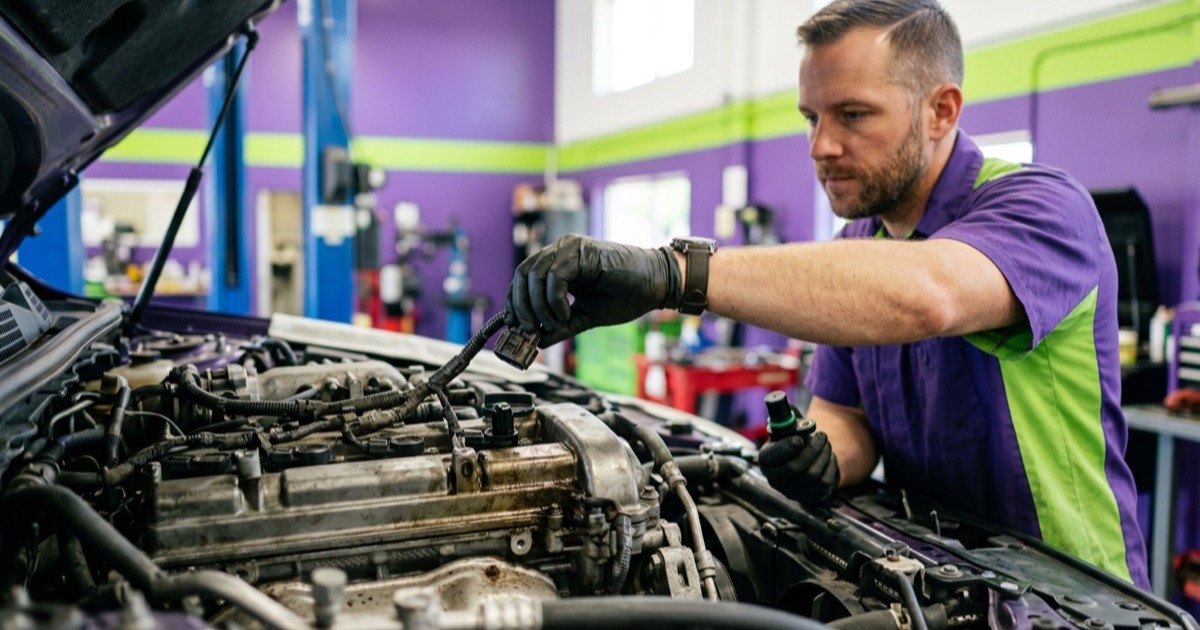
What the Job Is and What You Are Paying For
The camshaft position sensor reads a toothed wheel or notches on the camshaft. Every time a tooth passes, it sends a pulse to the engine computer. The computer uses that signal, along with the crankshaft sensor, to know which cylinder is on its power stroke. That is how it knows when to fire each injector and each coil.
On engines with variable valve timing, the cam sensor does a second job. It tells the computer whether the cam is actually moving to where the computer asked it to go. That is why a lot of cam timing codes end up being sensor problems, and why a lot of sensor codes end up being timing problems.
A fair quote includes reading the codes, checking the sensor signal and wiring, replacing the sensor with a new O-ring, clearing codes, and a test drive to confirm the code does not come back. Most of the bill on an easy engine is the diagnostic time. The swap itself can be 15 minutes.
Why the Price Swings From $80 to Nearly $400
Location is the biggest factor. A sensor on top of a four cylinder head is a 20 minute job. A sensor on the back of a V6 rear bank, behind the intake plenum, can be one and a half hours because the plenum has to come off.
The number of sensors matters too. Many V6 and V8 engines have one sensor per camshaft, so two to four total. The code will tell you which bank and which cam. A good shop replaces the one that failed. If all of them are original and the car has 150,000 miles, replacing the matching sensor on the same bank is a fair question, not an automatic upsell.
Parts tier is the third factor. Store brand sensors run $20 to $40. Name brand or factory sensors run $60 to $170. This is a part where the cheap tier really does fail more often. A sensor that sends a weak or noisy signal will set a fresh code within weeks.
Where you go matters last. A dealer will often charge one full hour of diagnosis on top of the repair. An independent shop or a mobile mechanic will usually fold a quick code check into the job when the sensor is easy to reach.
Diagnosis First: What Else Causes the Same Codes
A cam sensor code does not always mean a bad cam sensor. This is the most common way people overpay for this repair. Codes in the P0340 to P0349 range point at the sensor circuit, but the circuit includes the plug, the wiring, and the computer.
Oil leaks are a big one. On many engines the valve cover gasket or a cam seal leaks oil right onto the sensor plug. Oil inside the connector can kill the signal. Replacing the sensor without fixing the leak means the new one fails too.
Timing problems are the other big one. A stretched timing chain, a jumped timing belt, or a sticking variable valve timing solenoid can make the cam and crank signals disagree. The computer sets a correlation code, and a parts changer replaces the sensor. The code comes right back.
Low or dirty oil can also cause cam timing codes on engines with oil driven cam phasers. Check the oil level first. It is free.
A good tech will look at the sensor signal on a scope or a scan tool, check the wiring for chafing, and compare cam and crank timing before selling you a part. Ask what test they ran.
- Oil soaked sensor plug from a valve cover or cam seal leak
- Stretched timing chain or jumped timing belt
- Sticking or clogged variable valve timing solenoid
- Low oil level or the wrong oil weight
- Broken or rubbed through wiring near the exhaust
- A failing crankshaft position sensor that confuses the picture
What Gets Done at the Same Time
A new O-ring comes with the sensor and should always go on. An old hard O-ring leaks oil, and that oil ends up in the plug.
If the plug is oily, fix the leak. A valve cover gasket is often the source, and it is a worthwhile add-on if the cover is already coming off to reach the sensor.
Cleaning the connector with electrical contact cleaner is worth asking for. It takes a minute and costs almost nothing.
Skip pricey extras unless there is a reason. A fuel system cleaning or a full tune up is not related to a cam sensor. If the shop wants to replace the crank sensor too, ask them to show you why. Both can fail, but they rarely fail together.
Questions to Ask Before You Approve the Quote
A short conversation before the work starts saves the most money on this repair. These questions sort out a real diagnosis from a guess.
- Which code did you pull, and which bank and cam does it point to?
- Did you check the wiring and the plug, or only read the code?
- Is there oil in the connector, and where is it coming from?
- Did you check cam and crank timing correlation?
- What brand of sensor are you installing?
- Is diagnosis charged on top of the repair, or included?
- What is the warranty on parts and labor if the code comes back?
Can a Mobile Mechanic Do It?
Yes, for most cars. If the sensor is on top of the engine or at the front of the head, a mobile mechanic can scan, test, and swap it in your driveway in under an hour. That is often cheaper than a shop because there is no tow if the car will not start.
The exceptions are sensors buried behind the intake manifold, on the back of a V8 block, or low on a diesel. Those still can be done in a driveway, but they take longer. Give the mobile tech your year, make, engine, and code number, and they can tell you which kind you have before they show up.
How Long a New Sensor Lasts
A quality cam sensor can easily last 100,000 miles or the life of the engine. Heat and oil are what kill them.
Keep the oil changed on time and at the right level. Fix oil leaks on the top of the engine before they reach the wiring. And buy the sensor from a known brand. Those three habits stop most repeat failures.
Signs you need this repair
- Check engine light with a code from P0340 to P0349, or a cam and crank correlation code like P0016
- Engine cranks but will not start, especially when hot
- Stalling at idle or when coming to a stop
- Rough idle, misfires, or a stumble on acceleration
- Long crank time before the engine fires
- Car stuck in limp mode with low power and a transmission that will not shift up
- Worse fuel economy with no other obvious cause
Cost by vehicle type
| Vehicle | Typical range | Notes |
|---|---|---|
| Compact / economy car | $75 to $340 | Usually the cheapest version of the job. The sensor is on top or at the end of the head on most four cylinders, and parts run well under $100 for a good brand. |
| Midsize sedan / small SUV | $80 to $365 | Four cylinder models are quick. V6 models often have two or four cam sensors, one per camshaft, and the rear bank can take an hour of labor to reach. |
| Full-size truck / large SUV | $95 to $430 | Many V8 trucks put the cam sensor at the front timing cover or behind the intake. Some GM V8s mount it on the back of the block under the intake, which pushes labor up. |
| Luxury / European | $120 to $525 | German engines often run several cam sensors and genuine parts can cost two or three times aftermarket. Many specialists use the factory brand here because cheap sensors cause repeat codes on these engines. |
| Hybrid | $90 to $405 | Same sensor and same job as the gas version of the engine. Hybrids shut the engine off often, so a weak sensor can show up as a slow or rough restart before it sets a code. |
| Electric vehicle | Electric vehicles have no camshaft, so there is no cam sensor to replace. The motor uses its own position sensor that is built into the drive unit. | |
| Diesel / heavy duty | $115 to $510 | Diesel cam sensors are critical, the engine will not start or will run in limp mode without a good signal. Parts cost more and some sit low on the block, so expect the top of the range. |
Ranges assume national-average labor rates ($95, $140/hr) and quality aftermarket parts.
Cost by state
State ranges reflect typical independent-shop labor rates for a midsize vehicle.
Common questions
How much does it cost to replace a camshaft position sensor?
Most drivers pay about $80 to $370 at an independent shop. Easy four cylinder jobs land near the bottom. V6 and V8 engines with a sensor behind the intake, or European cars with factory parts, land near the top.
Can I drive with a bad camshaft position sensor?
You can for a short time if the car still runs smoothly, but it is a risk. A failing sensor can make the engine stall without warning, including at highway speed. If it has stalled even once, stop driving it in traffic and get it fixed.
How do I know if it is the cam sensor or the crank sensor?
The code usually tells you. Cam sensor codes run P0340 to P0349, and crank sensor codes run P0335 to P0339. A no start with no code needs a scan tool that can watch both signals while cranking. A good tech checks both before buying a part.
Should I replace both camshaft sensors at the same time?
Only replace the one that failed unless the other one shows a weak signal or the car has very high miles. On a V6 the sensors are not always easy to reach together. If both are in the same easy spot, doing the pair at once saves a second labor charge later.
Will a bad cam sensor make me fail a smog check?
Yes, in most states. A lit check engine light or a stored sensor code is an automatic fail in programs that plug into the OBD port. Fix it, drive a few days so the monitors reset, then go in for the test.
Why did my check engine light come back after replacing the cam sensor?
The sensor was probably not the real problem. The usual causes are oil in the plug, broken wiring, a stretched timing chain, or a sticking valve timing solenoid. A cheap sensor that sends a weak signal is the other common reason.
Is it worth fixing a cam sensor on an old car?
Almost always yes. It is one of the cheapest engine repairs there is, and a car that stalls is not safe to keep driving. Even on a car worth $2,000, a $150 fix is an easy call.
Related Repair Guides
More Engine Repair Costs
Sources and further reading
Primary sources behind this page. Federal safety, emissions and consumer-protection references, worth reading before you authorize any repair.
- Nevada DMV: On-Board Diagnostics testing How state emissions programs read OBD codes and why a lit check engine light fails the test.
- California Bureau of Automotive Repair State rules on written estimates and your right to approve repairs before work starts.
- fueleconomy.gov maintenance guide DOE and EPA guidance on how engine faults and maintenance affect fuel economy.
Need Work Done? Get a Free Quote.
Tell us what the car is doing. A local mechanic calls you back, most requests get a call back the same day. No fee, no obligation.