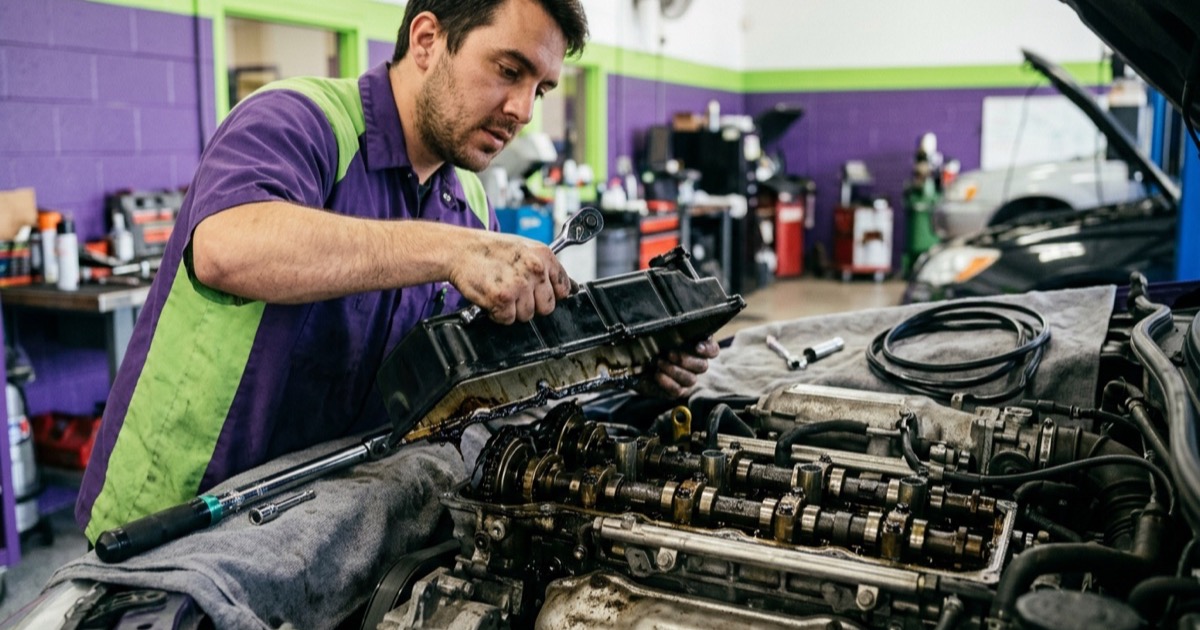
What the Job Is and What You Are Paying For
The valve cover is the lid on top of your engine. Under it are the camshafts, valve springs and rockers, all splashed with oil every second the engine runs. The gasket is a rubber ring that seals the lid to the cylinder head so that oil stays inside.
The gasket lives in heat. Every drive cycles it from cold to well over 200 degrees and back. After about 80,000 to 150,000 miles the rubber gets hard and flat and stops pushing back against the metal. That is when oil starts to seep, first as a damp film, then as drips.
A proper job includes taking off whatever sits on top of the cover, removing the cover, scraping and cleaning both sealing surfaces, and installing a new gasket. Most engines also need small dabs of RTV sealant at the corners where the head meets the timing cover. Then the bolts go back in a set order to a low torque spec, usually somewhere around 7 to 10 foot pounds.
On many engines the gasket set also includes spark plug tube seals. These are round seals around each plug hole. When they fail, oil fills the plug wells and soaks the coils. A good shop replaces them in the same visit because the cover is already off and they cost only a few dollars more.
The price you see is mostly labor. The parts are cheap. You are paying for the time it takes to get to the cover, clean it right and put everything back without a new leak.
Why the Price Varies So Much
Engine layout is the biggest factor. A four cylinder with the cover right on top is the cheap version. Pull the plastic engine cover, unplug the coils, pull the bolts, and the valve cover lifts off. That is often an hour of book time.
A V6 or V8 has two valve covers. On a truck, both are usually easy to reach. On a front drive V6, the rear cover faces the firewall and often sits under the upper intake manifold. That means the intake comes off, which adds gaskets, time and sometimes a throttle body cleaning. This is why a V6 sedan can cost twice what the four cylinder version of the same car costs.
Boxer engines in many Subarus put the covers on the sides of the engine, down low and close to the frame rails. Access is tight and the labor shows it.
The cover itself matters too. Metal covers can be cleaned and reused almost forever. Plastic covers can warp or crack, and on many European and some newer domestic engines the PCV valve or oil separator is built into the cover. If that part is bad, you are buying a whole cover.
Then comes the shop. Dealers charge the highest hourly rate and use factory parts. Independents usually charge less and use quality aftermarket gasket sets. Mobile mechanics often charge the least because they have no building to pay for, and this job fits a driveway well on most four cylinders.
What Usually Gets Done at the Same Time
Some add ons make real sense because the cover is already off. Others are upsells. Here is how to tell them apart.
Worth it almost every time are the spark plug tube seals, if your engine has them, and new grommets for the cover bolts if they are hard or cracked. Both come in most gasket sets.
Worth it if they are due are spark plugs. On engines where the coils come out to get to the cover, plug labor is nearly free. If your plugs are near their change interval, do them now. If they were changed 20,000 miles ago, skip it.
Worth checking is the PCV valve. A clogged PCV valve builds pressure inside the engine, and that pressure pushes oil past gaskets. If your new gasket is leaking again in six months, a bad PCV is a likely cause. Many PCV valves cost under $20.
Worth it if oil soaked them are ignition coils and coil boots. Oil in the plug wells eats coil boots and can cause misfires. Replace only the ones that are damaged or test bad.
Usually an upsell is an engine flush or an engine shampoo with a big price tag. A degrease of the leak area so you can watch for new leaks is fair. A $150 engine detail is not needed to fix a gasket.
- Spark plug tube seals: do them now if your engine has them
- Cover bolt grommets: do them if hard or cracked
- Spark plugs: do them if near the interval
- PCV valve: check it, replace if clogged or stuck
- Oil soaked coils or boots: replace only the bad ones
- Engine flush or full detail: usually skip
Make Sure It Is Really the Valve Cover
Oil runs down. A valve cover leak can leave oil on the side of the block, on the oil pan and even dripping from the bell housing, which makes it look like a rear main seal or oil pan leak. The reverse mistake is rarer, because oil does not run uphill. That is why you start diagnosis at the top of the engine.
The classic signs of a valve cover leak are wet oil along the seam where the cover meets the head, oil on the exhaust manifold, a burning smell after a drive, and oil in the spark plug wells when the coils come out.
If the engine is coated in old grime, a good shop cleans the area and checks it again after a few days of driving. Another trick is a bit of UV dye in the oil and a black light. The dye glows right at the source. Both cost far less than replacing the wrong gasket.
A few other parts leak from the same area. The oil filler cap seal, the cam or crank position sensor O rings, the oil pressure sender, a cracked plastic valve cover, and the timing cover can all leave oil near the top of the engine. On some engines, the oil filter housing gasket sits right below the valve cover and is a very common leak.
If you see blue smoke from the tailpipe, that is oil burning inside the engine, not a gasket leak. A valve cover gasket only leaks outside.
Questions to Ask Before You Approve the Quote
A clear quote is short and itemized. These questions help you spot padding and help you catch a shop that is guessing.
- Where exactly is the leak coming from, and can you show me the wet spot or a photo?
- Does my engine have one cover or two, and are you quoting both?
- Does the quote include spark plug tube seals and cover bolt grommets?
- Is my valve cover metal or plastic, and does it have the PCV system built in?
- Do you plan to clean the sealing surfaces fully and use RTV at the corners where the factory calls for it?
- Will you torque the bolts to spec with a torque wrench?
- Are the plugs or coils due, and what does it cost to add them now versus later?
- What is the warranty on parts and labor if it leaks again?
Can a Mobile Mechanic Do It?
Yes, for most cars. On an inline four cylinder with the cover on top, a mobile mechanic can do this in your driveway with hand tools, a torque wrench and a scraper. You avoid shop overhead and you do not lose your car for the day.
The front cover on a transverse V6 is also a driveway job. The rear cover is too on many cars, but it takes longer if the intake comes off.
The versions that are better in a shop are boxer engines with tight side access and some trucks or vans where the engine sits deep under the cab. A lift and good lighting help a lot there.
Tell the mechanic your year, make, model and engine size when you call. A good mobile tech will tell you up front whether your version is a one hour job or a half day.
How to Make the New Gasket Last
A valve cover gasket that is installed right should last as long as the first one did, often another 100,000 miles. The ones that fail early usually fail for one of four reasons.
The first is over tightening. The bolts are meant to hold the cover snug, not crush the rubber. A torque wrench set to the factory spec fixes this.
The second is a dirty surface. Old gasket bits or oil left on the head make a path for new oil to escape. The surfaces need to be clean and dry.
The third is missing RTV at the corners. Most engines need a small dab where the head meets the timing cover. Too much is as bad as none, because extra sealant can break off and clog an oil passage.
The fourth is pressure inside the engine. A clogged PCV valve or a blocked breather hose pushes oil out of every seal. Change your oil on time and keep the PCV system working, and the new gasket has an easy life.
Signs you need this repair
- Burning oil smell after a drive, especially when you stop at a light
- Light smoke rising from under the hood near the top of the engine
- Wet or dark oil film along the seam where the valve cover meets the head
- Oil found in the spark plug wells when the coils are pulled
- Misfire codes or a rough idle caused by oil soaked coils
- Oil spots under the car with oil traced up the side of the engine
- Oil level dropping slowly between changes with no blue exhaust smoke
Cost by vehicle type
| Vehicle | Typical range | Notes |
|---|---|---|
| Compact / economy car | $145 to $530 | Most inline four cylinder compacts put the valve cover right on top under a plastic engine cover, so this is often a one to one and a half hour job. Many also need new spark plug tube seals, which come in the gasket set. |
| Midsize sedan / small SUV | $150 to $550 | Four cylinder midsize cars price like compacts. Transverse V6 versions have two covers, and the rear one often sits under the upper intake manifold, which can double the labor. |
| Full-size truck / large SUV | $170 to $625 | V8 trucks have two covers that are usually easy to reach from the top, but there are two of them. Some trucks need the air intake, coil packs and wiring moved, so expect the middle to upper part of the range. |
| Luxury / European | $205 to $755 | Many German engines use a plastic valve cover with the PCV system built in, and when it cracks or the built in diaphragm fails you replace the whole cover, not just the gasket. That turns a $40 gasket into a $150 to $500 part. |
| Hybrid | $165 to $605 | Hybrids use the same gas engine family as their regular models, and the gasket job is the same. Make sure the shop follows the high voltage safety steps if any orange cables or the inverter sit near the work area. |
| Electric vehicle | Electric cars have no cylinder head, no valves and no valve cover, so there is no valve cover gasket to leak. | |
| Diesel / heavy duty | $200 to $740 | Diesel valve covers often have injector wiring passing through the gasket area, and some heavy duty trucks need a lot removed to reach the rear of the engine. Gaskets cost more and labor runs toward the top of the range. |
Ranges assume national-average labor rates ($95, $140/hr) and quality aftermarket parts.
Cost by state
State ranges reflect typical independent-shop labor rates for a midsize vehicle.
Common questions
How much does it cost to replace a valve cover gasket?
Most drivers pay about $150 to $550 at an independent shop or mobile mechanic. Four cylinder engines with the cover on top sit at the low end. V6 engines with a hidden rear cover, boxer engines and many European cars cost more, and a dealer adds more again because of the higher hourly rate.
Can I drive with a leaking valve cover gasket?
Yes, for a while, if it is a slow seep and the oil level stays full. Check the oil every week. Get it fixed soon if oil is dripping on the exhaust, if you smell burning oil, or if you get a misfire, because those mean the leak is causing damage or a fire risk.
Is a valve cover gasket leak serious?
It is usually not serious for the engine itself, but it can become serious fast depending on where the oil goes. Oil on a hot exhaust manifold can smoke and in rare cases ignite. Oil in the plug wells ruins coils. And a leak that is ignored long enough can drop the oil level low enough to hurt the engine.
How long does a valve cover gasket replacement take?
About one to three hours for most cars. A four cylinder with easy access can be done in about an hour. A V6 where the intake has to come off, or a boxer engine, can take three hours or more.
Should I replace the spark plugs when I replace the valve cover gasket?
Only if they are close to their change interval. On many engines the coils come out anyway, so adding plugs costs little extra labor. If your plugs were changed recently, there is no reason to do them again.
Can a bad valve cover gasket cause a misfire?
Yes, on engines where the spark plugs sit in tubes that pass through the valve cover. When the tube seals leak, oil fills the plug wells and soaks the coil boots, which can cause a misfire. Fix the seals, clean the wells and replace any coil boot that is swollen or soft.
Will a stop leak additive fix a valve cover gasket?
Sometimes it slows a small seep for a while, but it does not fix a gasket that is hard, cracked or crushed. The additive works by swelling rubber seals. It is a short term patch, not a repair. On most engines the real fix is cheap enough to just do.
Is a valve cover gasket worth fixing on an old car?
Almost always, yes. It is one of the cheapest oil leaks to fix, and it keeps oil off the exhaust and out of the plug wells. Even on a car worth $2,000, a $200 gasket job that stops a fire risk and protects the coils is money well spent.
Related Repair Guides
More Engine Repair Costs
Sources and further reading
Primary sources behind this page. Federal safety, emissions and consumer-protection references, worth reading before you authorize any repair.
- fueleconomy.gov maintenance guide DOE and EPA guidance on how routine engine maintenance protects efficiency and engine life.
- ASE certified technicians Find shops with ASE certified engine repair technicians before you approve a quote.
- EPA polluted runoff from urban areas Why oil dripping from cars onto streets and driveways matters for local water quality.
Need Work Done? Get a Free Quote.
Tell us what the car is doing. A local mechanic calls you back, most requests get a call back the same day. No fee, no obligation.