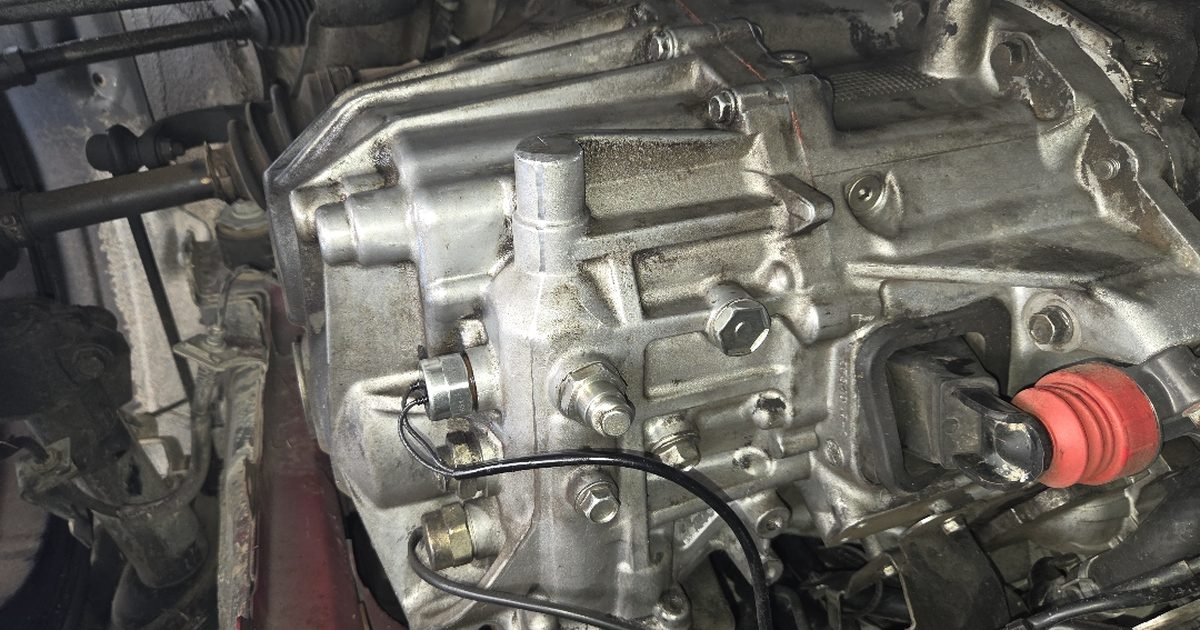
What a CV axle does, and how it fails
Each driven wheel gets its power through a CV (constant-velocity) axle — a steel shaft with a flexible joint at each end. The outer joint lets the front wheels steer through full lock while spinning; the inner joint plunges in and out as the suspension travels. "Constant velocity" is the engineering point: unlike a simple universal joint, a CV joint delivers perfectly smooth rotation at any angle, which is what makes front-wheel drive livable.
The joints themselves are packed with precision balls and races bathed in thick moly grease, sealed inside a pleated rubber boot. Sealed, they're effectively lifetime parts — plenty go 200,000 miles or more untouched. The boot is the weak point: rubber that flexes with every bump and steering input, ages in heat and ozone, and eventually cracks or tears. Once it does, centrifugal force slings the grease out through the tear and road grit gets in, and the joint grinds itself toward failure.
That's why almost every CV axle story starts with a boot. The joint didn't wear out on its own schedule — its boot failed, nobody caught it, and the joint followed some months later.
The torn-boot window: catch it cheap
There's a stage in every CV failure where the repair is dramatically cheaper, and most drivers sail through it unaware. A freshly torn boot with a quiet joint — no clicking yet — can often be fixed by cleaning the joint, repacking it with fresh grease, and installing a new boot. It's a labor-heavy little job (the axle usually comes out anyway), but the parts cost is small and you keep your original joint, which on many vehicles is better made than an aftermarket replacement axle.
The evidence of a torn boot is easy to spot on a lift: dark grease slung in a ring on the inside of the wheel, the strut, or the chassis around the axle. This is exactly the kind of thing a shop notices during an oil change or brake job if anyone looks — one good reason to use shops that actually inspect.
Once the joint has started clicking, the boot window has closed: the wear is done and no amount of fresh grease reverses it. At that point rebooting is wasted money and axle replacement is the correct call. The pricing gap between the two outcomes is the whole argument for periodic undercar inspection.
New aftermarket, remanufactured, or reboot the original?
For a clicking axle you have three real options, and this is a category with a genuine quality trap. New aftermarket axles are the default at most shops — inexpensive and available same-day for common cars. But the bargain tier of new axles has a documented reputation for vibration problems and short lives; the steel and machining in a $60 axle are exactly what they sound like. Sticking to reputable brands, or spending up modestly, avoids most of it.
Remanufactured axles rebuild an original core with new boots, grease, and whatever internals tested worn. A good reman preserves OEM joint quality at a mid-tier price, and on many vehicles it's the value pick — with the usual reman caveat that the rebuilder's name matters more than the price tag.
The third option — rebooting or rebuilding your original axle — shines on luxury and European cars where OEM axle quality is high and replacements are costly, and on anything where cheap aftermarket axles have known vibration issues. If a new axle introduces a highway vibration that wasn't there before, suspect the axle itself before chasing anything else; it's common enough that experienced techs check it first.
What the job should include
A proper axle replacement runs: wheel off, axle nut off, the knuckle freed at the ball joint or strut so it can swing outward, outer end pulled from the hub, inner end popped out of the transmission, and the new axle seated until its retaining clip engages — a click you want to positively confirm, because an axle that isn't fully seated can walk out later. Then everything goes back together with the suspension hardware and a new axle nut torqued to spec.
Two details separate careful work from quick work. First, the transmission side: pulling the inner joint usually lets some gear oil or ATF out, and the axle seal it passes through is a wear item — a good shop checks the seal, tops off the fluid, and mentions both. Second, that axle nut torque: the nut clamps the wheel bearing, and both undertorquing and impact-gun guesswork are classic causes of a wheel bearing failing months after an axle job.
If the boot failed but the joint was saved, the same steps apply with a reboot instead of a new axle. Either way, the test drive should include full-lock turns in both directions — the exact maneuver that reveals CV problems — before the car comes back to you.
Why the price varies
Per-axle quotes run from about $225 to $650 on mainstream vehicles, with the parts tier doing most of the moving: bargain new, quality new, reman, and OEM can span 4x on the same car. Labor varies less but isn't flat — a front-drive compact with open access sits at the low end, while 4WD trucks, AWD rears tucked behind subframes, and rust-belt hardware add real time.
Some designs add their own surcharges: axles with intermediate shafts and carrier bearings, captive inner joints that require extra disassembly, and a few models where the correct procedure involves dropping part of the subframe. European cars often push toward reboot-or-OEM decisions rather than cheap replacement, which changes the quote's whole structure.
If you're comparing quotes, make sure each names the axle brand or tier. A $150 gap between two quotes is very often just a bargain axle versus a quality one — and given this category's vibration problems at the bottom tier, that's a gap worth paying.
How to save money on this repair
The biggest saving is upstream: catch boots before they open the joint. Ask for a quick look at the CV boots at every oil change and tire rotation — it takes seconds with the car in the air, and the reboot-stage fix costs a fraction of joint failure. Grease slung on the inside of a wheel is your early-warning system.
At the replacement stage, put your money in the axle, not the venue. This is a standard job at any competent independent or mobile mechanic, and mobile labor in a driveway works fine for most front-drive cars — but insist on a name-brand or reman axle rather than the cheapest unit the parts store stocks. A vibrating bargain axle that gets replaced twice is the most expensive option on the menu.
If both front axles are original and one has failed at high mileage, it's fair to ask about the other's condition — but unlike struts, axles don't need to be done in pairs. Replace what's actually worn, keep the boots inspected, and your original joints can genuinely outlast the car.
Signs you need this repair
- Rhythmic clicking or popping when turning — loudest in tight, slow turns like parking maneuvers, and the classic outer-joint sound
- Grease slung in a ring on the inside of a wheel, the strut body, or nearby chassis — the signature of a torn boot
- A clunk when shifting between drive and reverse, or when getting on and off the throttle
- Vibration that appears under acceleration and eases when you lift off — typical of a worn inner joint
- A visibly cracked, split, or missing CV boot during an inspection
- Shudder or judder pulling away from a stop
- A knocking that speeds up with wheel speed in a straight line — a joint in its final stage
Cost by vehicle type
| Vehicle | Typical range | Notes |
|---|---|---|
| Compact / economy car | $210, $590 | Front-drive compacts are the highest-volume CV axle application there is — parts are cheap, access is standard, and this is the least expensive version of the job. |
| Midsize sedan / small SUV | $225, $630 | Routine on front-drive models; AWD versions add rear axles that fail less often (they don't steer) but cost similarly to replace when they do. |
| Full-size truck / large SUV | $260, $735 | 4WD front axles are heavier, pricier, and often crusted with off-road grime or rust. IFS trucks follow the normal pattern; solid-axle designs differ. Expect the upper half of the range. |
| Luxury / European | $320, $905 | OEM axles can cost several times aftermarket, and this is a category where bargain aftermarket axles have a poor reputation — many specialists reboot or rebuild the original OEM axle instead of replacing it with a cheap new one. |
| Hybrid | $245, $695 | Same job as the conventional version of the car. Instant electric torque from a stop does work the joints a bit harder over the years, so don't be surprised by a CV click on a higher-mileage hybrid. |
| Electric vehicle | $255, $725 | EVs have CV axles just like front-drive gas cars — and full torque from zero RPM plus extra vehicle weight is exactly the loading CV joints dislike. The job is conventional; heavier-duty axles on larger EVs price toward the top of the range. |
| Diesel / heavy duty | $310, $875 | Heavy 4WD front axles built for plow and tow duty cost the most in parts, and seized hardware on work trucks adds labor. Dually and solid-axle configurations fall outside this estimate. |
Ranges assume national-average labor rates ($95, $140/hr) and quality aftermarket parts.
Cost by state
State ranges reflect typical independent-shop labor rates for a midsize vehicle.
Common questions
How long can I drive with a clicking CV joint?
Usually weeks to a few months of normal driving — but it's wear you can hear, and it only moves in one direction. The failure mode at the end is the joint coming apart, which immediately disables the car and can damage surrounding components. Treat the first click as the booking signal, not the beginning of a long negotiation.
My boot is torn but there's no clicking. Do I need a whole new axle?
Maybe not — this is the cheap-fix window. A quiet joint under a freshly torn boot can often be cleaned, repacked, and rebooted, keeping your original (often better-than-aftermarket) joint. The window closes once clicking starts; after that, rebooting is wasted money and replacement is correct. Get it looked at promptly — the window is measured in weeks, not years.
Should I replace CV axles in pairs like struts?
No. Axles fail individually — almost always because one boot tore — and a healthy sealed joint doesn't care what the other side is doing. Replace the failed one, have the other side's boots inspected while the car is up, and spend the savings elsewhere. The pair rule applies to dampers and brakes, not axles.
Why does my car vibrate after getting a new CV axle?
Suspect the new axle first. Bargain-tier aftermarket axles have a well-earned reputation for vibration straight out of the box — imperfect balance or joint machining that shows up at highway speed. Shops see it often enough that swapping the new axle for a quality brand or reman is a standard fix. It's the strongest argument for not buying the cheapest axle on the shelf.
Is a CV axle the same as a wheel bearing? The sounds seem similar.
Different parts, commonly confused. A wheel bearing hums or growls steadily with road speed and often changes when you swerve gently side to side; a CV joint clicks or pops, mostly in turns, and changes with throttle. They live inches apart and one job is sometimes misdiagnosed as the other — a shop that road-tests before quoting is worth choosing.
Can a mobile mechanic replace a CV axle?
Yes — on most front-drive cars it's a well-scoped driveway job with jack stands, hand tools, and a proper torque wrench for the axle nut. The tougher versions are rusted 4WD trucks and cars whose inner joints demand subframe work; a good mobile tech will ask your year and model and tell you honestly which kind you have.
Related repair guides
Sources and further reading
Primary sources behind this page. Federal safety, emissions and consumer-protection references, worth reading before you authorize any repair.
- NHTSA recall & complaint lookup Check any symptom against open recalls and technical service bulletins before paying for a repair.
- SAE International The engineering body behind fluid, fastener and diagnostic standards.
- fueleconomy.gov maintenance guide DOE and EPA guidance on how maintenance affects fuel economy and engine life.
- DOE Alternative Fuels Data Center: electric vehicles Federal reference on EV drivetrains, batteries and charging.
Need work done? Get a free quote.
Tell us what the car is doing. A local mechanic calls you back, most requests get a call back the same day. No fee, no obligation.