What a Transmission Fluid Change Includes
Automatic transmission fluid does three jobs. It carries pressure that applies the clutches, it cools the gears and bearings, and it carries away tiny bits of wear. Over time heat breaks it down and it loses the friction traits the clutches count on.
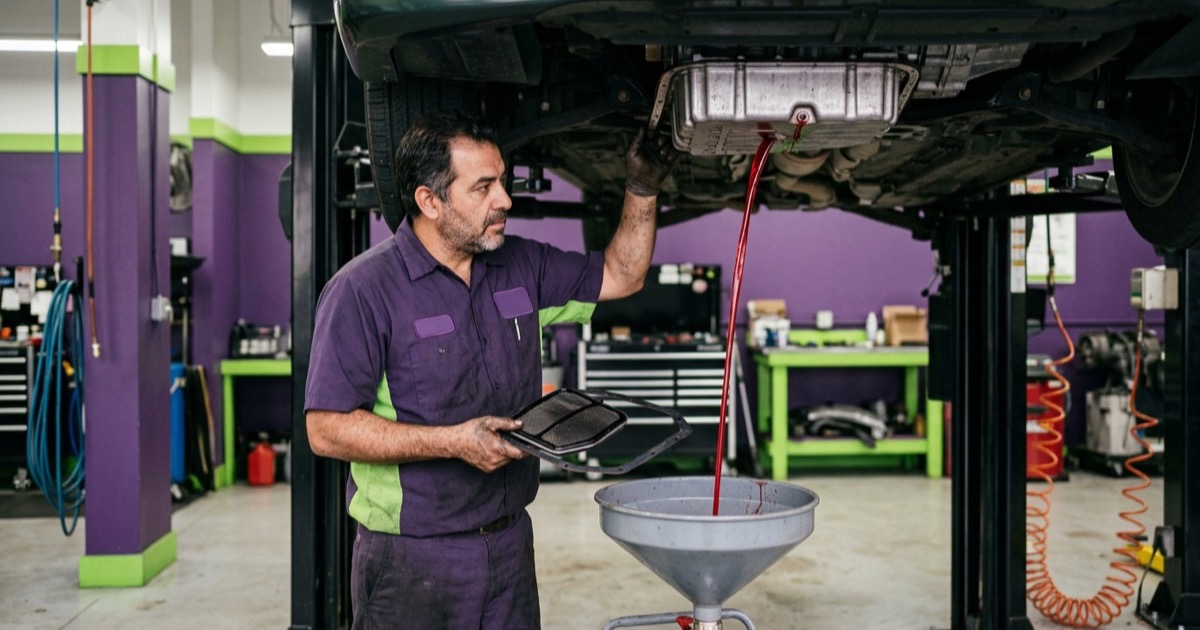
A drain and fill is the basic service. The tech pulls the drain plug or drops the pan, lets the old fluid run out, and refills with the correct fluid. On most cars this only replaces about a third to half of the total fluid. The rest stays in the torque converter and cooler lines.
A pan service adds dropping the pan, cleaning it, changing the filter if there is one, and fitting a new gasket. This costs more but lets the tech look at what is in the pan, which tells you a lot about the health of the transmission.
A flush or fluid exchange uses a machine hooked to the cooler lines. As the engine runs, the machine pulls old fluid out and pushes new fluid in until nearly all of it is fresh. It uses more fluid, so it costs more. A drain and fill usually runs about $100 to $250. A machine flush usually runs about $150 to $400.
Drain and Fill vs Flush: Which One to Pick
For most cars on a normal schedule, a drain and fill is the safer and cheaper choice. Do it on time and the fluid stays in good shape because each service dilutes the old fluid with a big dose of new.
A flush makes sense when the fluid is badly overdue but the transmission still shifts fine, or when the maker calls for a full exchange. Two or three drain and fills a few hundred miles apart get you most of the same result for about the same money.
The worry about flushes on high mileage cars is real but often told wrong. The flush itself does not destroy transmissions. The problem is that a transmission already slipping from worn clutches will still slip after new fluid, and owners blame the service. If the fluid is burnt and the car already slips, no fluid service will save it.
The one hard rule is the fluid type. Using a universal fluid in a car that calls for a specific one is the most common way a fluid service causes shifting problems. Ask what fluid goes in, and check it against your owner's manual.
Why the Price Varies
Fluid is most of the parts cost. A generic fluid can be under $8 a quart while a maker's own CVT or eight speed fluid can be $15 to $25 a quart. A truck that takes 12 quarts on a flush costs a lot more than a compact that takes 4 on a drain.
The second factor is how the transmission is filled. A car with a dipstick is quick. A sealed unit must be filled through a check plug with the fluid at a set temperature and the car level on a lift. That takes longer and needs a scan tool to read fluid temperature.
Filters and pans add cost. Some cars have a filter that should change every time, and some European cars have a pan with the filter built in that must be replaced, which can add $100 or more.
Venue matters too. Quick lube chains often sell a flush with a generic fluid at a low price. Dealers use the right fluid but charge the most. An independent shop or a mobile mechanic who uses the correct fluid is usually the best value.
Your local labor rate matters, but this is a short job, so fluid choice usually moves the price more than the rate does.
What Often Gets Done at the Same Time
A few add ons are worth it, and a few are upsells.
- Filter and pan gasket: worth it if your car has a serviceable filter and the pan is coming off anyway.
- Pan inspection: always worth asking about. A little gray paste on the magnet is normal. Chunks of metal or lots of clutch material are not.
- Differential or transfer case fluid on AWD and 4WD vehicles: worth doing at the same visit if it is due, since the car is already on the lift.
- Transmission additives or conditioners: usually an upsell. The right fluid already has what the transmission needs.
- Cooler line flush on a car with a healthy transmission: rarely needed unless the transmission is being rebuilt.
Do You Really Need It? Check These First
Many shifting problems are not about old fluid at all. Before you pay for a service to fix a symptom, rule out the cheaper causes.
Low fluid is the first suspect. A leak at a cooler line, pan gasket or axle seal can drop the level enough to cause slipping or a delay into gear. Topping off and fixing the leak is the real repair.
A check engine light with a transmission code points to an electrical fault, like a bad speed sensor or shift solenoid. A scan costs little and can save you from paying for a fluid service that does nothing.
Engine misfires can feel like a rough shift. So can a worn engine mount, which lets the engine rock when the car shifts. A good shop drives the car and scans it before selling you a fluid service as a cure.
If the car has no problem and you are just on schedule, you do not need any of this. Just do the service on time with the right fluid.
Questions to Ask Before You Approve the Quote
A short list of questions sorts the careful shops from the quick ones.
- Is this a drain and fill, a pan service, or a machine flush, and how many quarts go in?
- What brand and spec of fluid are you using, and does it match my owner's manual?
- Does my car have a filter, and is it included?
- How will you check the level on a car with no dipstick? Do you check it at the right temperature?
- Will you show me what is in the pan or on the drain plug magnet?
- If the fluid looks burnt, will you call me before going ahead?
How Often to Change It and How to Make It Last
Your owner's manual is the authority here. Many cars list a change every 30,000 to 60,000 miles under severe use, and longer under normal use. Some makers call the fluid lifetime, but lifetime often means the length of the warranty, not the life of the car.
Towing, hot climates, stop and go traffic, and mountain driving all count as severe service. If that describes your driving, use the shorter interval.
Heat is the enemy. Fluid that runs hot breaks down fast. If you tow, an added transmission cooler is cheap insurance.
A mobile mechanic can do a drain and fill in your driveway on most cars with a drain plug. Sealed units that must be filled at a set temperature on a level lift are better done in a shop.
Signs you need this repair
- Fluid on the dipstick looks dark brown or black instead of red or pink
- A burnt smell from the fluid or from under the car after a drive
- Shifts that feel harsh, late or soft
- A short delay when you put the car into drive or reverse
- Engine revs climb but the car does not speed up, a sign of slipping
- You are past the service interval in your owner's manual
- A whine or hum that changes with speed on a CVT
Cost by vehicle type
| Vehicle | Typical range | Notes |
|---|---|---|
| Compact / economy car | $120 to $345 | Many small cars now use a CVT, which needs its own special fluid and often a fill by temperature. Older four speed automatics are the cheapest drain and fill there is. |
| Midsize sedan / small SUV | $125 to $370 | Most take 3 to 5 quarts on a drain and fill. Sealed units with no dipstick are common, so ask how the shop checks the level. |
| Full-size truck / large SUV | $145 to $430 | Trucks hold more fluid, often 12 quarts or more in total, and towing calls for the severe service interval. Some have a pan filter that should be changed at the same time. |
| Luxury / European | $180 to $530 | Many German cars use a plastic pan with the filter built in, so the pan gets replaced every time. That plus pricey OEM fluid pushes these to the top of the range. |
| Hybrid | $140 to $405 | Hybrid transaxles use their own fluid and are often serviced rarely. The job is a simple drain and fill, but the fluid must match the maker's spec exactly. |
| Electric vehicle | $145 to $425 | The reduction gearbox holds a small amount of fluid. Some makers list a change at a high mileage, others list none. It is a short, cheap job when it is due. |
| Diesel / heavy duty | $175 to $515 | Heavy duty automatics hold a lot of fluid and work hard when towing. Plan for more fluid, an external filter on some models, and a shorter interval. |
Ranges assume national-average labor rates ($95, $140/hr) and quality aftermarket parts.
Cost by state
State ranges reflect typical independent-shop labor rates for a midsize vehicle.
Common questions
How much does a transmission flush cost?
A machine flush usually costs about $150 to $400 at an independent shop. Trucks and cars that need a pricey maker fluid can run higher. A basic drain and fill is usually $100 to $250.
Is a transmission flush better than a drain and fill?
Not for most cars. A flush replaces more fluid at once, but a drain and fill done on time keeps the fluid healthy for less money. A flush makes the most sense when the fluid is overdue but the car still shifts well.
Can changing transmission fluid cause problems on a high mileage car?
Fresh fluid does not usually cause damage, but it will not fix worn clutches. If a transmission already slips, it will keep slipping after a service. That is why the change gets blamed. If your fluid is burnt and the car slips, get a diagnosis first.
How often should I change my transmission fluid?
Follow your owner's manual. Many cars call for 30,000 to 60,000 miles under severe use. Towing, heat and city traffic all count as severe use.
My car says lifetime fluid. Do I still need to change it?
Usually yes if you plan to keep the car a long time. Lifetime often means the warranty period. Many mechanics change it around 60,000 to 100,000 miles to protect the transmission.
How much does a transmission fluid change cost at a dealer?
Dealers often charge $200 to $450 for the same service, mostly from higher labor rates and OEM fluid. An independent shop using the same fluid spec is usually cheaper.
Can I just top off my transmission fluid?
Yes, if it is low, but low fluid means a leak somewhere. Top it off with the correct fluid and have the leak found. Never overfill, because too much fluid can foam and cause shifting problems.
Related Repair Guides
More Drivetrain Repair Costs
Sources and further reading
Primary sources behind this page. Federal safety, emissions and consumer-protection references, worth reading before you authorize any repair.
- fueleconomy.gov maintenance guide DOE and EPA guidance on how routine maintenance affects fuel economy and vehicle life.
- SAE International The engineering body behind fluid and drivetrain standards.
- ASE certification Look for ASE certified techs in automatic transmission work.
Need Work Done? Get a Free Quote.
Tell us what the car is doing. A local mechanic calls you back, most requests get a call back the same day. No fee, no obligation.