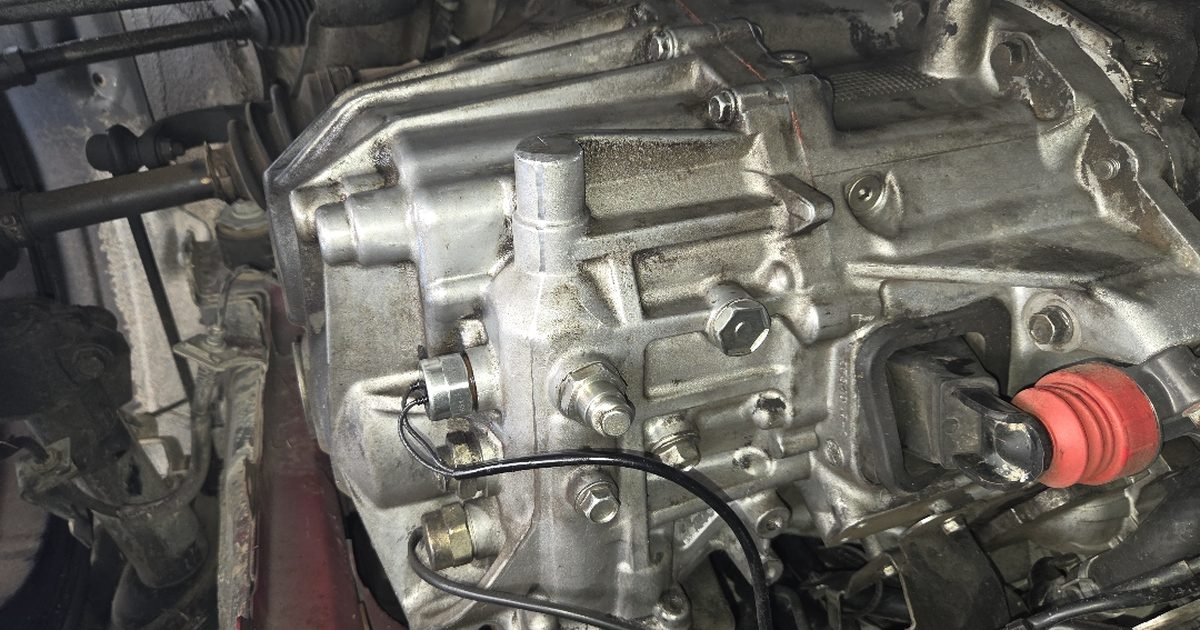
What the clutch does, and how it wears
A manual transmission needs a way to smoothly connect a spinning engine to wheels that start from zero, and the clutch is it: a friction disc clamped between the engine's flywheel and a spring-loaded pressure plate. Pedal down, the clamp releases and engine and gearbox spin independently; pedal up, the disc is squeezed into the flywheel and drives the car. Every launch and every shift slides that friction surface briefly — controlled wear, exactly like a brake pad.
That's why clutch life varies more than almost any other component: 40,000 miles for a city driver who rides the pedal and slips every launch, 150,000+ for a highway driver with good technique. Towing, hills, and stop-and-go traffic all bill the disc.
The disc isn't the only wear point. The pressure plate's spring fingers fatigue, the release (throwout) bearing that pushes on them gets noisy, and the pilot bearing centering the input shaft wears — which is why replacement is always a kit, never just a disc.
Slipping, dragging, or noisy — reading the symptoms
Clutch problems sort into three families with different meanings. Slipping — engine revs climb but the car doesn't pull to match, worst in high gears up hills — is the worn-out disc announcing the end. The classic test: third gear at low RPM, floor it; if the tach jumps without acceleration, it's slipping.
Dragging is the opposite: the clutch won't fully release, making gears grind on engagement and first gear hard to select at stops. Dragging often isn't the clutch's friction parts at all but the hydraulic system that operates it — a failing master or slave cylinder, or air in the line. That's a dramatically cheaper repair, and it's why "hard to shift" complaints deserve diagnosis before anyone quotes a full clutch job.
Noise sorts by pedal position: a whir or chirp that appears when the pedal is pressed points at the release bearing; a rattle at idle that quiets with the pedal down suggests a dual-mass flywheel on its way out; squealing on engagement is a glazed or contaminated disc — sometimes from an engine or transmission oil leak that must be fixed with the clutch, or the new one gets oiled too.
What a complete clutch job includes
The labor is the transmission coming out, so everything in that zone gets done at once. The standard kit is disc, pressure plate, and release bearing — installing a new disc against a worn pressure plate wastes the labor. The pilot bearing is a few dollars more. The flywheel the disc clamps against must be addressed too: resurfaced (machined smooth, like a brake rotor) or replaced if heat-cracked, glazed, or — on dual-mass designs — worn past spec. Reusing a heat-checked flywheel is the classic cause of a new clutch that chatters and judders from day one.
While the transmission is out, the rear main engine seal and transmission input seal are exposed — cheap parts whose leaks kill clutches, and a near-free add now versus a full repeat labor bill later. The hydraulic system gets bled, and worn slave cylinders (especially internal ones that live inside the bellhousing) should be replaced on the same logic: the labor to reach them again is the whole cost.
The test drive should confirm smooth engagement, no slip under full-throttle load in high gear, and clean shifts hot and cold. Expect a gentle break-in recommendation — a few hundred miles of moderate driving seats the new surfaces.
The dual-mass flywheel question
Many modern manuals — most European cars, most diesels, many trucks — use a dual-mass flywheel (DMF): two spring-coupled masses that absorb driveline vibration for smoothness. They work beautifully and wear out expensively, often lasting about one clutch life. If yours is worn (rattle at idle, chatter on takeoff), it must be replaced with the clutch, and it can cost as much as the entire rest of the kit.
The tempting alternative is a single-mass conversion kit — cheaper, durable, and it trades the smoothness back for some gear rattle and vibration, which bothers some drivers and not others. It's a legitimate choice on trucks and older cars, a controversial one on refined European sedans.
What matters at quote time: ask explicitly whether your car has a DMF, whether the quote includes it, and what the inspection decision will be if it's marginal. The largest surprise line-items in clutch work are almost all flywheels — surface the question before the transmission is hanging on a jack.
How to save money on this repair
Technique is the cheapest clutch extender ever invented: don't rest your foot on the pedal, don't hold the car on hills with the clutch, launch gently. City drivers who fix those three habits can double clutch life.
At repair time, diagnose "hard shifting" separately from "slipping" — hydraulic fixes cost a fraction of clutch jobs and cure a real share of complaints. When it is the clutch, do the complete kit plus seals in one labor event, and settle the flywheel question up front. Quality mid-tier kits (the OE supplier brands) hit the value sweet spot; bargain kits chatter and racing clutches punish street driving — buy for how you actually drive.
Independent shops and transmission specialists price this job well below dealers, and it's high-volume work for them. And if the quote lands on a dual-mass flywheel plus clutch on an aging car, do the same whole-vehicle math as any big repair — the kit decision only matters if the car deserves it.
Signs you need this repair
- Engine revs rise under acceleration without the car pulling to match — clutch slip, worst uphill in high gears
- A burning, acrid smell after hard launches or hill starts
- Grinding into gear, or first gear hard to select at a stop — the clutch not fully releasing
- Chirping or whirring that appears when the clutch pedal is pressed (release bearing)
- Rattle at idle that goes quiet with the pedal down — a dual-mass flywheel wearing out
- Judder or chatter as the clutch engages from a stop
- The pedal engagement point creeping higher and higher toward the top of its travel
Cost by vehicle type
| Vehicle | Typical range | Notes |
|---|---|---|
| Compact / economy car | $635, $1,575 | The classic manual-transmission population. Parts are cheap, kits are everywhere, and front-wheel-drive transaxle removal is routine work — the low end of the range lives here. |
| Midsize sedan / small SUV | $680, $1,680 | Manuals are increasingly rare in this class, but the job follows the compact pattern where they exist. Check flywheel type — some use dual-mass flywheels that change the parts bill significantly. |
| Full-size truck / large SUV | $795, $1,955 | Bigger clutches for bigger torque, heavier transmissions to remove, and 4WD transfer cases that add labor. Work trucks that tow eat clutches faster and deserve heavy-duty replacement parts. |
| Luxury / European | $975, $2,395 | Dual-mass flywheels are near-universal here and often need replacement with the clutch — sometimes doubling the parts cost. Some performance models use multi-disc or self-adjusting designs with their own pricing. |
| Hybrid | $750, $1,850 | Conventional hybrids don't have clutches in the serviceable sense — their power-split systems replace the manual gearbox entirely. The rare mild-hybrid manual exists; treat it as its conventional twin. |
| Electric vehicle | EVs have no clutch and no manual transmission — electric motors deliver torque from zero RPM with nothing to slip. | |
| Diesel / heavy duty | $945, $2,325 | Diesel torque demands heavy clutches, and dual-mass flywheels are standard on modern diesel manuals. Parts sit at the top of the range; heavy-duty and commercial applications exceed it. |
Ranges assume national-average labor rates ($95, $140/hr) and quality aftermarket parts.
Cost by state
State ranges reflect typical independent-shop labor rates for a midsize vehicle.
Common questions
How long should a clutch last?
Anywhere from 40,000 to 150,000+ miles — driver technique is the biggest variable in all of car wear. Riding the pedal, slipping launches, and holding hills on the clutch shorten it; smooth engagement and highway miles stretch it. There's no replacement interval: a clutch that engages cleanly and doesn't slip is healthy at any mileage.
Can I drive with a slipping clutch?
Briefly and gently. Slip creates heat, heat glazes the disc, and glazing accelerates the slip — the failure compounds itself, and a clutch that slips only on hard pulls this week can fail to move the car within weeks. Baby it (gentle throttle, no towing, no mountain routes) and book the repair now rather than after it strands you.
Why does the quote include a pressure plate and bearing when only the disc is worn?
Because the labor is removing the transmission, and it's identical whether one part or four goes in. The pressure plate's clamping springs fatigue on the same schedule as the disc, and a release bearing that fails alone would cost the entire labor bill again. The kit isn't padding — it's the difference between doing the job once and twice.
What's a dual-mass flywheel and why did it double my estimate?
It's a two-piece, spring-damped flywheel most modern European cars, diesels, and many trucks use for smoothness — and it wears out roughly on the clutch's schedule. When worn (idle rattle, takeoff chatter), it must be replaced with the clutch, and the part alone can match the rest of the kit. Cheaper single-mass conversions exist, trading some refinement for durability and cost.
My pedal is hard to press / went to the floor. Is that the clutch?
Probably the hydraulics rather than the clutch itself. Most modern clutches are operated by a small master and slave cylinder, and their failure — fluid leak, worn seals, air in the line — changes pedal feel or drops it to the floor. That's a much cheaper repair, unless the slave lives inside the bellhousing, in which case it's wise to do it with a clutch anyway.
Can a mobile mechanic replace a clutch?
Rarely a good fit. The transmission has to come out, which on most cars wants a lift and a transmission jack — driveway clutch jobs are long, heavy, and risky on jack stands. Some mobile techs with the right equipment take on rear-drive trucks; for most vehicles, this one goes to a shop, ideally one that does manual-transmission work weekly.
Related repair guides
Sources and further reading
Primary sources behind this page. Federal safety, emissions and consumer-protection references, worth reading before you authorize any repair.
- NHTSA recall & complaint lookup Check any symptom against open recalls and technical service bulletins before paying for a repair.
- SAE International The engineering body behind fluid, fastener and diagnostic standards.
- fueleconomy.gov maintenance guide DOE and EPA guidance on how maintenance affects fuel economy and engine life.
Need work done? Get a free quote.
Tell us what the car is doing. A local mechanic calls you back, most requests get a call back the same day. No fee, no obligation.