
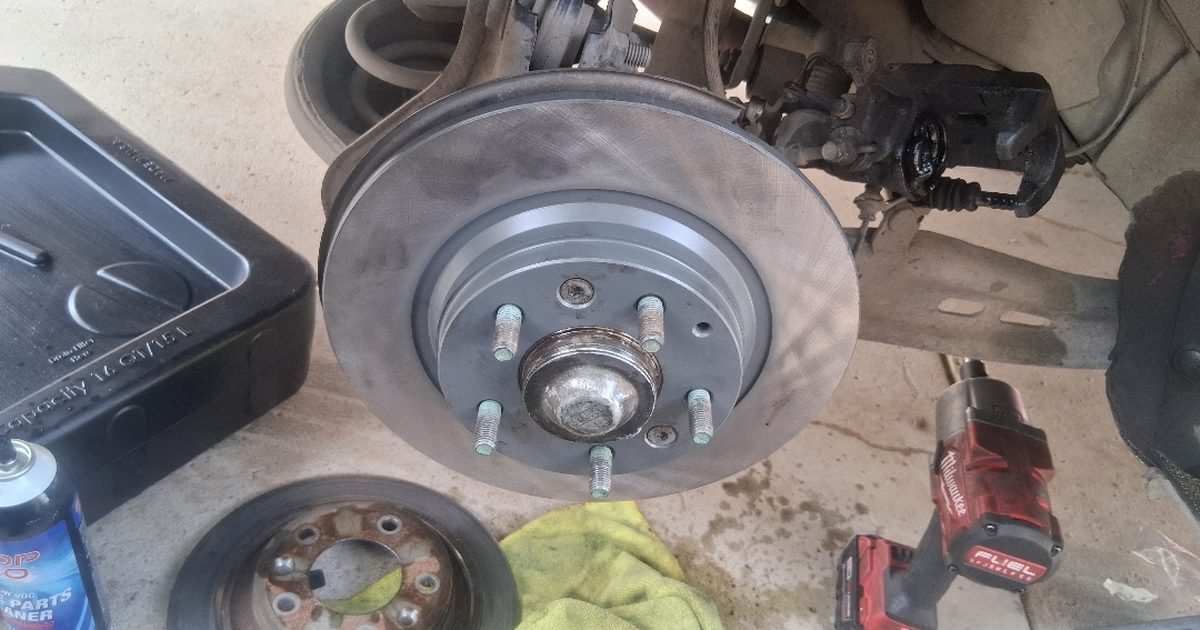
What are brake shoes, and how are they different from pads?
Brake shoes are curved friction linings that live inside a drum brake. When you press the pedal, a wheel cylinder pushes the shoes outward against the inside of a spinning drum, and the friction slows the wheel. Brake pads do the same job in a disc brake system, but they clamp inward onto a flat rotor instead of pressing outward into a drum.
Most modern vehicles use disc brakes on all four corners, but drum brakes survive on the rear axle of many compact cars, older sedans, vans, and some trucks because they are cheap to build and double easily as a parking brake. If your vehicle has drums, they are almost certainly on the rear — which is also why brake shoes wear far slower than front pads. The front brakes do 60 to 80 percent of the stopping work, so a set of rear shoes commonly lasts 80,000 to 120,000 miles.
What's included in a brake shoe replacement
A proper shoe job is always done in axle pairs — both rear wheels at the same time, never one side alone. Uneven friction side-to-side causes the car to pull or the rear to step out under hard braking.
A quality shop visit should include: new shoes for both sides, a new spring and hardware kit (the old springs lose tension after years of heat cycles), cleaning and adjustment of the self-adjuster mechanism, measurement of the drums against their stamped maximum diameter, inspection of the wheel cylinders for leaks, and adjustment of the parking brake. If the drums measure within spec, they can often be resurfaced or simply cleaned; if they are scored or beyond the wear limit, they must be replaced, which typically adds $60 to $150 in parts.
Be wary of a quote that is dramatically cheaper than the ranges on this page — it usually means the shop is reusing the old springs and hardware, which is the number one cause of noisy, grabby, or self-destructing drum brakes a few months later.
Why the price varies so much
Three things move the number: your vehicle, your location, and the condition of what comes off.
Vehicle: shoe sets for a compact car cost far less than heavy-duty truck shoes, and some vehicles bury the drum behind a pressed-on hub that adds labor time. Location matters because this is a labor-heavy job — the same two hours of work costs roughly 40 percent more in California than in Mississippi simply because shop labor rates differ that much. And condition is the wildcard: leaking wheel cylinders, seized adjusters, or worn-out drums discovered during the job all add parts and time. A good shop will show you the measurements and the old parts before adding anything to the bill.
Mobile mechanics are a strong option for this repair. Drum work needs hand tools, a jack, and experience — not a lift or an alignment rack — so a mobile tech can do it in your driveway, usually at a lower effective labor rate because there is no shop overhead.
How a mechanic does the job
The wheel and drum come off first — sometimes with penetrating oil and a puller if rust has welded the drum to the hub. The tech photographs or notes the spring arrangement (every make routes them slightly differently), then strips the old shoes, springs, and adjuster.
The backing plate gets cleaned and its contact pads lubricated, the adjuster is cleaned and threaded back freely, and the new shoes go on with the fresh hardware kit. The drum is measured with a drum micrometer against the maximum-diameter spec cast into it, then reinstalled. Finally the shoes are adjusted until they lightly drag, the parking brake is set, and the job is repeated on the other side. A conscientious tech finishes with a low-speed test drive and a handful of firm stops to seat the new linings.
How to save money on this repair
First, don't pay for it early: shoes wear slowly, and a free brake inspection will tell you how much lining is left. Second, get the drums measured before agreeing to replace them — drums that are within spec and lightly worn can stay. Third, compare a mobile mechanic quote against shop quotes; for driveway-friendly jobs like this, mobile pricing is often 10 to 20 percent lower for identical parts.
Skip the false economy of lining-only or hardware-reuse quotes. The $20 to $40 a hardware kit costs is the cheapest insurance in brake work.
Signs you need this repair
- Squealing, scraping, or grinding from the rear wheels, especially when braking gently
- A rhythmic thumping or pulsing felt through the pedal at low speed
- Parking brake needs to be pulled higher or pressed farther than it used to hold
- The car pulls or the rear feels loose under hard braking
- Brake pedal travels farther than normal before the car slows
- Rear wheels coated in fine black dust after highway driving
Cost by vehicle type
| Vehicle | Typical range | Notes |
|---|---|---|
| Compact / economy car | $180 to $445 | The most common drum-brake holdouts — rear shoes are a routine job. |
| Midsize sedan / small SUV | $190 to $460 | Mostly older model years; newer midsize cars use rear discs. |
| Full-size truck / large SUV | $215 to $520 | Larger drums and heavier hardware push parts cost up. |
| Luxury / European | $255 to $630 | Rare — most switched to four-wheel discs decades ago. Some use small drum-in-hat parking brake shoes. |
| Hybrid | $205 to $505 | Regenerative braking means shoes often last 100k+ miles. |
| Electric vehicle | $215 to $530 | Rare, but rear-drum EVs exist (VW ID.4). Regen braking means shoes may never wear out. |
| Diesel / heavy duty | $255 to $620 | Heavy-duty drum systems cost more in parts and labor time. |
Ranges assume national-average labor rates ($95, $140/hr) and quality aftermarket parts.
Cost by state
State ranges reflect typical independent-shop labor rates for a midsize vehicle.
Common questions
How long do brake shoes last?
Typically 80,000 to 120,000 miles — far longer than front pads, because the rear brakes only handle 20 to 40 percent of the stopping load. City driving with lots of stop-and-go, towing, or a dragging parking brake shortens that considerably.
Can I replace brake shoes myself?
It's doable with a spring tool kit, jack stands, and patience, but drum assemblies are the easiest brake job to get wrong — one misrouted spring and the brake can drag, grab, or fail to self-adjust. If you DIY, do one side at a time so the assembled side is your reference.
Do I need new drums with new shoes?
Not automatically. Drums have a maximum inside diameter cast into them; if they measure within spec and aren't scored or heat-cracked, they can be resurfaced or reused. Expect drums to add $60–$150 in parts if yours are worn past the limit.
Why do shops replace shoes on both rear wheels at once?
Friction must be equal side-to-side or the car pulls and the rear can slide in a hard stop. Every reputable shop treats shoes as an axle set — if someone offers to do one wheel, find a different shop.
Is it safe to drive with worn brake shoes?
For a short while, yes — the front brakes do most of the work. But stopping distances grow, the parking brake weakens, and once the lining wears through, the metal shoe grinds the drum, roughly doubling the repair cost. Book it within a few weeks of the first symptoms.
Can a mobile mechanic replace brake shoes at my home?
Yes — drum brake service needs hand tools and a jack, not a lift, which makes it one of the best repairs to have done in your driveway. Mobile quotes often come in 10–20 percent under shop quotes for the same parts.
Related Repair Guides
More Brakes Repair Costs
Sources and further reading
Primary sources behind this page. Federal safety, emissions and consumer-protection references, worth reading before you authorize any repair.
- NHTSA recall & complaint lookup Check any symptom against open recalls and technical service bulletins before paying for a repair.
- NHTSA TireWise Federal guidance on tire age, load ratings, pressure and tread depth.
- FTC auto repair basics Your rights on estimates, authorization and disputed repair bills.
- DOE Alternative Fuels Data Center: electric vehicles Federal reference on EV drivetrains, batteries and charging.
Need Work Done? Get a Free Quote.
Tell us what the car is doing. A local mechanic calls you back, most requests get a call back the same day. No fee, no obligation.