What the Job Is and What You Are Paying For
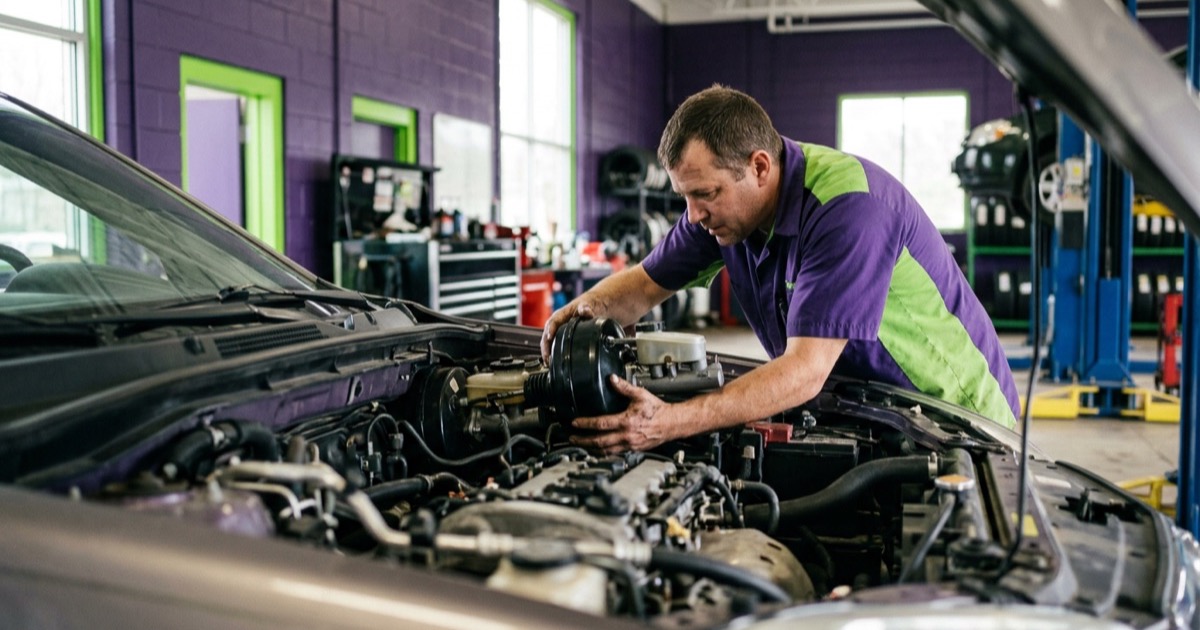
Most gas cars use a vacuum brake booster. It is a round metal can, often 8 to 11 inches across, mounted to the firewall where the brake pedal pushes through. Engine vacuum pulls on a rubber diaphragm inside the can, and that pull adds force when you press the pedal.
To replace it, the shop unbolts the master cylinder from the front of the booster. On many cars they can pull the master cylinder forward with the brake lines still attached, which keeps air out of the system. Then they disconnect the pushrod from the brake pedal inside the car and remove four nuts under the dash.
The new booster goes in, the pushrod length gets checked and set, and the master cylinder goes back on. If the lines were opened, the brakes get bled. The shop then road tests the car and checks for a vacuum leak at idle.
A remanufactured vacuum booster for a common car costs about $150 to $400. New aftermarket units cost a little more. Factory boosters can cost twice that. Labor is usually one and a half to four hours.
Why the Price Varies From Car to Car
Access is the first factor. On some cars you can see the booster the moment you open the hood. On others it hides behind the engine, under the wiper cowl, or behind wiring and the air box. Inside the car, some pedal setups are easy to reach and some need lower dash panels removed.
The booster type is the second factor. A vacuum booster is the common, cheaper kind. A hydraulic booster on a diesel or heavy truck uses power steering pressure, costs more and needs the power steering system bled after. An electric booster on a hybrid or EV is the priciest and needs a scan tool.
Whether the master cylinder comes off cleanly matters. If the shop can slide it forward without opening the lines, the job is faster and needs only a quick check. If the lines must be opened, add a bleed.
Parts tier shapes the bill. Remanufactured boosters are the norm and work well. Factory parts cost more. Very cheap boosters can come with the wrong pushrod length or a weak check valve.
Dealers charge the most per hour and often sell factory parts only. Independents and mobile mechanics usually use quality remanufactured units.
What Usually Gets Done at the Same Time
Booster jobs have a few smart add ons and a few common upsells.
Worth it almost every time is a new check valve and vacuum hose. The check valve is the small one way valve where the hose plugs into the booster. Many new boosters include one. The hose is cheap and old ones crack.
Worth it if the lines had to be opened is a brake fluid flush. Fresh fluid is cheap, and the system is already open.
Worth checking is the master cylinder. If brake fluid has leaked into the booster from a bad rear master cylinder seal, the new booster will fail too. A good shop looks for fluid inside the old booster before deciding.
On hydraulic booster trucks, worth it is a power steering flush and new hoses if they are seeping. Dirty fluid kills hydraulic boosters.
Usually an upsell is a new master cylinder when there is no leak and the pedal does not sink. A hard pedal is a booster problem. A sinking pedal is a master cylinder problem.
- New check valve and vacuum hose: yes, cheap and often included
- Brake fluid flush: yes if the lines were opened or fluid is old
- Master cylinder: only if it leaks into the booster or the pedal sinks
- Power steering flush on hydraulic boosters: yes
- Master cylinder on a firm pedal with no leak: usually skip
How to Tell If the Booster Is Really Bad
A hard brake pedal is the main sign. The car still stops, but you have to push much harder than before.
There is a simple test you can do at home. With the engine off, pump the brake pedal five or six times to use up any stored vacuum. Hold firm pressure on the pedal and start the engine. On a good booster, the pedal drops a little under your foot as vacuum builds. If it does not move at all, the booster or its vacuum supply is not working.
Next, check the vacuum supply before you blame the booster. A cracked vacuum hose, a stuck check valve or a weak engine vacuum can all make a good booster act bad. On diesels and some turbo engines, a failed vacuum pump causes the same hard pedal.
Listen under the dash with the engine running. A hiss that gets louder when you press the pedal often means a torn diaphragm inside the booster. A torn diaphragm can also make the idle drop when you brake.
A soft or sinking pedal is not a booster problem. That points to air in the lines, a leak or a worn master cylinder.
On a hybrid or EV, a hard pedal with a brake warning light usually means a fault in the electric brake unit, and a scan tool reading is the first step.
Questions to Ask Before You Approve the Quote
These questions help you make sure the shop tested the right part and quoted the whole job.
- Did you test the vacuum supply and check valve before calling the booster bad?
- Is my booster vacuum, hydraulic or electric?
- Is the booster remanufactured, new aftermarket or factory?
- Will you set the pushrod length on the new booster?
- Do the brake lines need to be opened, and is a bleed or flush included?
- Did brake fluid leak into the old booster from the master cylinder?
- What parts need to come off to reach it on my car?
- What is the warranty on the booster and the labor?
Can a Mobile Mechanic Do It?
Often, yes. Most vacuum booster jobs need only hand tools and do not need a lift, since the work is under the hood and under the dash. A mobile mechanic can do many of them in a driveway in two to four hours.
A mobile tech also saves you from driving a car with a hard brake pedal across town, which is a real safety plus.
The jobs better left to a shop are electric brake boosters on hybrids and EVs that need dealer level software, and some European cars where the cowl and engine parts have to come out.
Give the mechanic your year, make, model and engine when you call. Ask whether they will bring the booster with them so it is a one visit job.
How Long a Brake Booster Lasts
Most vacuum boosters last 150,000 miles or the life of the car. When they fail early, there is usually a reason.
The most common reason is brake fluid leaking past the rear seal of the master cylinder into the booster. The fluid eats the rubber diaphragm. If you see fluid where the master cylinder meets the booster, fix it early.
On hydraulic boosters, dirty power steering fluid wears the seals. Keep the fluid clean and full.
An engine oil leak or a bad PCV valve can also send oil vapor through the vacuum hose into the booster. A new check valve and a working PCV system help protect the new part.
Signs you need this repair
- Brake pedal that is hard to push and needs a lot of force to stop
- Longer stopping distances than normal
- Hissing sound under the dash when you press the brake
- Engine idle drops or stumbles when you press the brake
- Pedal does not drop when you start the engine with your foot on it
- Check engine light with a lean or vacuum leak code
- Brake warning light on hybrids and EVs with electric boosters
Cost by vehicle type
| Vehicle | Typical range | Notes |
|---|---|---|
| Compact / economy car | $310 to $1,070 | Most compacts use a vacuum booster with fair access once the air box or battery tray is moved. Expect the low to middle part of the range with a remanufactured booster. |
| Midsize sedan / small SUV | $340 to $1,160 | Midsize cars are similar to compacts, but transverse V6 engines can crowd the booster. Some models need the wiper cowl or a brace removed, which adds about an hour. |
| Full-size truck / large SUV | $405 to $1,365 | Gas trucks usually have a large dual diaphragm vacuum booster that is easy to reach. Many diesel and heavy duty trucks use a hydraulic booster run off the power steering pump instead, which is a different part with higher cost. |
| Luxury / European | $505 to $1,690 | European cars often bury the booster under the cowl, behind the engine cover and wiring. Parts cost more and labor often lands at the top of the range or above it. |
| Hybrid | $375 to $1,275 | Many hybrids use an electric brake actuator or booster instead of a vacuum booster because the engine shuts off often. These parts can cost $800 to $2,000 or more and need a scan tool bleed and calibration. |
| Electric vehicle | $395 to $1,335 | EVs have no engine vacuum, so they use an electric booster or an integrated brake unit. Replacement is usually a dealer or specialist job because of the cost of the unit and the setup steps. |
| Diesel / heavy duty | $485 to $1,630 | Diesels make little vacuum, so most use a hydraulic booster fed by the power steering pump or a separate vacuum pump. When the booster leaks, power steering fluid often shows up on the firewall or the steering feels odd too. |
Ranges assume national-average labor rates ($95, $140/hr) and quality aftermarket parts.
Cost by state
State ranges reflect typical independent-shop labor rates for a midsize vehicle.
Common questions
How much does it cost to replace a brake booster?
Most drivers pay about $350 to $1,000 at an independent shop with a remanufactured vacuum booster. Hydraulic boosters on heavy trucks and electric boosters on hybrids and EVs cost more, and a dealer usually adds a few hundred dollars.
Can I drive with a bad brake booster?
You should not. The brakes still work, but you need much more force to stop, and in an emergency most drivers do not press hard enough. Drive it only as far as you need to get it fixed, or have a mobile mechanic come to you.
How do I know if my brake booster or master cylinder is bad?
A hard pedal usually means the booster. A soft pedal that sinks slowly toward the floor usually means the master cylinder. Fluid leaking where the two parts meet can mean both need attention.
Can a bad brake booster cause a rough idle?
Yes. A vacuum booster with a torn diaphragm leaks air into the engine. The idle may drop or run rough, especially when you press the brake, and you may get a lean code.
How long does it take to replace a brake booster?
About one and a half to four hours on most cars. Cars with the booster in plain view are quick. Cars that need the wiper cowl, air box or dash panels removed take longer.
Do you have to bleed the brakes after replacing the booster?
Not always. If the shop slides the master cylinder forward without opening the lines, no air gets in. If the lines are opened, the brakes must be bled before the car is safe to drive.
Is a brake booster worth fixing on an old car?
Yes, in most cases. A hard pedal is a safety problem, and a remanufactured booster keeps the repair in the few hundred dollar range on most cars. Only a car that is near the end of its life for other reasons should be parked instead.
Related Repair Guides
More Brakes Repair Costs
Sources and further reading
Primary sources behind this page. Federal safety, emissions and consumer-protection references, worth reading before you authorize any repair.
- FMVSS 135 Light Vehicle Brake Systems (49 CFR 571.135) The federal standard that sets brake performance rules for cars, including tests with power assist failed.
- FMVSS 105 Hydraulic and Electric Brake Systems (49 CFR 571.105) The federal brake standard for heavier vehicles, many of which use hydraulic boosters.
- fueleconomy.gov hybrid technology DOE and EPA explanation of regenerative braking and why hybrids use different brake hardware.
Need Work Done? Get a Free Quote.
Tell us what the car is doing. A local mechanic calls you back, most requests get a call back the same day. No fee, no obligation.