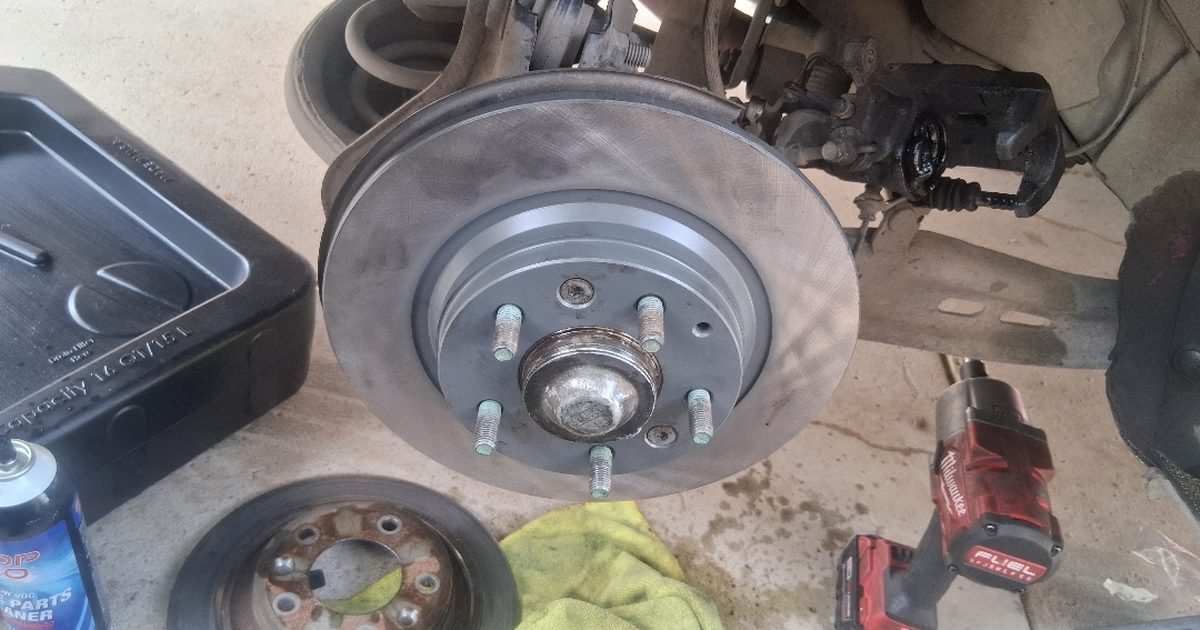
What the caliper does, and how it fails
Press the brake pedal and you pressurize fluid that has one destination: the caliper pistons at each wheel, which convert that pressure into clamping force — pads against rotor, motion into heat. Most cars use sliding calipers: pistons on one side push the inner pad while the caliper body slides on lubricated pins to draw the outer pad in evenly. It's simple, robust, and dependent on everything moving freely.
Failure is corrosion and age, not exotic breakage. The slide pins seize when their grease dries and water creeps past torn boots — the caliper stops centering, wears one pad to nothing while the other loafs, and drags. The piston's chrome surface pits behind a torn dust boot; its square-section seal stiffens with age and heat; and the piston starts sticking in its bore — applying fine but not fully releasing. Internally, a deteriorating seal can even act as a one-way valve, holding pressure the pedal released. And the bleeder screw — the little valve that makes service possible — rusts solid on neglected calipers, sometimes single-handedly turning a rebuild into a replacement.
The symptoms follow the mechanics: a pull toward the strong side under braking, a car that wanders toward the dragging side cruising, one wheel roasting hot after a drive, uneven pad wear discovered at inspection, and the drag's quiet tax on fuel economy.
Sticking pins vs. seized piston — not every 'bad caliper' needs a caliper
Here's the honest sorting that saves money: a large share of dragging-brake complaints are seized slide pins or corroded pad hardware, not the caliper's hydraulics at all. Pins cleaned and re-greased, rusty pad abutments wire-brushed, new hardware clips, boots replaced — that's a service, not a replacement, and on a caliper whose piston still moves freely it's a complete fix at a fraction of the cost. Any brake job worth its invoice includes exactly this maintenance on healthy calipers.
The hydraulic failures are the real replacements: a piston that's pitted, sticking in its bore, or leaking fluid past the seal (wetness inside the wheel, dropping reservoir, soft pedal) — that caliper is done. A frozen bleeder screw on an aging caliper often tips the same direction, since you can't service what you can't bleed. One more impostor worth naming: a collapsed rubber brake hose can act as a check valve and mimic a seized caliper perfectly — a good tech cracks the bleeder to test (pressure releases = hose problem, not caliper) before condemning anything.
Ask which failure yours actually is. "Sticky caliper" covers a $40 service and a $300 replacement, and the difference is a ten-minute inspection.
New, remanufactured, or loaded — choosing the part
Remanufactured calipers are the industry standard and a genuinely good product: your old caliper (or one like it) rebuilt with new seals, boots, bleeder, and a machined or replaced piston, sold at a fair price with your old unit returned as the core. For most vehicles this is the value pick, with the familiar reman rule — established brands over mystery boxes.
New calipers cost more and make sense where reman quality for your model is spotty, on newer vehicles, or when a reman core simply isn't available. "Loaded" calipers arrive with pads and hardware installed — convenient, though the included pads are usually mid-grade; if you care about pad choice, buy the caliper bare and pick your friction.
The pairs question, honestly: unlike struts, calipers don't mandate axle pairs — a healthy opposite-side caliper doesn't need replacing on principle. But braking balance matters, so the practical rule is: replace one if the other side inspects healthy and the pads wear evenly; replace both when the survivor shows its own early symptoms, when pads will be replaced across the axle anyway (mismatched clamping ages new pads unevenly), or on high-mileage rust-belt cars where the second caliper's future is legible. Let inspection, not superstition, decide.
What the job should include
The swap: wheel off, brake line disconnected at the caliper (with a new copper sealing washer where banjo fittings are used — reused washers are the classic slow leak), old caliper unbolted, new one mounted, pads and hardware installed with lubricated slides, line reconnected, and the system bled until fluid runs clear and bubble-free at that corner. Torque on brackets and line fittings is specification work, not feel work.
Bleeding is half the job's value. Opening the circuit admits air; air compresses; a spongy pedal after caliper work means the bleed wasn't finished. Better shops take the opportunity to flush through fresh fluid entirely — brake fluid absorbs water over years, old fluid corrodes calipers from the inside (often the reason this caliper died), and a full flush during a caliper job costs little more than the bleed you're already paying for. Rear calipers with electronic parking brakes add the scan-tool retract/reset step — worth confirming the shop is equipped for before booking.
Verification is a firm pedal, no leaks at fittings after a pressure-hold, even pad contact, a test drive with straight-line stops, and — the detail that separates thorough from fast — a temperature check across wheels afterward to confirm nothing drags.
How to save money on this repair
Fund the fluid, starve the failure: brake fluid flushed on schedule (every 2–3 years) is the single best caliper preservative, because internal corrosion from waterlogged fluid is what kills pistons and bores. It's a cheap service that protects four expensive corners plus the master cylinder and ABS unit.
At repair time, insist on the sorting inspection — pins-and-hardware service versus true hydraulic failure — and on the hose check before any caliper is condemned. Choose name-brand reman over bargain units, and time caliper work with pad replacement when possible: the labor overlaps almost entirely, and fresh pads deserve a straight-clamping caliper anyway.
Hybrid and EV owners get a special note: your calipers rust from disuse, not wear — an occasional firm stop from speed (safely, on an empty road) exercises the pistons, and periodic slide-pin service at tire rotations is the cheapest brake money you'll ever spend. And for any car in the salt belt, the humble annual cleaning-and-lubrication of caliper hardware is the difference between calipers that retire with the car and calipers you buy in pairs every few winters.
Signs you need this repair
- The car pulling to one side under braking — toward the strong side, away from the weak one
- One wheel much hotter than the others after a drive, sometimes with a hot metallic or burning smell
- A burning smell or smoke from a wheel — a dragging caliper building serious heat
- Pads on one wheel worn dramatically faster or more unevenly than the rest
- The car feeling held back, with fuel economy down — constant drag you've stopped noticing
- A soft or sinking pedal with fluid wetness at the inside of a wheel — a leaking caliper
- Clunking over bumps or a rhythmic scrape from a caliper loose on worn slides
Cost by vehicle type
| Vehicle | Typical range | Notes |
|---|---|---|
| Compact / economy car | $170, $490 | Single-piston sliding calipers with cheap, plentiful reman replacements — the least expensive version, and often barely more than rebuilding your own. |
| Midsize sedan / small SUV | $185, $530 | Routine sliding-caliper work. Rear calipers with integrated parking brake mechanisms cost more and add a wrinkle: electronic parking brake models need a scan tool to retract before service. |
| Full-size truck / large SUV | $215, $620 | Bigger twin-piston calipers at higher parts prices, offset by easy access. Tow rigs generate serious brake heat — quality reman or new units, not the cheapest shelf option, pay off here. |
| Luxury / European | $270, $765 | Multi-piston fixed calipers can cost several times a basic sliding unit, and electronic parking brake integration is near-universal on rears. Painted-caliper cosmetic matching is a real (if optional) line item people care about. |
| Hybrid | $205, $585 | Regenerative braking means friction brakes are used lightly — which paradoxically causes caliper problems: slides and pistons seize from disuse and corrosion rather than wear. Hybrid calipers benefit from periodic exercise and service more than replacement mileage suggests. |
| Electric vehicle | $215, $610 | The hybrid pattern, amplified: EVs brake mostly with the motor, and lightly-used calipers in wet or salty climates are notorious for seizing from sheer inactivity. Caliper service on an EV is usually corrosion-driven; periodic cleaning and lubrication of slides is the prevention. |
| Diesel / heavy duty | $260, $740 | Heavy trucks mean heavy braking loads and bigger, pricier calipers; dually and commercial applications go beyond this estimate. Seized hardware from plow-truck winters is standard fare. |
Ranges assume national-average labor rates ($95, $140/hr) and quality aftermarket parts.
Cost by state
State ranges reflect typical independent-shop labor rates for a midsize vehicle.
Common questions
Can I drive with a sticking caliper?
Short and gentle to the shop, with windows down for the smell test — but no farther. A dragging caliper builds heat continuously: glazed pads and a warped rotor are the cheap outcomes, boiled fluid (a pedal that goes soft mid-drive) and wheel-end fires are the expensive ones. A hard pull under braking or a smoking wheel means stop and get it towed. Brakes are the wrong system for optimism.
Do calipers have to be replaced in pairs?
No — that rule belongs to struts and pads, not calipers. Replace one if its opposite number passes inspection and wears its pads evenly. Replace both when the survivor shows symptoms of its own, when it's a high-mileage rust-belt car whose second caliper is clearly next, or when you want perfectly matched clamping on a fresh set of axle pads. It's an inspection call, not a commandment.
Why does the quote include a brake fluid flush?
Two honest reasons: the circuit must be opened and bled to replace a caliper anyway, so completing the flush costs little extra — and waterlogged old fluid is very likely what corroded your caliper from the inside in the first place. Fresh fluid protects the new caliper, its three siblings, and the expensive ABS hardware upstream. It's the least padded line on the invoice.
My mechanic said it's the slide pins, not the caliper. Is that a real fix?
Completely — and it's the cheaper diagnosis you want to hear. Seized slide pins cause most 'sticky caliper' symptoms, and cleaning, re-greasing, and re-booting them restores proper function on a caliper whose piston is healthy. It's standard maintenance that should accompany every pad job. A shop that services pins instead of auto-selling calipers is showing you their character.
What's different about rear calipers with electronic parking brakes?
The rear caliper contains (or carries) the parking brake mechanism, and on electronic systems the piston must be commanded into service mode with a scan tool before pads or calipers come off — forcing it damages the actuator. Parts cost more and the job takes longer. It's routine work for equipped shops; just confirm yours has the tooling, especially with mobile service.
Can a mobile mechanic replace a brake caliper?
Yes — good mobile techs carry pressure or vacuum bleeders and do calipers in driveways routinely; it's a well-contained job. The requirements are non-negotiable though: a proper bleed (never 'good enough'), a torque wrench, and the scan tool if your rear calipers are electronic-parking-brake type. Ask about all three when booking, and expect a firm-pedal test drive before they leave.
Related repair guides
Sources and further reading
Primary sources behind this page. Federal safety, emissions and consumer-protection references, worth reading before you authorize any repair.
- NHTSA recall & complaint lookup Check any symptom against open recalls and technical service bulletins before paying for a repair.
- NHTSA TireWise Federal guidance on tire age, load ratings, pressure and tread depth.
- FTC auto repair basics Your rights on estimates, authorization and disputed repair bills.
- DOE Alternative Fuels Data Center: electric vehicles Federal reference on EV drivetrains, batteries and charging.
Need work done? Get a free quote.
Tell us what the car is doing. A local mechanic calls you back, most requests get a call back the same day. No fee, no obligation.