What Brake Repair Costs
Shops that post a brake job price online charge a median of $189. Across the 160 independent shop websites we found with a posted brake job price, the middle half sit between $140 and $305. Most of those prices are per axle, which means one pair of wheels, either the front or the rear. The posted prices were crawled in October 2026, and chains and dealers are left out.
A brake job is not one repair. It is a name that shops use for several different jobs, so the number you see depends on what the shop means. Two other prices help show the difference. A total of 82 shops post a price for pads and rotors together, and the middle half of those sit between $225 and $400, with a median of $312. For pads alone, 197 shops post a price per axle, with a median of $180 and the middle half between $135 and $259.
So the cost climbs as the job gets bigger. Pads alone sit at the low end. Pads and rotors together cost more, since the rotors add parts and labor. Calipers, brake lines, a master cylinder or a fluid flush are separate repairs that add to the bill when they are needed.
This page is the overview that helps you figure out which brake job you need. Our pad guide covers the pad job in detail, and the rotor guide covers rotors. Start here to match your symptoms to a repair, then go to the guide for that repair.
Treat these as guide numbers. Your car, the parts you choose and where you live all change the final quote. The most useful thing you can ask any shop is what the price covers, which wheels it includes and whether rotors are part of it.
Which Brake Job Do You Need
Start with the sound and the feel. A high squeal when you brake lightly is often the wear indicator on the pads telling you they are getting thin. That usually means a pad job, and if you catch it early, you may save the rotors. A deep grinding noise means the pads are gone and metal is touching metal. At that point the rotors are almost certainly damaged, so plan on pads and rotors together.
A pulsing pedal or a shake in the steering wheel when you brake points to rotors that are warped or worn unevenly. A pull to one side can mean a stuck caliper or a worn hose. A soft or spongy pedal suggests air or moisture in the brake fluid, or a leak somewhere in the lines. A pedal that sinks slowly to the floor can mean a failing master cylinder. These are not pad problems, and they need a proper inspection.
A brake warning light on the dash can mean low fluid, a problem with the parking brake or a fault in the system. The light for the anti lock system is a separate warning. Both deserve a scan and a look.
If you have no sound but the car feels fine, the best plan is still a brake inspection at the time of any tire rotation. A tech can measure the pad thickness and check the rotors, hoses and fluid while the wheels are off.
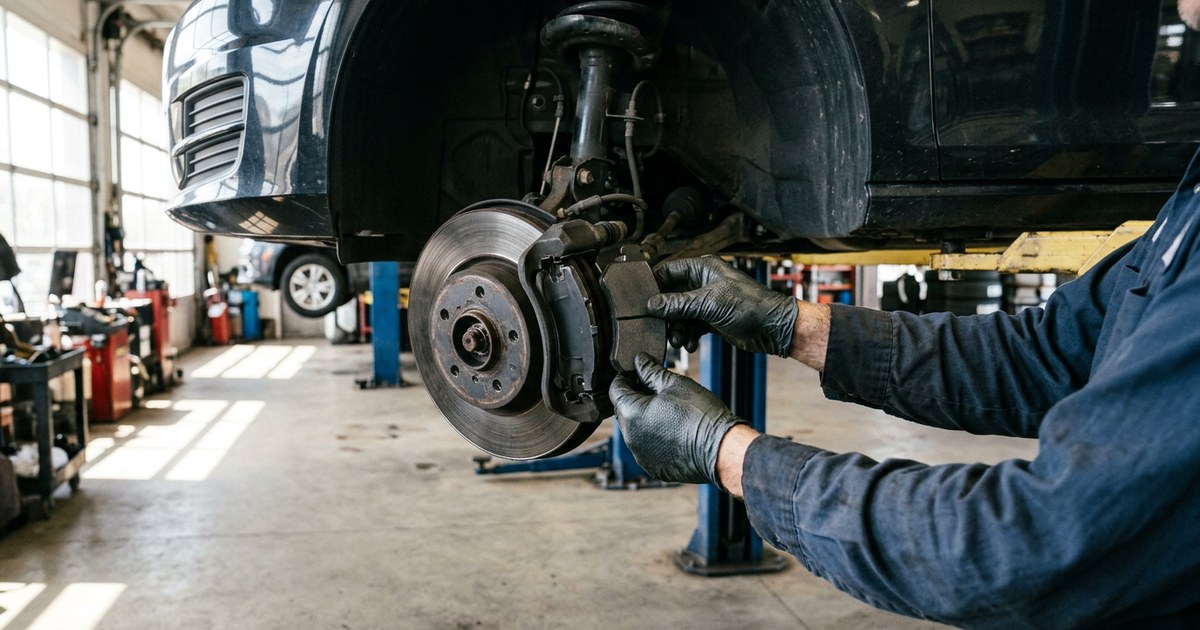
The main brake jobs come down to a few parts. Pads are the friction blocks. Rotors are the discs the pads squeeze. Calipers are the clamps that push the pads. Brake fluid carries the pressure from your foot to the wheels. Each has its own guide on this site, and each can be the cause of a symptom that sounds like another one.
Ask the shop to show you the worn part. A good tech is happy to hold it up and point.
What Goes Wrong With Brake Repair
Of 23,409 public shop reviews we counted, 788 name brakes, and 16.1 percent of those are 1 or 2 stars. Across all reviews that share is 11.2 percent, so brakes go badly more often than the average repair job. These reviews make up 3.4 percent of everything we counted.
The complaints fall into a few groups. The biggest is the upsell. A customer comes in for a squeal and leaves with a quote for rotors, calipers and a fluid flush. Sometimes that quote is right, and sometimes it is not, and many owners feel they cannot tell the difference. The second is the low price that does not stay low, where a posted brake special covers only one axle or only the cheapest pads. The third is the repair that does not hold, such as noise coming back or a pedal that still feels wrong after the visit. The fourth is a lack of explanation, with no worn part shown and no measurements given.
Owners talk about this a lot in public. In Reddit threads about brakes, the median dollar figure people mention is $900. That tells you what many owners expect a brake surprise to cost.
You can protect yourself with a few plain steps. Ask the shop for the pad thickness and the rotor condition in writing, and ask for the old parts back. Ask whether the price covers one axle or both. Ask which items are urgent today and which could wait. A shop that can answer all of that is working from measurements.
If a quote feels large, get a second opinion before you approve it. A brake inspection is a small cost next to a repair you did not need, and next to a repair you put off too long.
Why Prices Vary and How to Read a Quote
The spread from $140 to $305 comes from three things. The first is what the shop counts as a brake job. A pad only price and a pads and rotors price are far apart, so check the line items. The second is the car. Larger vehicles, performance cars and luxury models use bigger parts that cost more, and some need special tools or software for electronic parking brakes. The third is the shop. Shops that post a labor rate charge a median of $129 an hour across 207 shops, and a shop with higher overhead will charge more for the same work.
Parts choices matter as well. Cheap pads and rotors can wear fast, make noise or warp, while better ones cost more and tend to last longer. Ask what brand and grade the quote uses, and whether the parts have a warranty. A short warranty on a cheap part is a warning sign.
Read the quote with these questions in mind. Does it say front, rear or both? Does it include rotors, or only pads? Does it list brake fluid, hardware kits or caliper service? Is there a charge to resurface the rotors, and is that even possible, since many rotors are too thin to be machined? A clear quote answers each of these without being asked.
Watch for vague language. A line that says brake service with no detail is not a quote you can compare. Ask the shop to break it out.
The most useful comparison is the same job at two or three shops. Ask each for a price on the same parts and the same axle. If one is far lower, find out why. It might be a smaller scope, lower grade parts or a shop that gets a better deal. Those are very different reasons, and you should know which one you are paying for.
How to Save Money on Brake Repair
The best way to save on brakes is to catch the problem early. Pads are the cheapest part of the system, and they protect the rotors. If you act on the first squeal, you often end with a pad job alone. If you wait for the grinding, you will most likely pay for rotors too, and sometimes for a caliper that was damaged by the extra heat.
Ask for a brake check each time the tires are rotated. The wheels are already off, so a tech can measure pad thickness at almost no added cost. Many shops include this in the visit. It gives you a number to plan around so a repair does not come as a surprise.
Get the full job priced, then ask what can safely wait. A good shop will tell you which items are urgent for safety and which are coming up soon. Pads that are nearly worn out cannot wait. A fluid flush that is due in a few months can. You are in charge of the order, and a straight answer helps you spread out the cost.
Compare two or three quotes for the same parts on the same axle. Shops that post prices make this easy, and a quick phone call will cover the rest. Be wary of the lowest number if it leaves out rotors or hardware you will need.
Mobile mechanics can do many brake jobs in your driveway, which saves a tow or a trip and often costs less. They cannot do every brake repair, since some need a lift or a press, but pads and rotors are well within reach for most.
After any brake work, ask how to bed in the new pads, and follow the steps. A proper bed in keeps the brakes quiet and helps the pads last.
Signs you need this repair
- Squealing or squeaking when you brake lightly
- Deep grinding noise when you brake
- Pulsing pedal or shaking steering wheel when braking
- Car pulls to one side when braking
- Soft, spongy or sinking brake pedal
- Brake warning light on the dash
- Burning smell near a wheel after driving
- Longer stopping distance than before
More Questions Drivers Ask
Can I spray WD-40 on brakes to stop squeaking?
No. Oil on pads or rotors reduces braking and can cause a dangerous loss of stopping power. If you spray a lubricant on them by mistake, have a shop clean and inspect the brakes. A squeak is a sign to check the pads, not to coat them.
Do I need to replace pads and rotors together?
Not always, but often. If the pads are worn evenly and the rotors are smooth and thick enough, pads alone can be fine. If you hear grinding or feel pulsing, the rotors are usually worn and should be replaced with the pads.
How often should brake fluid be changed?
Follow the schedule in your owner's manual. Brake fluid absorbs moisture over time, which lowers its boiling point and can rust parts from inside. A flush is a routine, low cost service that protects the calipers, lines and master cylinder.
What should I ask a shop before I approve a brake job?
Ask which wheels it covers, whether rotors are included and what the pad and rotor measurements are. Ask for the grade and warranty on the parts, and ask to see the worn parts. A clear answer to each means you are comparing real quotes.
Related Repair Guides
More Brakes Repair Costs
Sources and further reading
Primary sources behind this page. Federal safety, emissions and consumer-protection references, worth reading before you authorize any repair.
- NHTSA vehicle recalls Check your car by VIN for open brake recalls, which are repaired at no charge.
- FTC auto repair basics Your rights on estimates, authorization and disputed repair bills.
Need Work Done? Get a Free Quote.
Tell us what the car is doing. A local mechanic calls you back, most requests get a call back the same day. No fee, no obligation.