What the Job Is and What You Are Paying For
Each wheel has a toothed ring or a magnetic ring that spins with it. The wheel speed sensor sits a tiny distance from that ring and reads each tooth or magnet as it passes. The ABS computer uses those signals to see when a wheel is about to lock or spin.
A proper job starts with a scan tool. The shop reads the ABS codes and watches live wheel speed data while the car rolls. The bad wheel shows zero or a jumpy reading.
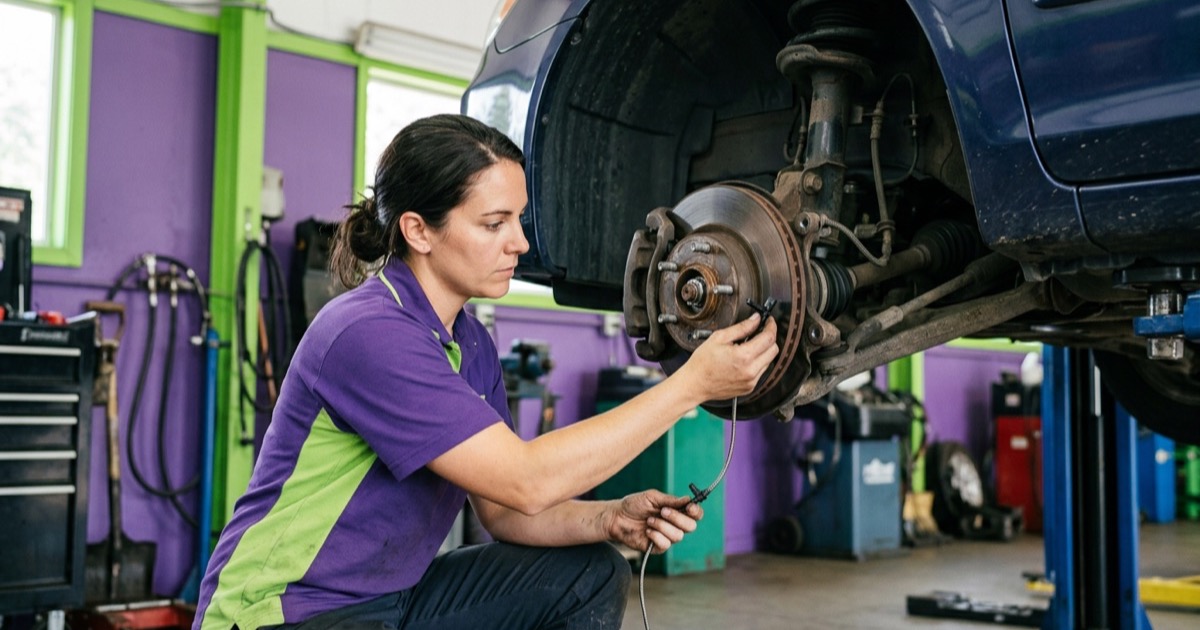
Then they remove the wheel, unplug the sensor, unbolt it, clean the mounting hole and install the new sensor. The wire gets clipped back in its brackets so it cannot rub on the tire or the axle. Last, the codes get cleared and the car gets a test drive to confirm all wheels read the same.
Most of the price is labor and diagnosis. Aftermarket sensors for common cars cost $20 to $80. Factory sensors cost more. Many shops charge a diagnostic fee, about one hour, that is sometimes credited if you approve the repair.
Why the Price Varies From Car to Car
Sensor design is the biggest factor. A bolt in sensor that comes out clean is a quick job. A sensor built into the wheel bearing hub means buying the whole hub, which can triple the bill.
Rust is next. Sensors sit in aluminum or iron knuckles right behind the brakes, where water and salt collect. A seized sensor may break off and need to be drilled or pressed out.
Wire length and routing matter. Some sensors plug in right at the wheel. Others run a long wire up into the wheel well or under the car, held by many clips.
Parts tier changes the price. Factory sensors can cost $100 to $250. Good aftermarket sensors often cost a third of that. Very cheap sensors sometimes give weak signals and bring the light right back.
The shop type matters too. Dealers charge more per hour and often add a separate diagnostic fee. Independents and mobile mechanics with a scan tool can usually test and replace a sensor in one visit.
What Usually Gets Done at the Same Time
Most wheel speed sensor jobs are simple, but a few add ons are worth a look.
Worth it when the tone ring is cracked or rusty is a new tone ring or the axle or hub that carries it. A cracked ring gives a bad signal even with a new sensor.
Worth it when the wheel bearing is noisy or loose is a new hub bearing, especially if the sensor reads the magnetic ring inside the bearing seal. A worn bearing lets the ring wobble and throws off the signal.
Worth it when the wire is chafed is a wiring repair or a sensor with a new pigtail. Many failures are a broken wire, not a bad sensor.
Usually an upsell is replacing all four sensors when only one has a code. Sensors do not wear out in sets like brake pads do.
Also usually an upsell is a full ABS module when the code points to one wheel. Test the sensor and wire first.
- Cracked or rusty tone ring: replace it, or the light comes back
- Worn wheel bearing with a built in magnetic ring: replace with the sensor
- Damaged or chafed sensor wire: repair or replace with a new pigtail
- All four sensors at once: usually skip
- ABS module for a single wheel code: test the sensor and wire first
Make Sure It Is Really the Sensor
An ABS light means the computer saw a problem, not that a sensor is bad. Diagnosis comes first.
The code tells you which wheel and what kind of fault. A code for an open or shorted circuit often points to a broken wire or a bad connector. A code for a signal that drops out at speed can point to a dirty sensor tip, a cracked tone ring or a worn bearing.
A good shop watches live data. All four wheels should read close to the same speed on a straight road. One that reads zero or jumps around is the problem corner.
A quick visual check helps too. Look for a wire that is cut, melted on the exhaust, rubbed through on the tire or pulled loose from a clip. Look for metal shavings or rust stuck to the sensor tip, which can weaken the signal. Sometimes cleaning the tip fixes it.
Other things set ABS lights too. Low brake fluid, a bad brake light switch, a weak battery, the wrong tire size on one corner or a failing ABS module can all turn the light on.
Questions to Ask Before You Approve the Quote
These questions help you pay for a fix, not a guess.
- Which wheel has the fault, and what is the exact code?
- Did you check live wheel speed data on a test drive?
- Did you check the wiring and connector before calling the sensor bad?
- Is the sensor separate, or is it built into the hub bearing on my car?
- Is the tone ring cracked, rusty or packed with debris?
- Are you using a factory or a quality aftermarket sensor?
- Is the diagnostic fee credited toward the repair?
- Will you clear the codes and confirm the light stays off after a road test?
Can a Mobile Mechanic Do It?
Yes. This is one of the best jobs for a mobile mechanic. It needs a jack, stands, hand tools and a scan tool that reads ABS codes and live data. Most bolt in sensors are done in a driveway in under an hour per wheel.
If the sensor is part of the hub bearing, many mobile techs can still do it on cars with bolt on hubs. Press in bearings need a shop press, so those go to a shop.
Make sure the mobile tech has a scan tool that reads ABS, not just engine codes. A basic code reader will not see ABS faults on most cars.
How Long a Wheel Speed Sensor Lasts
Many wheel speed sensors last the life of the car. The ones that fail usually fail from heat, rust, road debris or a damaged wire.
Careless brake work can kill a sensor too. A tech who yanks the wire while hanging a caliper or pulling a knuckle can break it.
When the new sensor goes in, a small dab of anti seize or grease on the body, not the tip, makes the next removal easier in rust prone areas. All the wire clips should go back so the wire cannot rub.
If you live where roads get salted, rinsing the wheel wells helps the sensors and the wire last longer.
Signs you need this repair
- ABS warning light on the dash
- Traction control or stability control light on
- Brake pedal pulses or clicks at low speed with no slippery road
- Wheels lock up in a hard stop on wet or snowy roads
- Speedometer that jumps, drops to zero or stops working on some cars
- Cruise control that will not engage
- Rough or delayed transmission shifts on cars that use wheel speed data
Cost by vehicle type
| Vehicle | Typical range | Notes |
|---|---|---|
| Compact / economy car | $95 to $345 | Most compacts use a bolt in sensor with a short wire, so this is often under an hour per wheel. Rear sensors on some models are built into the rear hub, which raises the cost. |
| Midsize sedan / small SUV | $100 to $370 | Midsize cars are much like compacts. Many newer models use a magnetic tone ring inside the wheel bearing seal, so a damaged bearing can look like a bad sensor. |
| Full-size truck / large SUV | $120 to $430 | Front sensors on many four wheel drive trucks are built into the hub bearing assembly, so a sensor failure can mean a $150 to $400 hub. Some older trucks use one rear sensor in the differential instead of one per rear wheel. |
| Luxury / European | $145 to $530 | European sensors cost more and often rust into aluminum knuckles. Plan on the upper part of the range, plus time if the old sensor breaks off. |
| Hybrid | $110 to $405 | Hybrids rely on wheel speed signals to blend regenerative and friction braking. A bad sensor can turn on several warning lights at once, and some models need a scan tool reset after the repair. |
| Electric vehicle | $115 to $425 | EVs use the same sensors as gas cars. A bad one can limit regenerative braking and set multiple warning lights, and a scan tool check after repair is a good idea. |
| Diesel / heavy duty | $140 to $515 | Heavy duty trucks often have long sensor wires that run along the frame and get damaged by rocks, rust and salt. Wiring repair is common, and the sensors themselves are usually easy to reach. |
Ranges assume national-average labor rates ($95, $140/hr) and quality aftermarket parts.
Cost by state
State ranges reflect typical independent-shop labor rates for a midsize vehicle.
Common questions
How much does it cost to replace an ABS sensor?
Most drivers pay about $100 to $350 per wheel at an independent shop or mobile mechanic. If the sensor is built into the wheel bearing hub, plan on $250 to $600 because the whole hub gets replaced. Dealers often charge more and add a diagnostic fee.
Can I drive with a bad wheel speed sensor?
Yes, your regular brakes still work. But anti lock brakes, traction control and stability control are usually turned off, so a hard stop on a wet road can lock the wheels. Drive gently and fix it soon.
Is an ABS sensor the same as a wheel speed sensor?
Yes. Most people say ABS sensor, and service manuals usually say wheel speed sensor. Most cars have one at each wheel.
Can a bad ABS sensor cause the traction control light to come on?
Yes. Traction control and stability control use the same wheel speed signals as ABS. When one sensor fails, all three systems usually shut off and their lights come on.
Can I clean an ABS sensor instead of replacing it?
Sometimes. If the sensor tip is coated with rust flakes or metal dust, cleaning it can bring the signal back. If the wire is broken inside or the sensor is shorted, cleaning will not help.
Should I replace ABS sensors in pairs?
No, not usually. Wheel speed sensors do not wear like pads. Replace the one that failed, unless the other side is also rusted in badly and you want to avoid a second visit.
Will a car pass inspection with the ABS light on?
It depends on your state. Some state safety inspections check the brake warning lights, including ABS, and a lit light can fail the car. Check your state rules before your inspection date and fix it first if you can.
Is an ABS sensor worth fixing on an old car?
Yes, in most cases. It is one of the cheaper brake repairs and it brings back anti lock braking and stability control. Those systems help most in exactly the moments you cannot plan for.
Related Repair Guides
More Brakes Repair Costs
Sources and further reading
Primary sources behind this page. Federal safety, emissions and consumer-protection references, worth reading before you authorize any repair.
- FMVSS 126 Electronic Stability Control (49 CFR 571.126) The federal standard requiring stability control on light vehicles, which depends on wheel speed sensors.
- FMVSS 135 Light Vehicle Brake Systems (49 CFR 571.135) The federal brake standard, including rules for ABS malfunction warning lights.
- fueleconomy.gov hybrid technology DOE and EPA explanation of regenerative braking, which relies on wheel speed data in hybrids and EVs.
Need Work Done? Get a Free Quote.
Tell us what the car is doing. A local mechanic calls you back, most requests get a call back the same day. No fee, no obligation.