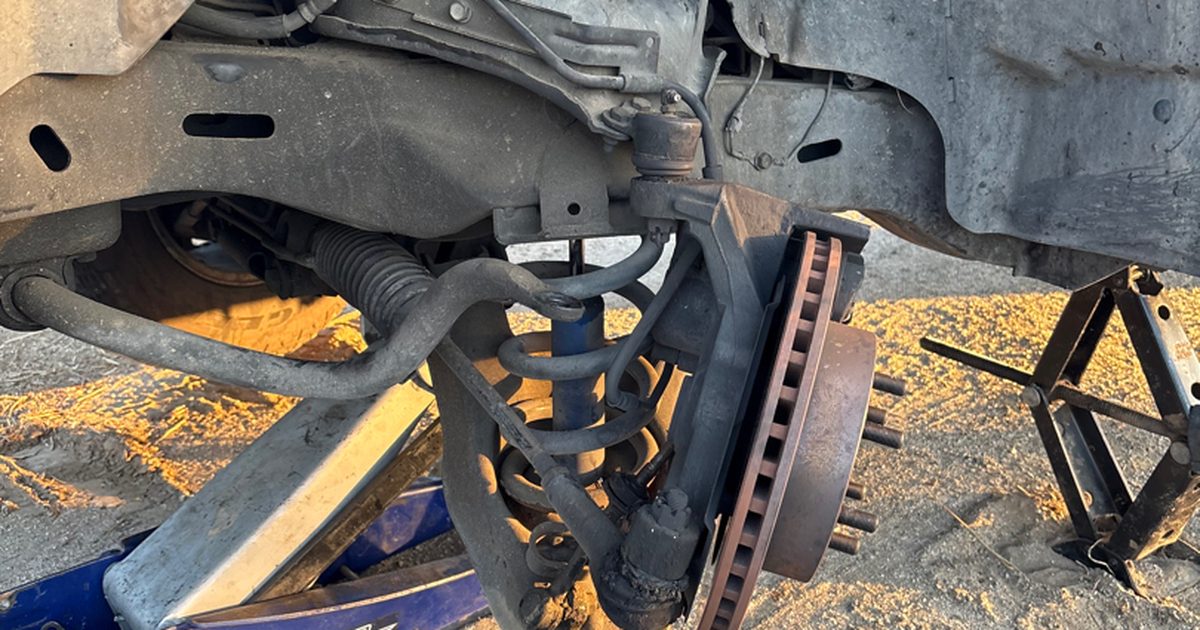
What shocks do — and shocks vs. struts, settled
Springs absorb bumps; dampers stop the springs from bouncing forever. A shock absorber is the damper alone: a sealed hydraulic cylinder that converts suspension motion into heat by forcing oil through precision valves, keeping the tire pressed to the road instead of hopping across it. Without working dampers, a car doesn't ride softer — it rides uncontrolled: floating over crests, wallowing after dips, hopping sideways across washboard, and stretching its stopping distance because a hopping tire isn't gripping.
The strut distinction is structural, not functional. A strut is a damper built into a load-bearing assembly that also locates the wheel and carries the spring; a shock is a damper bolted alongside a separately mounted spring, carrying no structural load. Your car may have struts in front and shocks in back (very common), struts all around, or — trucks and body-on-frame SUVs — shocks at every corner with springs or leaf packs doing the carrying.
Why you care: the shock version of the job skips the strut version's hard parts. No spring under dangerous compression, no steering geometry disturbed, no alignment required on most designs — which is why a pair of rear shocks costs a fraction of a pair of front struts even when the parts look similar.
Reading the wear — and the tests that actually work
Dampers die slowly and drivers adapt, so the diagnosis leans on evidence over impressions. The definitive sign: oil leaking down the shock body — the seal has failed, the oil that does the damping is leaving, and that shock is finished regardless of how the truck feels. A light film of misting can be normal; wet streaks and grime-caked runs are not.
Behavioral evidence: the rear continuing to bounce after dips (the classic multi-bounce over a speed bump), squatting deeply under acceleration or tongue weight, cargo-area contents getting airborne on bumps that used to be nothing, rear-end hop or skitter on broken pavement — especially in curves — and cupped, scalloped wear patterns on the rear tires. For tow rigs: increased trailer sway and porpoising at highway speed is frequently worn rear dampers announcing themselves before anything else does.
The old push-down bounce test only catches fully dead units, but it's free: push each rear corner down hard and release — one rebound and settle is healthy; bobbing twice or more is a damper doing little. Mileage context helps calibrate: 50,000–100,000 miles is the normal service window, with loads, roads, and salt deciding the end of it.
Choosing shocks — the tier decision that actually matters
Unlike many parts, shocks offer a genuine menu, and matching the tier to the duty is where the money is smart or wasted. Standard OE-grade replacements restore factory ride for commuting — the right answer for most vehicles, at the friendly end of the price range. Premium gas-charged and monotube designs damp more consistently under hard use and heat — worth it for towing, heavy loads, long highway miles, or drivers who notice ride quality. Heavy-duty and off-road tiers valve for abuse and pay you back only if the abuse is real.
Load-carrying variants deserve a mention for the towing crowd: air-assist shocks and helper-spring designs manage tongue weight and payload sag — genuinely useful on work trucks, unnecessary on grocery-getters. In the other direction, don't over-buy stiffness: aggressive off-road valving on a street truck rides harshly and helps nothing.
Two rules cross all tiers. Replace in pairs across the axle — mismatched damping left-to-right makes braking and cornering behavior asymmetric exactly when it matters. And if your vehicle has electronic or air suspension, the decision tree is different: adaptive units cost multiples, aftermarket passive conversions exist as a budget path, and that trade-off (cost versus losing the adjustable ride) deserves a deliberate choice rather than a parts-counter default.
What the job should include
The core work is honest and quick on most vehicles: support the vehicle and axle, unbolt the old shock top and bottom, compress and seat the new unit, and torque the fasteners — with one craft detail that separates good installs from squeaky ones: final torque happens at ride height, not full droop, so the rubber bushings clamp in their neutral position instead of permanently twisted. New shocks typically include new bushings and hardware; reusing crushed old bushings wastes the new damper's precision.
The visit should include eyes on everything nearby while it's exposed: spring or leaf-pack condition (a sagged spring makes any shock look bad), bump stops (often destroyed by the bottoming that worn shocks allowed), sway bar links and bushings (fellow clunk sources), and — on trucks — U-bolts and axle hardware. Rust-belt fasteners that fight are part of the honest labor range, and a shop that quotes penetrating-oil time on a 15-year-old truck is being realistic, not slow.
Verification is simple for this job: correct ride height side to side, no clunks over a test route, one-bounce-and-settle behavior at each corner, and fasteners re-checked after the suspension has cycled. Alignment is only needed if your particular design ties the shock into located geometry — most don't, and the quote should reflect that.
How to save money on this repair
Right-size the parts: the biggest waste in this category is paying for off-road or adjustable hardware on a vehicle that commutes. OE-grade pairs serve most drivers completely; spend up only for towing, loads, or genuine enthusiasm — and if you do tow, spend the upgrade money here rather than on-brand accessories, because rear damping is real trailer-control equipment.
Bundle with the wheels-off work you're already doing: shocks share labor beautifully with brake jobs, tire changes, and exhaust work, and the marginal labor when the truck's already up is small. Do axle pairs, skip the four-corner reflex unless the fronts actually test worn — front struts and rear shocks age at different rates, and money spent on healthy fronts is just spent.
This is also one of the best mobile-mechanic jobs on the entire site: accessible fasteners, hand tools, no alignment on most designs, done in a driveway in an hour or two — get a mobile quote alongside shop quotes and let them compete. The one preventive habit worth having: rinse the undercarriage in salt season and glance at the shock bodies for leaks at each oil change; catching a failed seal early keeps the repair on your calendar instead of the road's.
Signs you need this repair
- Oil visibly leaking down a shock body — wet, grimy streaks meaning the seal has failed
- The rear bouncing more than once after a dip or speed bump
- The vehicle floating or wallowing at highway speed, needing constant small corrections
- Rear-end squat under acceleration, or deep sag under tongue weight and cargo
- Rear tires developing cupped, scalloped wear patterns
- Skittering or sideways hop from the rear over broken pavement, worst mid-corner
- Increased trailer sway and porpoising when towing — often the first sign an owner actually feels
Cost by vehicle type
| Vehicle | Typical range | Notes |
|---|---|---|
| Compact / economy car | $180, $580 | Compacts with rear shock designs (many use rear struts instead — check) are quick, cheap work with excellent parts availability. If your rear corners are struts, see the strut guide's pricing instead. |
| Midsize sedan / small SUV | $195, $630 | Split population: some sedans and small SUVs run rear shocks with separate springs, others rear struts. Shocks-with-springs versions are the cheaper, simpler service by a wide margin. |
| Full-size truck / large SUV | $230, $745 | The heartland of this repair — solid rear axles with shocks at each corner, generous access, and endless parts choice from OE-grade to heavy-duty and off-road tiers. Match the shock to the actual duty: highway trucks don't need rock-crawler valving. |
| Luxury / European | $285, $925 | Watch for air suspension and adaptive damping: an 'air shock' or electronically controlled unit costs multiples of a conventional damper and may want calibration afterward. Conventional-shock models price normally with OEM-grade parts. |
| Hybrid | $215, $695 | Same job as the conventional twin, with the familiar hybrid note: extra battery weight works dampers harder, so hybrids often need them somewhat earlier than their gas siblings. |
| Electric vehicle | $225, $725 | Conventional replacement work — but EV mass is the defining factor. Several hundred extra pounds riding on the same corners wears dampers faster, and heavier-duty (sometimes EV-specific) shocks are worth the modest upcharge on heavy models. |
| Diesel / heavy duty | $275, $890 | Heavy-duty axles, plow and tow duty, and big unsprung mass call for HD dampers at HD prices. Fleet trucks that live loaded should treat shocks as scheduled maintenance, not a someday repair. |
Ranges assume national-average labor rates ($95, $140/hr) and quality aftermarket parts.
Cost by state
State ranges reflect typical independent-shop labor rates for a midsize vehicle.
Common questions
How do I know if I have shocks or struts back there?
Look behind each rear wheel: a slim damper bolted separately from the spring (or alongside a leaf pack on trucks) is a shock; a fat damper running up through the center of the coil spring into a big rubber-topped mount is a strut. Trucks and body-on-frame SUVs almost always have rear shocks; cars split both ways. The distinction decides which repair — and which price — applies.
Do shocks really affect safety, or just comfort?
Safety, measurably. A damper's job is keeping the tire pressed to the pavement; worn dampers let tires hop over bumps, and a hopping tire isn't braking or gripping. The practical effects are longer stopping distances, rear-end instability in evasive maneuvers, and — for anyone towing — meaningfully worse trailer control. The comfort decline is just the symptom you happen to feel.
How long do shocks last?
Typically 50,000–100,000 miles, with duty deciding the endpoint: loads, towing, rough roads, and salt shorten it; gentle highway miles stretch it. Leaking seals end the discussion at any mileage. Because wear is gradual and drivers adapt, the honest practice is having them looked at during brake and tire visits rather than trusting your calibrated-to-decline seat of the pants.
Should I replace all four corners at once?
Only if all four are actually worn. Replace in pairs across an axle always — mismatched left-right damping is a handling problem — but front and rear age independently, and healthy front struts don't need sympathy replacement when the rear shocks fail. Test and inspect each axle; spend where the wear is.
Do I need an alignment after replacing shocks?
Usually not — and this is a real cost advantage over strut work. Most shocks carry no wheel-locating role, so unbolting and replacing them doesn't disturb alignment geometry. The exceptions are designs where the shock integrates into located suspension arms; your shop will know. If a rear-shock quote on a common truck includes a mandatory alignment, ask why.
Can a mobile mechanic replace shock absorbers?
It's close to the perfect mobile job: a few accessible fasteners, hand tools, no spring compressor, no alignment on most vehicles — an hour or two in your driveway, often at a friendlier rate than a shop bay. The complications a good mobile tech will flag up front: rust-seized hardware on older vehicles, upper mounts hidden behind interior trim on some SUVs, and air or electronic suspension, which changes the job entirely.
Related repair guides
Sources and further reading
Primary sources behind this page. Federal safety, emissions and consumer-protection references, worth reading before you authorize any repair.
- NHTSA TireWise Federal guidance on tire age, load ratings, pressure and tread depth.
- NHTSA recall & complaint lookup Check any symptom against open recalls and technical service bulletins before paying for a repair.
- FTC auto repair basics Your rights on estimates, authorization and disputed repair bills.
- DOE Alternative Fuels Data Center: electric vehicles Federal reference on EV drivetrains, batteries and charging.
Need work done? Get a free quote.
Tell us what the car is doing. A local mechanic calls you back, most requests get a call back the same day. No fee, no obligation.