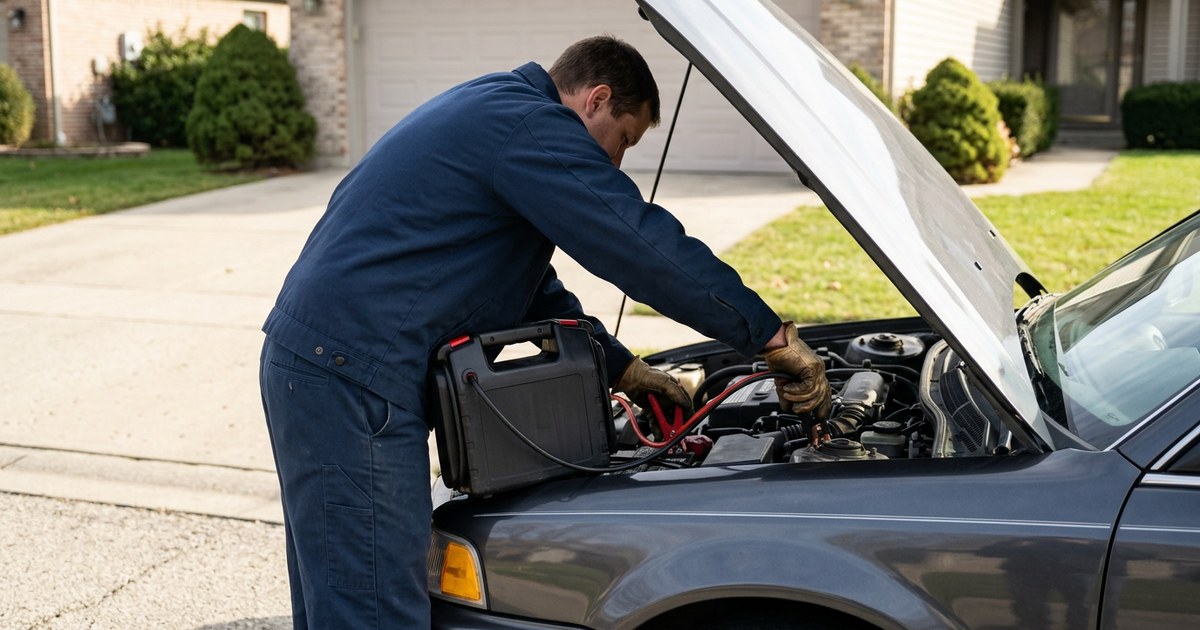
What a Jump Start Costs
Shops that post a jump start price online charge a median of $75. Across the 32 independent shop websites we found with a posted jump start price, the middle half sit between $50 and $85. The prices were posted on shop websites in October 2026, and chains and dealers are left out of these numbers.
Most of these posted prices are for a service call, meaning a tech comes to you with a booster pack, connects it and gets the car running. That is why the price is higher than you might expect for what looks like a quick job. You are paying for the drive to you, the equipment and the tech's time. Towing and roadside companies price this in their own ways, and some memberships include a jump, so check what you already have before you book.
The jump start gets the engine going. It does not tell you why the battery died. That is the part that matters. If the cause was a light left on, a jump is all you need. If the battery is old, or the alternator is not charging, the car will not start again later, and you may be stuck again within days.
If the battery is the problem, a new one is the usual fix. For that, 188 shops post a battery replacement price, with a median of $150 and the middle half between $110 and $200. Many shops will test the battery at no charge or at a small cost when you come in.
Ask for the total before the tech starts, and ask whether a test is included. A jump that comes with a battery and charging system test is worth more than a jump alone.
Why Cars Will Not Start
When a car will not start, the sound it makes is the best clue. A fast clicking noise usually means the battery is weak and does not have enough power to turn the starter. A single loud click can point to a bad starter or a poor connection. A slow, heavy crank means a weak battery or a cold engine. A car that cranks strongly but never fires is a different problem, often fuel or spark. And a car that makes no sound at all, with no dash lights, points to a dead battery or a loose or corroded cable.
The most common cause is the battery. Batteries wear out over time, and heat and cold both shorten their life. Leaving a light on, or a short trip routine that never lets the alternator recharge the battery, can also drain it. Corroded battery terminals are a close second and are easy to spot as white or green crust around the posts.
If the dash lights come on but the car will not crank, try the basics. Check that the car is in park or neutral, press the brake and try again. Wiggle the battery cables to see if they are loose. If the lights dim a lot when you try to start, the battery is weak.
The alternator is the next suspect. It charges the battery while the engine runs, and when it fails, the battery runs down until the car stops. A battery warning light or dim headlights while driving are signs. The starter motor is the third. It can fail even with a strong battery, and a click with bright lights points that way.
Beyond those, a car can fail to start because of a bad fuel pump, a faulty sensor, a security system issue or a blown fuse. These need testing and not guessing.
What Goes Wrong With Battery and Starting Repairs
Of 23,409 public shop reviews we counted, 582 name a battery, starter or alternator, and 14.3 percent of those are 1 or 2 stars. Across all reviews that share is 11.2 percent, so this kind of repair goes badly a bit more often than the average job. These reviews make up 2.5 percent of everything we counted.
The complaints repeat. The first is the wrong part. A shop replaces the battery when the real problem is the alternator, or the other way around, and the car dies again a week later. The second is the quick sale of a new battery without a test, which leaves the owner wondering if the old one was really bad. The third is a high price, especially at roadside or tow calls where the cost is not given up front. The fourth is a long wait for a tech who said they were close.
Owners talk about this a lot in public. In Reddit threads about battery and electrical problems, the median dollar figure people mention is $800. That shows how worried many owners are when the car will not start and the cause is a mystery.
You can protect yourself with a few plain steps. Ask for a battery and charging system test and ask to see the result. A good tech reads the battery health, the voltage while cranking and the output of the alternator. Ask for the price to come to you before they drive out. If a tech says the battery is bad, ask how old it is and what the test showed.
If the first fix does not hold, call the shop right away. A good shop wants to know and will stand behind the repair.
Why Prices Vary and How to Read a Quote
The spread from $50 to $85 for a jump start comes down to a few things. The first is distance and time. A tech who has to drive across town charges more than one around the corner, and a call after hours or on a weekend can cost extra. The second is the type of shop. Towing companies, mobile mechanics and repair shops price this service in different ways. The third is what is included. Some quotes cover the jump alone, and others add a test of the battery and charging system.
A quote should say what you get for the price. Does it include a test? Does it cover a second try if the first does not work? What happens if the car will not start even with a jump? In that case, some techs switch to diagnosing, which can carry its own fee. Shops that post a diagnostic price charge a median of $100, with the middle half between $80 and $150 across 504 shops. Ask whether that fee would be added.
If the car needs a new battery, compare the total, including the battery itself, the labor and any disposal or core fees. Ask whether the posted battery replacement price, which has a median of $150, includes the install. A mobile tech who brings a battery to you can save a trip and the cost of a tow.
Be careful with a quote that sounds like a trick. A very low price may turn into a long list of extras once the tech arrives. Ask for the total in plain words before the tech starts, and ask what will happen if the jump does not work.
Last, check your insurance policy, your car warranty and your roadside plan. Many include a free jump, and using one costs you nothing.
How to Jump a Car and Prevent the Next No Start
If you have cables and a second car, the steps are simple. Park the cars close but not touching, and turn both off. Connect one red clamp to the positive post on the dead battery and the other red clamp to the positive post on the good battery. Connect one black clamp to the negative post on the good battery. Connect the last black clamp to bare, unpainted metal on the dead car, away from the battery, such as a bolt on the engine block. Start the good car, wait a few minutes, then try the dead one. Remove the clamps in reverse order.
A booster pack is easier and safer, since you do not need a second car. Follow the instructions on the pack and your owner's manual. For a hybrid or an electric car, use only the jump points your manual shows.
Once the car runs, drive it for a good stretch so the alternator can recharge the battery, and do not shut it off at the first stop. Then get the battery and charging system tested soon. Many shops and parts stores will do this quickly.
To prevent the next no start, keep the battery terminals clean and tight. Do not leave lights or accessories on. If your trips are short, take a longer drive now and then. Watch for the warning signs of a weak battery, like slow cranking, dim lights and a battery warning light.
Batteries do wear out, and heat is hard on them. If yours is old, replacing it before it dies is cheaper than a service call and a tow. Keep a booster pack in the car if you can. It costs less than one service call and gets you moving yourself.
If the car will not start even after a jump, stop trying. Repeated attempts can drain the good battery or damage the starter. Call for help.
Signs you need this repair
- Clicking noise when you turn the key
- Slow, weak engine crank
- No lights and no sound at all
- Dim headlights or dash lights
- Car started with a jump but died again
- Battery warning light on while driving
- Engine cranks strongly but will not start
- White or green crust on the battery terminals
More Questions Drivers Ask
How long should I drive after a jump start?
Drive for a good stretch, long enough to let the alternator recharge the battery, and avoid shutting the car off at the first stop. Then get the battery and charging system tested. A short drive may not be enough if the battery is weak or old.
Can a jump start damage my car?
It can if it is done wrong. Connecting the clamps backward or letting them touch can damage electronics and the battery. Follow the steps in the owner's manual, use the right ground point, and take extra care with a hybrid or luxury car.
How do I know if it is the battery or the alternator?
A battery that dies after sitting is often the battery. A car that starts with a jump and then dies while driving, or shows a battery warning light, points to the alternator. A shop can test both in a few minutes, so get a test before buying parts.
Related Repair Guides
More Electrical Repair Costs
Sources and further reading
Primary sources behind this page. Federal safety, emissions and consumer-protection references, worth reading before you authorize any repair.
- FTC auto repair basics Your rights on estimates, authorization and disputed repair bills.
- NHTSA vehicle recalls Check your car by VIN for open electrical and battery related recalls.
Need Work Done? Get a Free Quote.
Tell us what the car is doing. A local mechanic calls you back, most requests get a call back the same day. No fee, no obligation.