What Car AC Repair Costs
Shops that post an AC diagnostic price online charge a median of $120. Across the 26 independent shop websites we found with a posted price, the middle half sit between $95 and $180. A diagnostic is the first step in any AC repair. It pays for the tech's time to find out why the air is not cold. It is not the repair itself.
A second price is worth knowing. A total of 111 shops post an AC recharge price, with a median of $149 and the middle half between $100 and $189. A recharge adds refrigerant to the system. It can be the right fix when the system is only a little low, but it does not fix the reason refrigerant went missing. The posted prices were crawled in October 2026, and chains and dealers are left out.
So the cost builds up in steps. The diagnostic comes first, and its price covers the testing. A recharge is the next level and often the first thing shops quote. Repairs such as a new compressor, condenser, evaporator, hose or blower motor come after, and they cost more because the parts are costly and the labor is long. Our guides on those repairs break down the details.
This page is the overview. Use it to understand the steps, what each costs and what to ask. A car AC is a sealed system, so a recharge on a system with a leak is a short term fix. Many shops will add a dye to the system, or use a leak detector, to find the leak before they decide on a repair.
Treat these figures as a guide. Your own quote depends on your car, the type of refrigerant it uses, the extent of the leak and the shop you choose.
Why Your Car AC Blows Warm Air
A car AC works by moving refrigerant through a loop. The compressor squeezes the refrigerant and sends it to the condenser at the front of the car, where it gives off heat. It then passes through a small valve and into the evaporator behind the dash, where it gets cold and cools the air that the blower sends to the vents. When any part of that loop fails, the air gets warm.
The most common cause is low refrigerant. The system is sealed, so low refrigerant means there is a leak somewhere, in a hose, a seal, the condenser, the evaporator or the compressor. Small leaks can take a long time to show up, which is why cooling fades slowly over a season.
The next cause is the compressor. If it fails or its clutch will not engage, the refrigerant does not circulate. Signs include a clutch that does not click on, grinding noises or air that is warm no matter how long it runs. A bad compressor can also send metal bits through the system, a problem some people call black death. That makes repairs bigger, since the lines, condenser and other parts have to be flushed or replaced.
Other causes include a clogged condenser, a failed cooling fan, a bad pressure switch, a blocked cabin filter, a failing blower motor or a blend door that is stuck on the heat side. An electrical fault, such as a blown fuse or relay, can also stop the compressor from running.
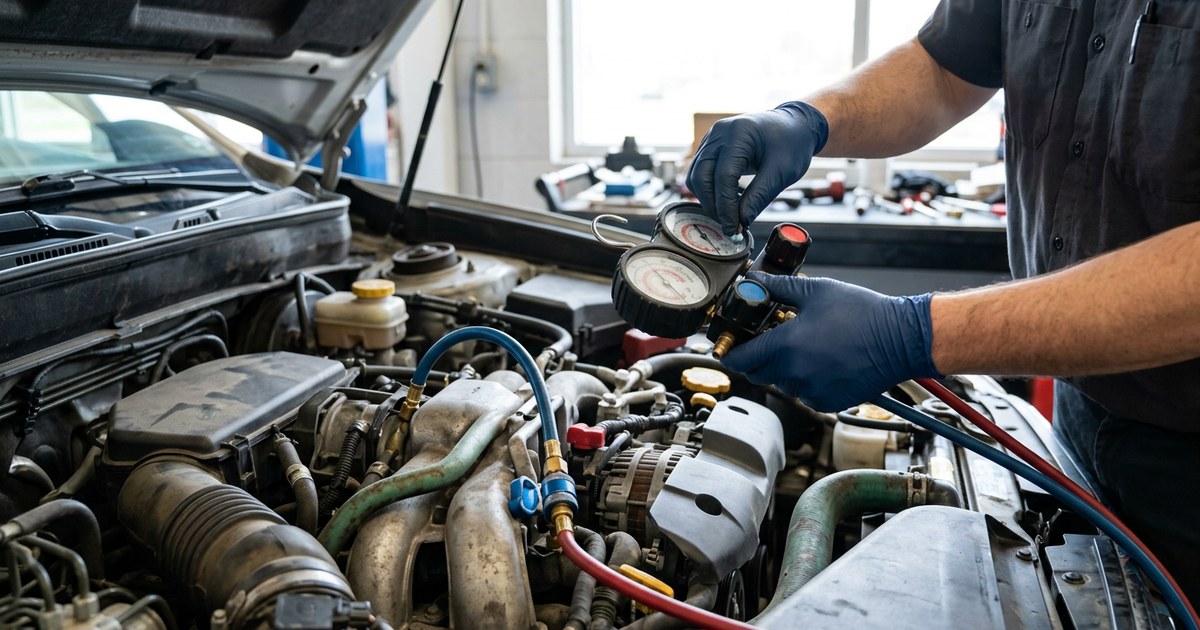
Some of these are cheap and some are not. That is why the diagnostic comes first. The tech connects gauges, checks pressures, looks for leaks, tests the compressor and electrical parts, and then tells you what is wrong. Paying for a proper diagnostic is usually less costly than guessing at parts.
What Goes Wrong With AC and Heat Repairs
Of 23,409 public shop reviews we counted, 532 name AC or heat, and 12.4 percent of those are 1 or 2 stars. Across all reviews that share is 11.2 percent, so AC and heat work goes badly a little more often than the average repair. These reviews make up 2.3 percent of everything we counted.
The complaints repeat. The first is the recharge that does not last. The air gets cold for a short while, then warm again, because the leak was never found. The second is a repair that costs more than the first quote. Once a system is opened, a tech may find more worn parts, and owners feel the price keeps growing. The third is a diagnostic fee with no clear answer, or a shop that replaces parts by guessing. The fourth is time, with cars left at the shop for days waiting on parts.
Owners talk about this a lot in public. In Reddit threads about AC and heat, the median dollar figure people mention is $943. That shows how big a surprise an AC bill can feel.
You can protect yourself with a few plain questions. Ask what the diagnostic includes, such as pressure readings, a leak test and a check of the compressor. Ask whether the shop found a leak and where it is. Ask for a quote before any parts are replaced. If the shop says the compressor failed, ask whether the rest of the system needs a flush and what parts that covers. Ask about warranty on the parts and the labor.
Ask also if a recharge alone is a smart choice. If the leak is slow, a recharge may last a season, but you should know that going in. A shop that explains this plainly is one you can trust with a bigger repair.
Why Prices Vary and How to Read a Quote
The spread from $95 to $180 for a diagnostic comes down to the shop and the car. Shops that post a labor rate charge a median of $129 an hour across 207 shops, and a diagnostic is a block of that labor sold at a set price. Some shops use a basic gauge check, and others do a full leak test with dye, a leak detector or nitrogen. A deeper test costs more and finds more.
The car matters too. Older cars use one type of refrigerant, and newer ones use another that is more costly. Luxury cars and trucks with rear air have more parts to check. Cars with electric compressors need a different oil and tools.
A fair quote names the cause and the fix. It lists the parts, the labor and the refrigerant. If the repair opens the system, it should also include a vacuum to remove moisture and air, and a new receiver drier or accumulator, which most manufacturers call for. Ask whether the price includes flushing the system after a compressor failure.
Be careful with a quote that sounds vague. A line that reads AC service with no details is hard to compare. Ask the shop to say what is being done and why.
It also helps to ask whether the diagnostic fee is credited toward the repair. Many shops do this if you approve the work there. Ask before you leave the car.
If the repair quote is large, a second opinion is worth another diagnostic fee. Bring the written findings from the first shop, including the pressure readings and leak location, and the second tech can start there. That often saves time.
Finally, consider whether the car is worth the repair. A system that needs several major parts on an older car is a real decision, and a shop that helps you weigh it is worth keeping.
How to Save Money on Car AC Repair
Start early. A weak AC is easier and cheaper to fix when it is only a little low than when the compressor has run dry and failed. If your cooling fades, get it checked in spring and not in the first heat wave, when shops are busy and prices and waits both go up.
Be cautious with do it yourself cans. They can get cold air back for a while, but a system overcharged by a can can cool poorly and strain the compressor. They also do nothing about the leak. If you use one, follow the directions closely, and know that you may still need a proper repair.
Ask the shop to find the leak before a recharge. A recharge with dye lets the tech trace the leak, and the repair tends to last longer. A recharge alone may be enough for a very slow leak, but that is a choice you should make knowing the facts.
Pay for the cheap items first. A dirty cabin filter or a blocked condenser can cut airflow and cooling, and both are low cost to fix. Ask the tech to check them when the car is in.
Run the AC for a few minutes every month, even in winter. This keeps the seals and the compressor oil moving and can help prevent leaks from dry seals. Using the defrost setting also turns on the AC compressor on most cars, which does the same job.
Use a certified shop. Technicians who service car AC are required to be certified under federal rules, and they use equipment that recovers refrigerant so it is not released into the air. A tech who is careful about this is usually careful about the rest.
A mobile mechanic can handle many AC jobs at your home or work, which saves a trip.
Signs you need this repair
- Air from the vents is warm or only slightly cool
- AC works while driving but not at idle
- Weak airflow from the vents
- Hissing or bubbling noise from the dash
- Grinding or squealing when the AC turns on
- Musty or sour smell from the vents
- Water on the floor of the front passenger side
- AC cuts in and out
More Questions Drivers Ask
Can I just add refrigerant to my car AC?
You can, but it only helps if the system is slightly low, and it does not fix the leak. Too much refrigerant can hurt cooling and damage the compressor. A shop can find the leak first so the repair lasts longer than a few weeks.
Why does my car AC smell bad?
A musty or sour smell often comes from mold or bacteria on the evaporator, or from a dirty cabin filter. A new filter and an evaporator cleaning usually help. A sweet smell is different and can mean a coolant leak, which needs a shop visit.
Does the AC diagnostic fee go toward the repair?
At many shops it does, if you approve the repair there, but policies differ. Ask before you leave the car and get the answer on the estimate. A shop that credits the fee expects to earn the job on its merits.
Related Repair Guides
More Climate Repair Costs
Sources and further reading
Primary sources behind this page. Federal safety, emissions and consumer-protection references, worth reading before you authorize any repair.
- EPA motor vehicle air conditioning Federal rules on refrigerant handling and technician certification for car AC.
- FTC auto repair basics Your rights on estimates, authorization and disputed repair bills.
Need Work Done? Get a Free Quote.
Tell us what the car is doing. A local mechanic calls you back, most requests get a call back the same day. No fee, no obligation.