What the Job Is and What Is Included
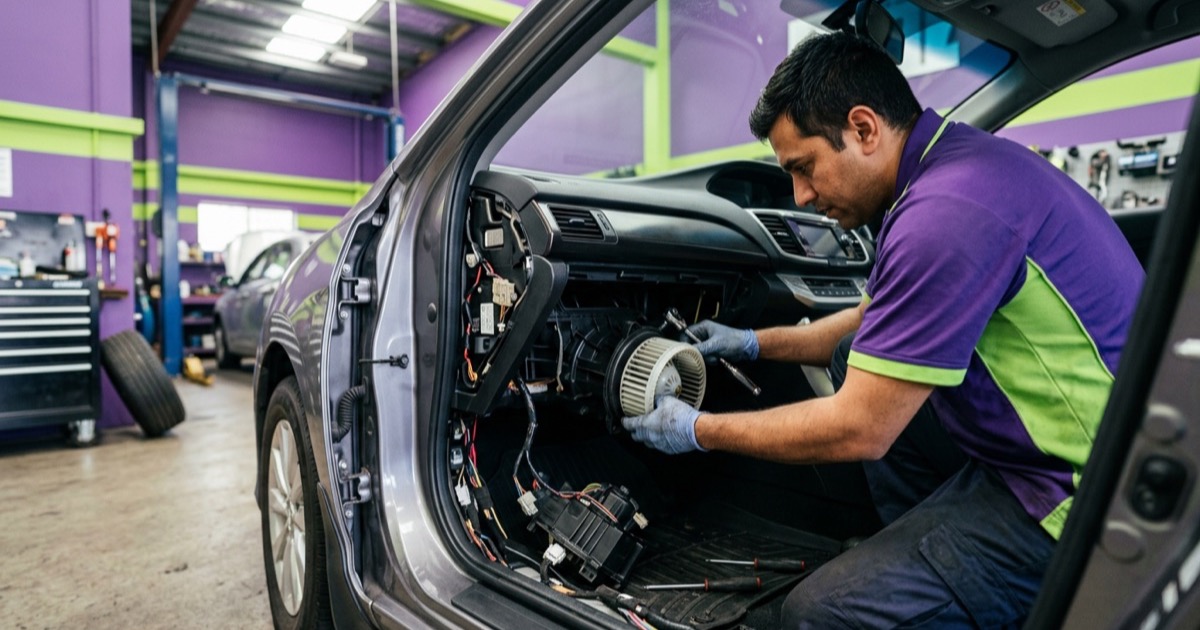
Behind your dash is a plastic box called the HVAC case. Air comes in from outside or from the cabin, passes through the cabin air filter, then the blower motor pushes it across the AC evaporator and heater core and out the vents. Every time you turn the fan knob, you are telling that motor how fast to spin.
The blower motor is a small electric motor with a round squirrel cage fan on the shaft. Over time the brushes and bearings wear. It starts to squeal, then it slows down, then it quits. Debris like leaves can also crack the fan wheel or knock it out of balance, which makes it rattle and shake.
A proper job starts with a test. The shop checks the fuse, then checks for power and ground at the motor plug with the fan switch on. If power is there and the motor does not spin, the motor is bad.
Then the lower dash trim comes off, the motor is unplugged and unbolted, and the new one goes in. The shop should run it through every speed, check the plug for heat damage and look for leaves or mouse nests in the case.
On most cars, that is the whole job. It is mostly a parts bill with a little labor.
Why the Price Varies
Where the motor sits drives labor. On most cars it hangs under the glove box. Remove a panel and three screws and it drops out. That can be a 30 minute job.
On some vehicles, the glove box frame, the lower dash or a brace has to come out first. A few older trucks and vans put the blower on the engine side of the firewall. Those jobs climb to two hours or more.
The motor type matters too. Cars with manual climate control usually use a basic motor and a separate resistor to set the speed. Cars with automatic climate control often use a variable speed motor with a control module, and some newer and European cars use a brushless motor with the electronics built in. Those cost a lot more.
The parts tier is the rest. A quality aftermarket motor for a common car costs $60 to $150. Factory parts from a dealer can cost two or three times that.
Dealers charge the most. Independent shops and mobile mechanics are usually much cheaper on this job, because it is quick and needs only hand tools.
What Usually Gets Done at the Same Time
A few add ons fix the reason the motor failed. Others are just extra.
Worth it almost every time is a new cabin air filter. A clogged filter makes the motor work harder and starves the resistor of cooling air. It is cheap and quick.
Worth it if it tests bad or the plug is burned is the blower resistor or control module. A failing motor draws extra current and can overheat the resistor and its plug. Many shops replace a melted plug with a new pigtail at the same time.
Worth it if found is cleaning out leaves, seeds or a mouse nest from the blower housing. Debris is a common reason the fan wheel cracks.
Usually an upsell is a heater core flush, an AC recharge or an evaporator cleaning on a car that heats and cools fine. If the airflow is the only problem, the fix is the airflow.
- Cabin air filter: yes, if dirty or old
- Blower resistor or control module: replace if it tests bad
- Melted plug or wiring: repair it now
- Clean leaves or nests out of the housing: yes, if found
- AC recharge or heater flush with no cooling or heating problem: usually skip
Diagnosis First: Is It the Motor or Something Else?
The blower is easy to blame, but a lot of other parts can stop the air. Testing first is fast and cheap.
The classic clue is speed. If the fan works only on the highest setting, the motor is almost always fine. The problem is the blower resistor, which handles the lower speeds. That part is cheaper than the motor.
If the fan does not work on any speed, the next check is the fuse and relay. Then the shop tests for power and ground at the motor plug. Power at the plug with no spin means a bad motor. No power means the problem is upstream, like the switch, the control head, the resistor, a module or a wire.
A tap on the motor that makes it start is a strong sign the motor is worn out.
Airflow that is weak at every speed can be a clogged cabin air filter, leaves blocking the housing or a stuck recirculation door. Air that blows but comes out the wrong vents points to a blend door or mode door actuator, not the blower.
Noise matters too. A squeal or rattle that changes with fan speed is usually the blower. A clicking from behind the dash that keeps going after you change settings is usually an actuator.
Questions to Ask Before You Approve the Quote
A short job should come with a clear answer. These questions help.
- Does the fan work on any speed, or only on high?
- Did you test for power and ground at the motor plug?
- Is the resistor or control module also bad, or just the motor?
- Is the plug or wiring burned, and is that repair in the price?
- Where is the blower on my car, and does the dash or glove box frame come out?
- Is a cabin air filter included, and how dirty is mine?
- What brand of motor are you using?
- What is the warranty on parts and labor?
Can a Mobile Mechanic Do It?
Yes, on most cars. This is one of the easiest jobs to have done at your home or at work. A mobile tech needs a meter, a few hand tools and a little time lying on the floor of the passenger footwell.
On a typical car with the blower under the glove box, the whole visit can take under an hour. The tech can test the resistor and the fuse in the same visit and swap the cabin filter.
The versions better done in a shop are vehicles where most of the dash comes apart, and some commercial trucks with the blower in an odd spot. A good mobile tech will look up your car before the visit and tell you which kind you have.
In winter, a mobile visit also saves you from driving with a windshield you cannot clear.
How to Make the New Blower Last
A good blower motor often lasts 10 years or more. Most early failures come from strain and debris.
Change the cabin air filter on schedule, often about once a year. A clean filter keeps the load on the motor low and keeps leaves out of the fan wheel.
Clear leaves out of the cowl area at the base of the windshield. That is where outside air enters, and leaves that get past it end up in the blower.
If your car has a separate resistor and it failed with the motor, make sure both were replaced. A worn motor can kill a new resistor, and a bad resistor can make a new motor look faulty.
Signs you need this repair
- No air from the vents on any fan speed
- Fan works only on the highest setting
- Weak airflow even on high
- Squealing, whining or rattling from behind the glove box that changes with fan speed
- Fan that cuts in and out, or starts only after a bump in the road
- Burning plastic smell from the passenger side of the dash
- Defroster cannot clear a fogged windshield
Cost by vehicle type
| Vehicle | Typical range | Notes |
|---|---|---|
| Compact / economy car | $115 to $490 | Most compacts put the blower under the glove box with easy access. Aftermarket motors are cheap, so this is often one of the least expensive climate repairs there is. |
| Midsize sedan / small SUV | $125 to $530 | Usually the same easy access as a compact. Cars with automatic climate control may use a variable speed motor with a control module, which costs more. |
| Full-size truck / large SUV | $150 to $620 | Many trucks are easy, but some older trucks and vans put the blower in a tight spot behind the glove box frame or on the engine side of the firewall. Parts cost a bit more because the motors are bigger. |
| Luxury / European | $185 to $765 | Many European cars use a brushless blower with built in electronics, and a few need lower dash panels or the glove box frame out. Parts can reach $300 to $500 or more, so plan for the top of the range. |
| Hybrid | $140 to $585 | Hybrids use the blower to cool the cabin and, on many models, a separate fan to cool the high voltage battery. Make sure the quote is for the cabin blower and not the battery cooling fan. |
| Electric vehicle | $145 to $610 | EVs lean on the blower for heat, AC and defrost, and some use it with a heat pump. The motor job is the same, and many sit behind the glove box like a gas car. |
| Diesel / heavy duty | $180 to $740 | Heavy duty pickups use the same cab design as their gas versions, so the blower job is usually the same. Large commercial trucks can put it in less friendly spots. |
Ranges assume national-average labor rates ($95, $140/hr) and quality aftermarket parts.
Cost by state
State ranges reflect typical independent-shop labor rates for a midsize vehicle.
Common questions
How much does it cost to replace a blower motor?
Most drivers pay about $130 to $530 at an independent shop or mobile mechanic. Cars with the motor under the glove box land near the low end. Vehicles that need dash parts removed and European cars with brushless motors cost more, and a dealer adds more again.
Can I drive with a bad blower motor?
Yes, the engine does not need it. But without a blower, the defroster cannot clear your windshield, which is dangerous in rain, cold or fog. In hot weather you also lose the AC. Fix it soon if you need the defroster.
Why does my blower only work on high?
That almost always means the blower resistor or speed control module failed, not the motor. The high setting usually bypasses the resistor. A resistor is cheaper and quicker to replace than the motor.
How do I know if my blower motor is bad?
If there is no air on any speed, the fuse is good and the motor gets power at its plug but does not spin, the motor is bad. A motor that squeals, rattles or starts only after a tap is also on its way out.
How long does it take to replace a blower motor?
About 30 minutes to two hours. Most cars with the motor under the glove box are done in under an hour. Vehicles where the dash or glove box frame comes out take longer.
Can a dirty cabin air filter ruin a blower motor?
It can make it work harder and wear out sooner. A clogged filter also starves the resistor of the airflow that keeps it cool, which is a common reason resistors fail. Changing the filter on time is cheap protection.
Is a blower motor worth fixing on an old car?
Yes. It is usually a cheap repair, and a working defroster is a safety item, not a comfort extra. Even on an older car, a few hundred dollars for clear glass in winter is worth it.
Related Repair Guides
More Climate Repair Costs
Sources and further reading
Primary sources behind this page. Federal safety, emissions and consumer-protection references, worth reading before you authorize any repair.
- FMVSS 103 windshield defrosting and defogging Federal safety standard requiring cars to have a working windshield defrost and defog system.
- fueleconomy.gov cold weather tips DOE and EPA guidance on heater and defroster use in winter driving.
- ASE certified technicians Find shops with ASE certified heating and AC technicians before you approve a quote.
Need Work Done? Get a Free Quote.
Tell us what the car is doing. A local mechanic calls you back, most requests get a call back the same day. No fee, no obligation.