What a Smog Check Costs
Shops that post a price online charge a median of $45 for a smog check. Across the 262 independent shops we found with a posted price, the middle half sit between $36 and $59. Ask for the out the door number, because some stations add a state certificate charge on top of the posted test price.
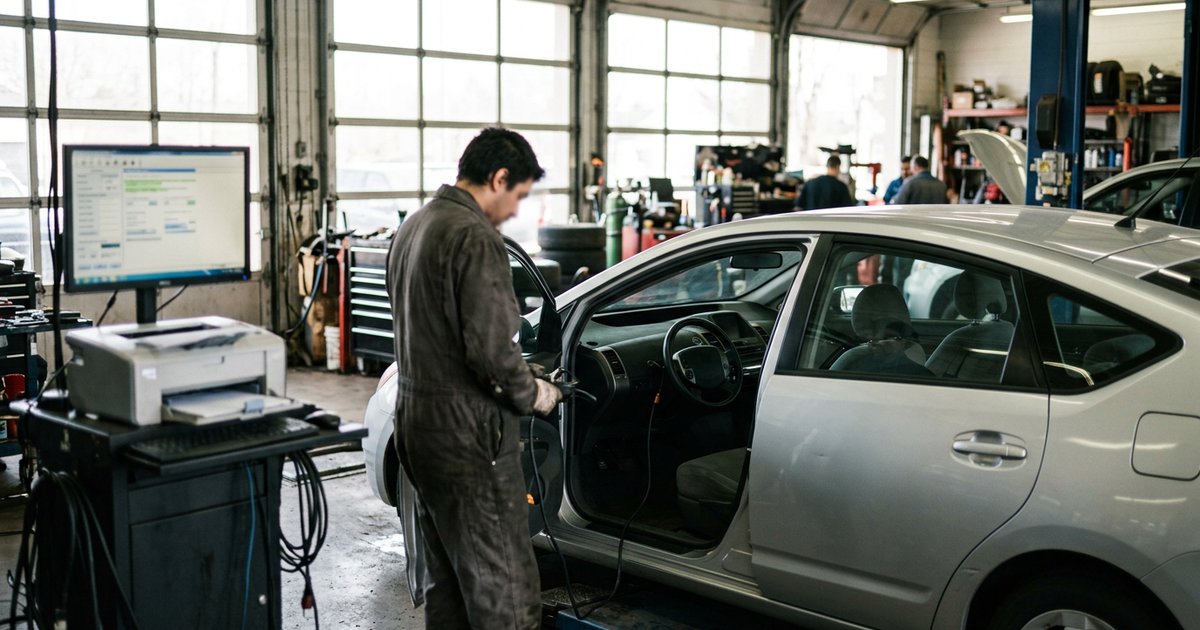
The fee pays for the test itself. The tester checks that your emissions parts are on the car and not tampered with, which is the visual part. Then comes the functional part. On a 1996 or newer car, the tester plugs into the OBD II port and reads what the computer says about the emissions system. It looks for a lit check engine light, any stored codes and whether the readiness monitors have finished their self checks. On older cars, many programs also run a tailpipe test that measures what comes out of the exhaust.
If the car passes, the station sends the result to the state electronically, so you rarely need to carry a paper form to the DMV. If it fails, you get a report that lists why, and that report is your repair roadmap.
Why the spread in price? Local competition plays a role. So does the type of test your car needs and what the state charges. Some shops post a low price for a basic test and charge more for older cars that need the tailpipe test. A few shops use a low smog price to bring in customers for repairs, so a bargain test is fine, but the repair quote after a failure deserves a hard look.
A smog check is a short visit when everything is ready. The surprises come when the car is not.
Who Needs One and When
The rules depend on your state, and sometimes on your county or ZIP code. California is the one most people ask about. Most gas cars there need a smog check every two years at registration renewal, and also when ownership changes. Very old cars are exempt, and so are electric cars. Some rural areas are outside the program, and your renewal notice or the state bureau's ZIP code lookup will tell you where you stand. Newer cars are also exempt for their first several years, though the state charges a fee in place of the test.
Other states run their own programs. Colorado tests in certain Front Range counties and not in others. Nevada tests in the Las Vegas area. Plenty of states have no program at all. If you moved recently, check the rules where you live now and do not assume your old state's rules still apply.
What do you need to bring? Usually your registration or the renewal notice, your keys and a car in good running order. Some stations will want a photo ID. If you are testing because you sold or bought a car, bring the paperwork that shows the change.
California is still requiring smog checks. The program has been in place for decades and the biennial cycle remains the norm. Rules and fees can change, so rely on your DMV renewal notice and the state's official site for your exact car.
Some cars get directed to a special type of station that has extra oversight. Your renewal notice says so if that applies to you. If it does, you cannot test at a regular station, so read the notice before you book.
Testing early is allowed within a window before your due date. Booking a few weeks ahead gives you time for repairs if you fail.
What Goes Wrong With Smog Checks
Of 23,409 public shop reviews we counted, 1,308 name a smog check or inspection, and 13.1 percent of those are 1 or 2 stars. These jobs make up 5.6 percent of all the reviews we counted, which shows how many people go through this every year.
The complaints fall into a few groups. The biggest is a failure that comes with a big repair quote. Owners feel cornered, since they cannot register the car without a pass. Next comes the bait and switch, where a low posted price turns into a higher one once the shop adds fees or says the car needs the other kind of test. Then there are the long waits, and cars that failed after sitting at a shop for hours. And last are owners who got a fail they did not see coming.
On Reddit, inspection threads show how heavy the worry is. The median dollar figure people mention in those posts is $1,500, which tells you a failed test feels like a big bill to a lot of owners.
The most common reasons for a failure are not mysterious. A lit check engine light is the top one, and it is an automatic fail. Readiness monitors that are not ready are next, which happens after a battery disconnect or after codes were cleared. Then come the real emissions problems, such as a worn catalytic converter, a bad oxygen sensor, a fuel vapor leak or an engine running too rich.
The fix is to scan the car before you book. If a code is stored, get it diagnosed and repaired first. A shop that tells you the problem now is cheaper than a failed test on the record and a rush job to finish the registration.
Why Cars Fail and What Happens Next
A failed smog check is information, not a verdict. The report tells you which part of the test the car failed, and the repair follows from that.
If the check engine light is on, the test cannot pass. Get the code diagnosed, fix the cause and drive the car until the monitors set. If the monitors are the only issue, the answer is usually just more driving. After a battery disconnect or code clear, the computer needs to finish its self checks. That takes a mix of cold starts, steady highway driving and city stops. Ask your shop how long to drive, since it depends on the car, and many cars will tell you the monitor status on a scan tool.
If the car failed on tailpipe gases, the tech looks at why. A bad oxygen sensor, a misfire, a clogged converter or a leak can all push numbers over the limit. Many repairs are modest. Some, like a catalytic converter, are not.
After repairs, you retest. Retest policies vary by station, and some shops include a retest in the price while others charge again. Ask before you pay for the first test.
If the repair bill is large, look into help. California runs a consumer assistance program that helps some owners with repair costs or with retiring a car that cannot pass. Other states have their own programs. Your state's smog agency website has the details.
A few other points. The state wants the car fixed properly, so it is not a good idea to look for tricks. Parts that defeat emissions equipment are illegal, and a shop that offers one is a risk to your registration and your wallet. Fix the actual cause and pass the right way.
How to Pass on the First Try and Pay Less
Start with the light. If your check engine light is on, do not book the test yet. Get a diagnostic, fix what it finds and then go. Testing with the light on costs you a test fee and puts a fail on your record for nothing.
Next, think about the battery. If you disconnected it or had a repair that cleared the computer, the readiness monitors reset. Drive the car normally for a good stretch before the test, with a mix of highway and city driving. Do not rush it. Many shops can check readiness with a scan tool before they run the official test, which spares you a failed result.
Warm the engine before the test. A fully warmed engine and catalytic converter work better than a cold one, so drive the car to the station instead of testing right after a cold start. Keep up with oil changes, since old oil carries fuel and extra pollutants that show up on a tailpipe test. And fix any known leaks or misfires you have been putting off.
When you pick a shop, call two or three. Posted prices run from $36 to $59 for the middle half, and ask whether the price is out the door and whether the retest is included. Check that the station is licensed and, if your notice requires it, the right type of station.
The last tip is to leave time. Test at least a few weeks before your registration is due. That gives you room to fix a problem, retest and finish renewal without paying late fees or driving on expired tags.
Signs you need this repair
- Check engine light on
- Registration notice says a smog check is due
- Selling or buying a car that needs a current smog certificate
- Recent battery disconnect or code clear
- Rough idle or misfire
- Rotten egg smell from the exhaust
- Black smoke or heavy exhaust smell
- Poor fuel economy
More Questions Drivers Ask
How long does a smog check take?
A smog check is usually a short visit when the car is ready, because the test itself is quick. Waits depend on how busy the station is. Calling ahead or booking an appointment helps. If the car is not ready, the shop may need more time to scan or warm it.
What happens if my car fails the smog check?
You get a report listing why it failed. Fix the listed problem, then retest. Some stations include one retest and others charge again, so ask first. If the repair is expensive, check whether your state has a repair assistance program.
Will a check engine light make me fail?
Yes. A lit check engine light is an automatic fail on any car with an OBD II system. Get it diagnosed and repaired first, then drive until the readiness monitors are set before you test again.
Do I need a smog check when I sell my car?
In California, the seller normally has to provide a current smog certificate when a gas car changes hands. Other states differ, and some require nothing. Check your state's rules before you list the car, and fix any warning light first.
Related Repair Guides
More Exhaust Repair Costs
Sources and further reading
Primary sources behind this page. Federal safety, emissions and consumer-protection references, worth reading before you authorize any repair.
- California Bureau of Automotive Repair The state program that runs Smog Check rules, stations and repair assistance.
- EPA vehicle emissions inspection and maintenance Federal background on inspection programs and what they test.
- EPA vehicles and engines Federal rules on vehicle emissions and the equipment that controls them.
Need Work Done? Get a Free Quote.
Tell us what the car is doing. A local mechanic calls you back, most requests get a call back the same day. No fee, no obligation.