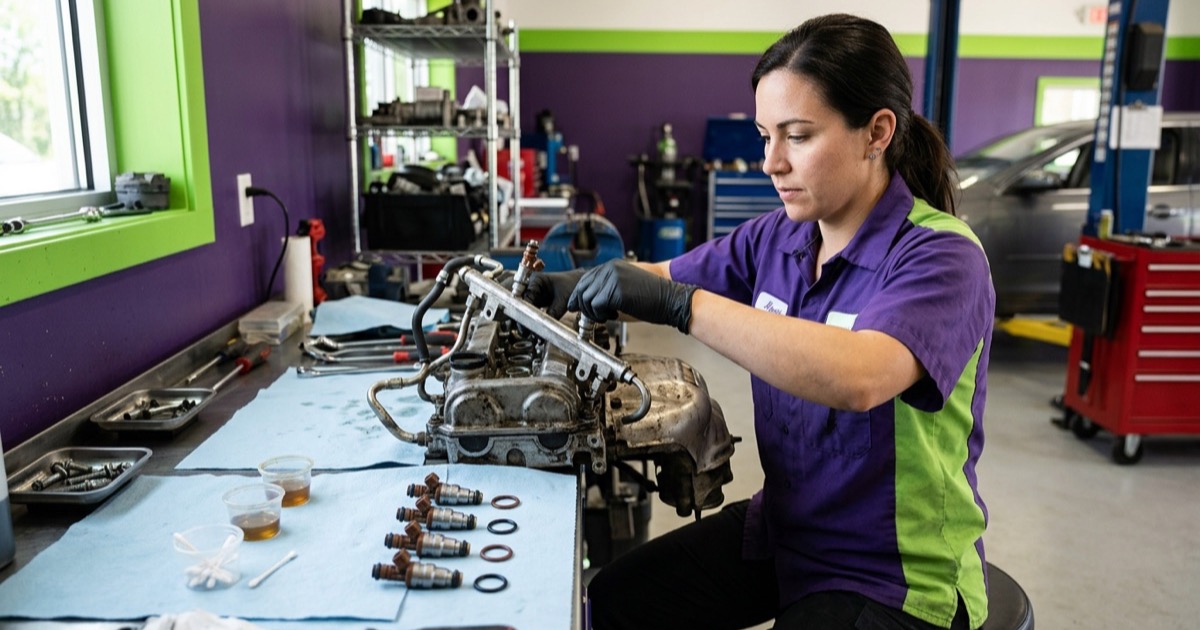
What the Job Is and What the Price Covers
Each cylinder has its own injector. The engine computer opens it for a few thousandths of a second at a time, and fuel under pressure sprays out as a fine cone of mist. When the spray pattern is right, the fuel burns clean. When it dribbles, sticks open or barely opens, that cylinder misfires.
A standard replacement covers relieving fuel pressure, removing whatever sits on top of the fuel rail, lifting the rail, pulling the bad injector and fitting a new one with new O-rings or seals. Then the shop puts it all back, checks for leaks with the key on, and clears codes. On engines where the manifold comes off, the price should also include a new intake gasket.
This estimate is for one injector on a typical gas engine. If the shop recommends all of them, the parts cost goes up four, six or eight times, but the labor barely moves because the rail is already off.
Port Injection vs Direct Injection
Older and many current engines use port injection. The injector sprays into the intake port, at fairly low pressure, outside the hot combustion chamber. These injectors are cheaper, last a long time, and often respond to a good cleaning.
Direct injection sprays fuel straight into the cylinder at very high pressure. The injectors sit in the hot zone, cost more, and need special seals and sometimes special pullers. A direct injector job can run two to three times the price of a port job on a similar car.
Some newer engines use both systems. Ask which one failed. It changes the part price and the labor time.
Why the Price Varies So Much
Access is the biggest swing. An inline four-cylinder with the rail on top might bill one hour. A V6 with three injectors buried under a plenum might bill three hours or more.
Part tier is next. Quality aftermarket or remanufactured injectors from known brands work well on most port engines. Bargain injectors with no flow testing are a gamble, because one bad flow rate makes that cylinder run wrong all over again.
The shop type matters too. Dealers often only sell new OEM injectors and charge top labor. Independent shops give you part choices. A mobile mechanic can do many top-mounted rail jobs in a driveway, but buried injectors and direct-injection work are better done in a shop with good light, a lift and the right pullers.
Diesel and some direct-injection engines also need the new injector coded to the engine computer. Each injector has a small code printed on it that tells the computer how that one flows. Skipping this step can leave a rough idle even with brand new parts, so the quote should list it.
What Often Gets Done at the Same Time
Some add-ons are smart, and some are just padding. Here is how to sort them.
Worth it: new O-rings and seals on every injector the shop touches, a new intake manifold gasket if the manifold came off, and spark plugs if they are near due and already exposed. Replacing all injectors at once can also make sense on a high-mileage engine when the manifold must come off anyway.
Often an upsell: a full fuel system flush on a car that only had one bad injector, or a new fuel pump with no pressure test proving the pump is weak. Ask for the test numbers before you pay for either.
- Worth it: new seals and O-rings on every injector removed
- Worth it: intake gasket if the manifold was removed
- Often worth it: spark plugs if they are near due and easy to reach now
- Ask for proof first: fuel pump, fuel pressure regulator or fuel system flush
Make Sure It Is Really the Injector
A misfire on one cylinder has three usual suspects. Spark, fuel and compression. A good shop checks all three before it sells you an injector.
The classic test is the swap. Move the ignition coil from the bad cylinder to a good one. If the misfire moves, it was the coil, not the injector. If it stays put, the shop can listen to the injector with a stethoscope, check its resistance, or run a balance test that measures how much fuel each injector lets through.
A lean code on the whole engine is usually not one injector. Vacuum leaks, a dirty mass airflow sensor and a weak fuel pump all cause it. A rich code with a fuel smell points more toward a leaking injector or a bad pressure regulator. Diagnosis first saves real money here.
Wiring is the other common miss. A broken wire or a loose connector at the injector looks exactly like a dead injector on a scan tool. A two-minute check with a test light or a noid light tells the tech whether the injector is getting a signal at all.
Clean It or Replace It?
A bottle of cleaner in the tank helps mild buildup on port injectors. It will not fix a stuck injector, an electrical fault or a cracked body.
Professional off-car cleaning and flow testing can bring a clogged port injector back to spec for less than a new one. It makes the most sense on older engines with costly injectors. Direct injectors are harder to clean and are usually replaced.
If the injector leaks externally, has a bad coil inside, or failed the flow test after cleaning, replace it. Good fuel from busy stations and a clean fuel filter help the new one last.
How long a new injector lasts depends a lot on what killed the old one. If dirty fuel or a clogged filter caused it, fix that too. If the engine burns oil or has a leaking valve seal, carbon can build up on direct injectors again, and the shop should tell you.
Questions to Ask Before You Approve the Quote
A clear quote tells you what failed, how they know, and what part you are getting. Use these questions to get there.
- How did you confirm it is the injector and not a coil, plug or vacuum leak?
- Is this engine port injected, direct injected, or both?
- Are you replacing one injector or the full set, and why?
- What brand are the injectors, and are they new, remanufactured or flow-tested?
- Does the quote include new seals, O-rings and any gaskets that get disturbed?
- Does the new injector need to be coded to the engine computer?
- What is the warranty on parts and labor?
Signs you need this repair
- Check engine light with a misfire code on one cylinder
- Rough or shaky idle, worse when the engine is cold
- Strong raw gas smell under the hood or from the exhaust
- Hesitation or stumble when you press the gas
- Worse fuel economy than usual
- Hard starting after the car sits for a while
- Black smoke or a rich smell at the tailpipe
Cost by vehicle type
| Vehicle | Typical range | Notes |
|---|---|---|
| Compact / economy car | $220 to $930 | Most compacts have the fuel rail on top of the engine, so labor stays near the low end. Direct-injection versions cost more for parts and seals. |
| Midsize sedan / small SUV | $245 to $1,020 | Four-cylinder models are usually simple. V6 versions often bury the rear injectors under the intake manifold, which can double the labor. |
| Full-size truck / large SUV | $290 to $1,210 | V8 trucks usually need the intake manifold off to reach the injectors, so expect the top of the labor range. Many shops quote the full set while the manifold is already off. |
| Luxury / European | $365 to $1,505 | German direct-injection and turbo engines use expensive injectors and one-time seals, and some need coding to the engine computer. A single injector can cost more than this whole estimate. |
| Hybrid | $270 to $1,120 | Hybrids use normal gas-engine injectors, but the engine starts and stops often, so a sticking injector may show up as a rough restart. Labor is similar to the gas version of the same car. |
| Electric vehicle | Battery electric cars have no fuel system, so they never need fuel injectors. | |
| Diesel / heavy duty | $350 to $1,445 | Diesel injectors are a different class of part, often $300 to $800 each or more, and many need coding or calibration. Diesel injector jobs usually land well above this estimate. |
Ranges assume national-average labor rates ($95, $140/hr) and quality aftermarket parts.
Cost by state
State ranges reflect typical independent-shop labor rates for a midsize vehicle.
Common questions
How much does it cost to replace one fuel injector?
One injector on a common port-injected gas engine usually runs about $250 to $1,000 at an independent shop. The low end is a four-cylinder with the rail on top. The high end is a V6 or V8 where the intake manifold has to come off, or a direct-injection engine with pricey injectors.
Should I replace all fuel injectors at once?
Not always, but it often makes sense on high-mileage engines where the manifold must come off anyway. The labor to reach one injector is close to the labor for all of them. On a top-mounted rail with one clear failure, replacing just the bad one is fine.
Can I drive with a bad fuel injector?
You can drive short distances with a mildly clogged injector, but not with a leaking one. A leaking injector can cause a fire or wash oil off the cylinder walls. Any misfire also sends raw fuel into the catalytic converter, which can ruin a part that costs far more than the injector.
Will fuel injector cleaner fix a bad injector?
Tank cleaner helps light buildup, but it will not fix a stuck, leaking or electrically dead injector. If one cylinder still misfires after a tank or two of cleaner, the injector needs testing. Off-car cleaning with a flow test is the middle option.
How long do fuel injectors last?
Many port injectors last 100,000 to 150,000 miles or the life of the engine. Direct injectors and diesel injectors work harder and can fail sooner. Dirty fuel, a clogged filter and long storage with old gas all shorten their life.
How much does a dealer charge for fuel injector replacement?
Dealers usually charge more because they use new OEM injectors and higher labor rates. Expect a dealer quote to run 30 to 60 percent above an independent shop for the same job. Ask the independent shop which injector brand it uses so you compare like with like.
What happens if a fuel injector sticks open?
A stuck-open injector floods its cylinder with fuel. You may get a hard start, a strong gas smell, black smoke and a misfire. In bad cases fuel can wash past the rings into the oil, so stop driving and have it checked right away.
Can a mobile mechanic replace fuel injectors?
Yes, on many four-cylinder engines where the fuel rail sits on top. A mobile tech can relieve pressure, swap the injector and leak check it in your driveway. Jobs that need the intake manifold removed, or direct injectors with special pullers, are usually better done in a shop.
Related Repair Guides
More Fuel Repair Costs
Sources and further reading
Primary sources behind this page. Federal safety, emissions and consumer-protection references, worth reading before you authorize any repair.
- fueleconomy.gov: Keeping Your Vehicle in Shape DOE and EPA guidance on how engine condition and maintenance affect fuel use.
- DOE Alternative Fuels Data Center: Ethanol Federal reference on ethanol blends in gasoline and which engines can use them.
- ASE certification Look for ASE engine performance certification on the tech who diagnoses a misfire.
Need Work Done? Get a Free Quote.
Tell us what the car is doing. A local mechanic calls you back, most requests get a call back the same day. No fee, no obligation.