What the Job Is and What You Are Paying For
Your fuel pump pushes more fuel than the engine needs. The regulator is a spring loaded valve that lets the extra go back to the tank so pressure at the injectors stays steady. Steady pressure means the injectors spray the right amount of fuel every time.
There are two common layouts. On a return style system, the regulator sits on the fuel rail on top of the engine with a small vacuum hose attached and a return line back to the tank. On a returnless system, which most cars built since the mid 2000s use, the regulator sits inside the tank as part of the fuel pump module.
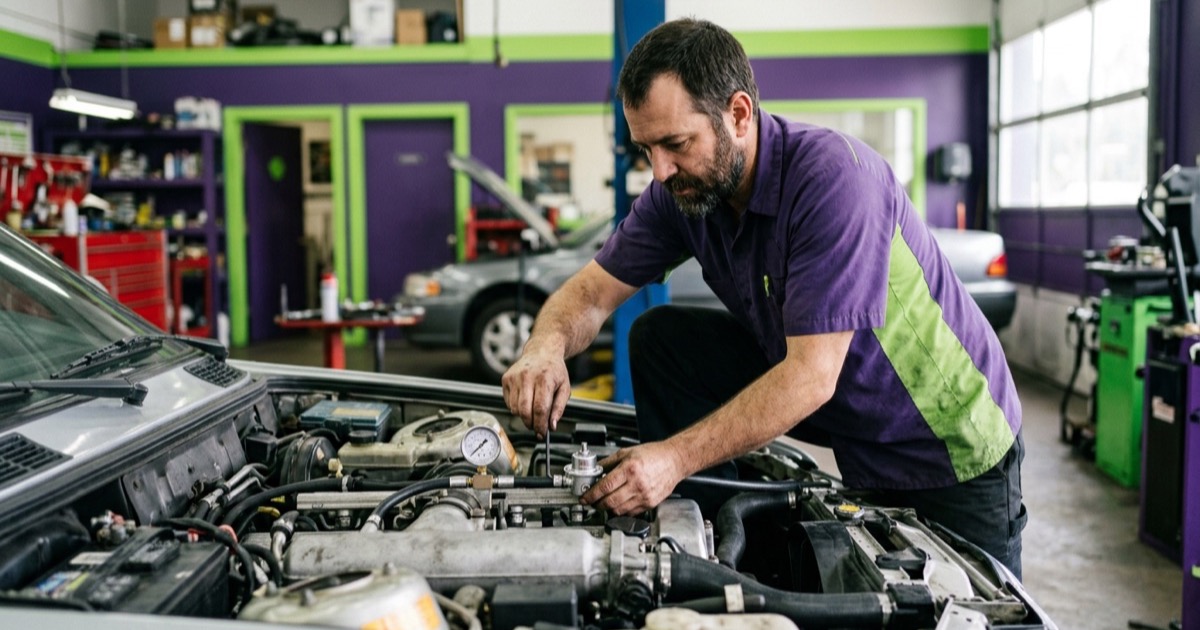
A proper job starts with a fuel pressure test. The shop hooks up a gauge, checks pressure at idle and under load, and watches how fast pressure drops after the engine shuts off. That test is what proves the regulator is the problem.
On a rail mounted regulator, the shop relieves pressure, removes the old regulator, installs the new one with fresh O rings, and checks for leaks with the key on. On an in tank regulator, they reach the pump module from under the rear seat or by dropping the tank.
The regulator itself is usually cheap, often $40 to $150 for a quality part. Most of the price is labor and testing.
Why the Price Varies So Much
Where the regulator lives is everything. A regulator on top of the fuel rail is a quick job. A regulator inside the tank can mean dropping the tank, which adds hours.
Some cars do not sell the regulator by itself. On those, the shop has to replace the whole pump module or a module assembly. That changes the job from a $200 repair into a fuel pump job, which costs much more.
The parts tier matters too. A factory regulator from the original supplier runs more but rarely causes trouble. Generic regulators can come with the wrong spring rate, which leaves pressure a little high or low and causes rough running.
Diagnosis adds cost, and it should. A fuel pressure test takes time. Expect $100 to $180 for a proper fuel system test at most shops.
Then comes the shop. Dealers charge the most per hour. Independents charge less. A mobile mechanic can do the rail mounted version in your driveway for less again.
How to Tell If the Regulator Is Really Bad
Fuel pressure problems look a lot like other problems. Here is how a good tech narrows it down.
The classic test on a return style system is the vacuum hose. Pull the small hose off the regulator with the engine running. If gas drips out of the hose or the hose smells of fuel, the diaphragm inside has torn. That regulator is bad.
Pressure that is too high usually points to a stuck regulator or a pinched return line. The engine runs rich, may smell of gas, and can set rich codes like P0172 and P0175.
Pressure that is too low can be the regulator, but it is more often a weak fuel pump or a clogged fuel filter. A good shop checks volume, not just pressure, to tell the pump from the regulator.
Pressure that drops fast after shutdown can be a leaking regulator, a leaking injector, or a check valve in the pump. That shows up as long cranking before the car starts.
Other things that cause similar symptoms include leaking injectors, a bad coolant temperature sensor that makes the computer add extra fuel, a failing oxygen sensor, and a vacuum leak. Testing fuel pressure first saves a lot of guessing.
- Fuel in the vacuum hose: the regulator diaphragm is torn
- Pressure too high: stuck regulator or pinched return line
- Pressure too low: often the pump or filter, test volume too
- Pressure drops fast after shutdown: regulator, injector or pump check valve
- Rich codes with normal pressure: look at sensors and injectors
What Usually Gets Done at the Same Time
Worth it every time are new O rings or seals for the regulator. They come with most parts and keep fuel from leaking.
Worth it if the regulator is in the tank is a look at the fuel pump, the strainer sock and the tank seal. The labor to reach them is already paid. If the pump has high miles and is weak on test, doing it now saves a second tank drop.
Worth it if your car has a serviceable fuel filter is a new filter. Many newer cars have a lifetime filter in the tank, so check before paying for one.
Worth checking are the spark plugs if the engine ran rich for a long time. Black, sooty plugs may need replacing.
Usually an upsell is a full fuel injection service on a car that ran fine before the regulator failed. Once pressure is right, the injectors usually clean up on their own.
- Regulator O rings and seals: always
- Fuel pump and strainer: only if the tank is open and the pump tests weak
- Fuel filter: only if your car has a serviceable one
- Spark plugs: check if the engine ran rich for a long time
- Fuel injection service: usually skip
Questions to Ask Before You Approve the Quote
Fuel jobs are easy to guess on and expensive when the guess is wrong. Ask these first.
- What fuel pressure did you measure at idle, under load, and after shutdown, and what is the spec?
- Did you check for fuel in the regulator vacuum hose?
- Is my regulator on the fuel rail or inside the tank?
- Can the regulator be replaced alone, or does the whole pump module have to go?
- Did you rule out the fuel pump, filter and injectors?
- Is the part from the original supplier or a generic brand?
- What is the warranty on parts and labor?
Can a Mobile Mechanic Do It?
On many cars, yes. If the regulator sits on the fuel rail, a mobile mechanic can test pressure and replace it in your driveway in about an hour. They need a fuel pressure gauge, a fire extinguisher and a way to catch spilled fuel.
If the regulator is in the tank and your car has an access cover under the rear seat, a mobile tech can often still do it.
If the tank has to drop, a shop with a lift and a transmission jack is the safer and faster choice. Dropping a gas tank on the ground with a floor jack is slow, and a sloshing tank can shift.
Tell the mechanic your year, make, model and engine when you call, and ask where the regulator lives on your car.
Signs you need this repair
- Strong smell of raw fuel under the hood or from the exhaust
- Fuel inside the small vacuum hose on the regulator
- Black smoke from the tailpipe
- Long cranking before the engine starts, especially when warm
- Rough idle, stalling or misfires
- Poor gas mileage with rich codes like P0172 or P0175
- Engine hesitates or loses power when you accelerate
Cost by vehicle type
| Vehicle | Typical range | Notes |
|---|---|---|
| Compact / economy car | $130 to $495 | Many newer compacts use a returnless fuel system with the regulator inside the tank, so it comes with or attaches to the pump module. Older compacts with a regulator on the rail are a quick and cheap job. |
| Midsize sedan / small SUV | $135 to $530 | Midsize sedans from the 2000s often have the regulator on the end of the fuel rail with a small vacuum hose, about an hour of labor. Newer models often move it into the tank, which can mean pulling the rear seat to reach the pump access cover. |
| Full-size truck / large SUV | $155 to $615 | Some trucks put the regulator in the tank or on the frame near the fuel filter. If the tank must drop, labor climbs fast, and a full tank is heavy, so shops prefer it near empty. |
| Luxury / European | $190 to $750 | Many European engines use direct injection with a high pressure pump and a separate low pressure regulator in the tank. Parts cost more, and a high pressure pump fault is often mistaken for a regulator fault. |
| Hybrid | $150 to $580 | Hybrids use the same regulator design as their gas only twins. The shop has to keep the engine from starting on its own during the job, so service mode is a must. |
| Electric vehicle | Electric cars have no fuel system, so there is no fuel pressure regulator. | |
| Diesel / heavy duty | $185 to $730 | Diesels use a fuel pressure control valve or a pressure relief valve on a high pressure rail, which is a very different part. These can cost several hundred dollars and need careful testing before replacement. |
Ranges assume national-average labor rates ($95, $140/hr) and quality aftermarket parts.
Cost by state
State ranges reflect typical independent-shop labor rates for a midsize vehicle.
Common questions
How much does it cost to replace a fuel pressure regulator?
Most drivers pay about $140 to $530 at an independent shop or mobile mechanic when the regulator is on the fuel rail or reachable through an access panel. If the tank has to drop or the whole pump module has to be replaced, the bill can run much higher.
Can I drive with a bad fuel pressure regulator?
It is not a good idea. A leaking regulator can drip fuel on a hot engine or flood the engine with gas, which damages the catalytic converter and can wash oil off the cylinder walls. If you smell fuel, park it and get it checked.
How do I know if my fuel pressure regulator is bad?
The surest way is a fuel pressure test with a gauge. On cars with a vacuum hose on the regulator, fuel in that hose is a sure sign the diaphragm has failed. A fuel smell, black smoke and long cranking are common symptoms.
Where is the fuel pressure regulator located?
On older engines and some trucks it is on the fuel rail on top of the engine, usually with a small vacuum hose. On most cars built since the mid 2000s it is inside the gas tank as part of the fuel pump module.
Can a bad fuel pressure regulator cause a misfire?
Yes. Pressure that is too high or too low throws off the fuel mixture, and the engine can misfire, run rough, or stall. Fuel leaking through the vacuum hose can also foul spark plugs.
Should I replace the fuel pump at the same time?
Only if the regulator is in the tank, the tank is already open, and the pump tests weak or has high miles. If the regulator is on the fuel rail, the pump is a separate job and there is no reason to replace it unless it tests bad.
Is a fuel pressure regulator worth fixing on an old car?
Yes. The part is cheap, and a leaking regulator wastes fuel and can ruin a catalytic converter that costs far more. On a rail mounted regulator it is one of the cheaper fuel system repairs.
Related Repair Guides
Sources and further reading
Primary sources behind this page. Federal safety, emissions and consumer-protection references, worth reading before you authorize any repair.
- fueleconomy.gov maintenance guide DOE and EPA guidance on keeping the engine and fuel system in tune to protect gas mileage.
- EPA vehicle inspection and maintenance programs How state emissions programs check the onboard computer, where rich running and fuel codes show up.
- California Smog Check program California Bureau of Automotive Repair rules for passing Smog Check after a fuel system repair.
Need Work Done? Get a Free Quote.
Tell us what the car is doing. A local mechanic calls you back, most requests get a call back the same day. No fee, no obligation.