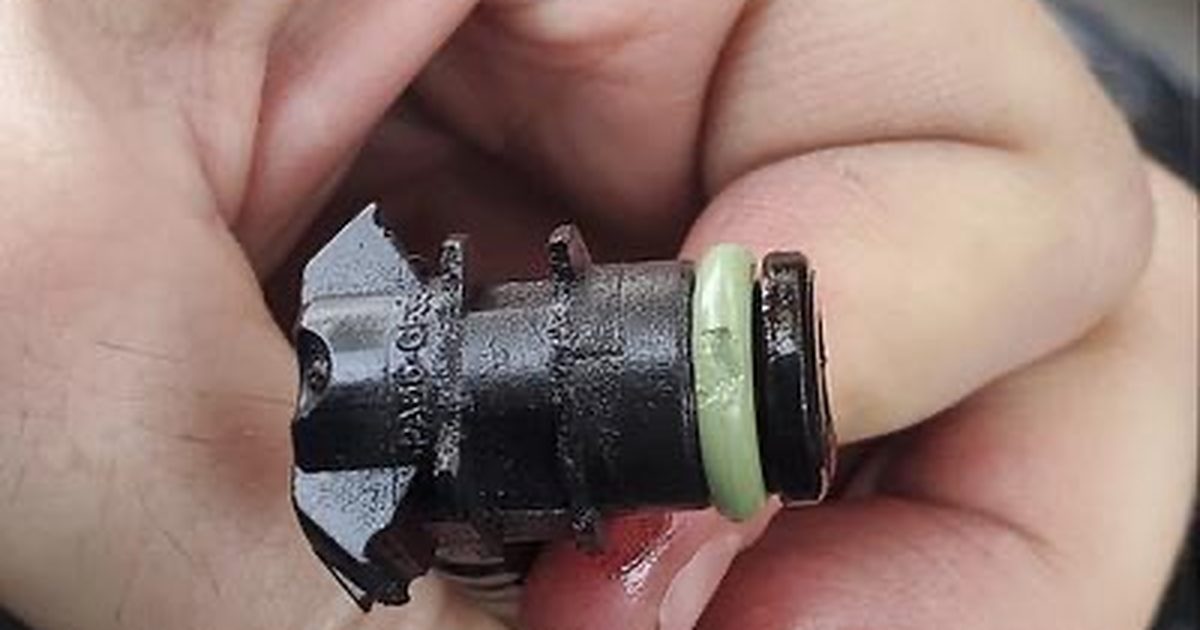
What the fuel pump does, and how it fails
Modern engines need fuel delivered at precise, constant pressure, and the pump that does it is an electric motor submerged inside the gas tank — a location that sounds odd until you know the design logic: gasoline surrounds and cools the motor, and there's no suction plumbing to leak. The pump runs every second the engine does, moving far more fuel than the engine burns; the excess circulates and returns, carrying heat away.
Pumps die of age, heat, and diet. The motor's brushes and commutator wear out over 100,000+ miles like any hard-working motor. Heat accelerates everything — and the pump's cooling is the fuel around it, which is why the chronic quarter-tank driver runs their pump hotter and shortens its life. Contamination finishes the job: rust and sediment from an aging tank, or debris from a bad batch of gas, gets dragged through the pump's strainer and grinds it down.
The failure curve matters: pumps usually weaken before they quit — pressure sags under load, starts get longer, the whine gets louder — and then one day the motor stops. That window of warning is the whole argument for taking the early symptoms seriously.
Diagnose before replacing — the imitators are cheaper
"Cranks but won't start" and "dies under load" have a lineup of suspects, and several cost far less than a pump. The fuel pump relay and its fuse — a $20 fix — kill the pump's power and imitate its death perfectly. A clogged fuel filter (on vehicles where it's separate and serviceable) starves the engine exactly like a weak pump. Failed crankshaft position sensors stop injection and spark entirely, and plenty of no-starts are ignition or immobilizer problems that never involved fuel at all.
Real diagnosis is direct: a fuel pressure test against the spec, listening for the pump's two-second prime when the key goes to ON, checking power and ground at the pump connector, and scanning for codes. On many cars, a tech can command the pump on with a scan tool and watch pressure respond — weak pressure with good voltage convicts the pump; no voltage acquits it and indicts the relay or wiring.
The classic misdiagnosis path — replace the pump on symptoms alone, symptoms continue, then find the real problem — costs the full tank-drop labor for nothing. An hour of testing is the cheap insurance here.
What the job should include
Modern pumps come as a module: pump, level-sending unit, strainer, and reservoir in one assembly that drops into the tank — and the module is what a quality job installs, not a bare pump motor spliced into an old assembly. The tank seal (lock ring gasket) is a mandatory new part; reusing it invites fuel smell and evaporative-system codes. If the vehicle has a serviceable inline fuel filter, it gets replaced in the same visit, because a part-clogged filter will work a brand-new pump to an early death.
The careful extras separate good work from comebacks: inspecting the tank's interior for rust and sediment (a contaminated tank must be cleaned or replaced, or it will eat the new pump), transferring or replacing the strainer sock, checking the wiring connector for the heat damage that high pump current causes over years, and verifying fuel pressure and the absence of leaks after reassembly.
Expect the shop to prefer working on a low tank — some will ask you to arrive near empty, and it's a fair request that saves labor time you'd otherwise pay for.
Why the price varies
The same three words — fuel pump replacement — span a wide range because of access, parts tier, and system design. Access is the big one: an under-seat service panel makes it a one-hour job, while a full tank drop on a rusty truck can be half a day. Neither you nor the shop chooses this; the vehicle's designers did, years ago.
Parts tier is the quality lever you do control. OEM-brand pump modules (often the same suppliers — Denso, Bosch, Delphi — who built the original) cost more and have earned their reputation; bargain-bin pumps have a documented failure-out-of-the-box and short-life problem that makes them a poor bet given the labor cost to swap again. This is a buy-quality category.
System design adds the rest: turbocharged direct-injection engines carry a second high-pressure pump on the engine with its own price; saddle tanks on AWD cars may have twin pumps; and old trucks with dual tanks double several things. Make sure competing quotes name the part brand and which pump they're replacing — that's where the spread usually hides.
How to save money on this repair
Keep the tank above a quarter as a habit — it's free, it keeps the pump cooled and fed, and it's the single best pump-life extender known. Buy gas from busy stations (high turnover means less water and sediment in their tanks), and if your car has a serviceable fuel filter, change it on schedule; filters are cheap and pumps working against clogged filters are not.
At repair time, insist on diagnosis before parts — relays, fuses, and filters resolve enough "dead pump" complaints to make testing mandatory. Choose a quality module over a bargain pump; the labor to do this job twice erases any parts savings several times over. And arrive with a near-empty tank if the shop requests it — you'll pay for less wrestling.
This is also a fair job to price with a mobile mechanic on vehicles with access panels — driveway-friendly and quick. Tank-drop versions favor a shop with a lift, and rust-belt tank straps favor whoever has the torch and the patience.
Signs you need this repair
- Long cranking before start, especially first start of the day — pressure bleeding down or building slowly
- A loud whine or buzz from the tank area that's grown over time (a soft hum is normal)
- The engine sputtering or cutting out at highway speed or under load, then recovering
- Losing power going uphill or under acceleration — demand exceeding what the weak pump delivers
- Sudden stalling and no-restart, sometimes heat-related and temporarily cured by cooling off
- The engine cranking strongly but never firing, with no pump prime hum at key-on
- Worsening fuel economy and hesitation as pressure sags below spec
Cost by vehicle type
| Vehicle | Typical range | Notes |
|---|---|---|
| Compact / economy car | $270, $800 | High-volume models enjoy cheap, plentiful pump assemblies. Some have under-seat access panels that cut labor dramatically — worth checking before comparing quotes. |
| Midsize sedan / small SUV | $290, $870 | Routine tank-drop or access-panel work on most models. Saddle tanks on some AWD sedans use two pumps or a transfer system — make sure the diagnosis identified the right one. |
| Full-size truck / large SUV | $345, $1,025 | Big tanks are heavy and awkward to drop, and long-bed trucks sometimes reward removing the bed instead — a legitimate technique, not a shortcut. Dual-tank setups on older trucks add complexity. |
| Luxury / European | $425, $1,265 | Expect OEM-priced pump modules, and on turbocharged direct-injection engines a second high-pressure pump on the engine with its own diagnosis and price. Confirm which pump failed before approving anything. |
| Hybrid | $320, $955 | Same in-tank pump job as the conventional twin, with one wrinkle: hybrids' sealed pressurized tanks (on some models) require a scan-tool depressurization step. Otherwise priced normally. |
| Electric vehicle | No gasoline, no fuel pump — EVs skip this system entirely. | |
| Diesel / heavy duty | $410, $1,220 | Diesel fuel systems are their own domain: lift pumps, high-pressure injection pumps, and contamination sensitivity that makes failures dramatically more expensive. These estimates are for gasoline vehicles — diesel injection work needs a diesel-specific quote. |
Ranges assume national-average labor rates ($95, $140/hr) and quality aftermarket parts.
Cost by state
State ranges reflect typical independent-shop labor rates for a midsize vehicle.
Common questions
How long do fuel pumps last?
Typically 100,000 to 200,000 miles — many outlive the car. The controllable factors are heat and contamination: chronic low-tank driving runs the pump hot, and sediment-laden gas wears it mechanically. Habitual full-ish tanks and busy gas stations are genuinely effective life extenders, unglamorous as they sound.
Does driving on a low tank really damage the pump?
As a habit, yes. The fuel surrounding the pump is its cooling system, and running the tank low regularly means running the motor hot regularly — heat is what ages the windings and brushes. One low tank does nothing; years of quarter-tank driving measurably shortens pump life. The quarter-tank rule is cheap insurance.
Car cranks but won't start — is it definitely the fuel pump?
No — that symptom has many parents. The pump relay or fuse, a clogged filter, a crank position sensor, ignition failures, and immobilizer issues all present identically from the driver's seat. Listen for the two-second hum from the tank at key-on: silence points toward pump or its power supply, but real diagnosis is a pressure test. Don't buy a pump on symptoms alone.
Should the fuel filter be replaced with the pump?
If your vehicle has a serviceable inline filter, absolutely — a restricted filter is a load the new pump shouldn't inherit, and the part is cheap. Many modern cars build the filter into the pump module itself, in which case it's included by design. Ask which type yours is; the answer also explains why some cars have no filter to service on the maintenance schedule.
Why did the quote mention a second 'high-pressure' pump?
Turbocharged and direct-injection engines use two pumps: the in-tank pump delivers fuel to an engine-mounted high-pressure pump that raises it to injection pressures. They fail differently, are diagnosed differently, and are priced differently. Make sure the diagnosis names which one failed — replacing the in-tank pump for a high-pressure pump fault (or vice versa) is an expensive miss.
Can a mobile mechanic replace a fuel pump?
Often, yes — especially on vehicles with under-seat or trunk access panels, where it's an ideal driveway job. Full tank drops are possible mobile work too (many mobile techs carry tank support equipment), but heavy tanks, rusted straps, and fuel handling favor a shop on some vehicles. An honest mobile tech will tell you which category your car is in from the year and model.
Related repair guides
Sources and further reading
Primary sources behind this page. Federal safety, emissions and consumer-protection references, worth reading before you authorize any repair.
- fueleconomy.gov maintenance guide DOE and EPA guidance on how maintenance affects fuel economy and engine life.
- EPA vehicle & engine certification Emissions standards that govern what may be replaced or modified.
- NHTSA recall & complaint lookup Check any symptom against open recalls and technical service bulletins before paying for a repair.
Need work done? Get a free quote.
Tell us what the car is doing. A local mechanic calls you back, most requests get a call back the same day. No fee, no obligation.