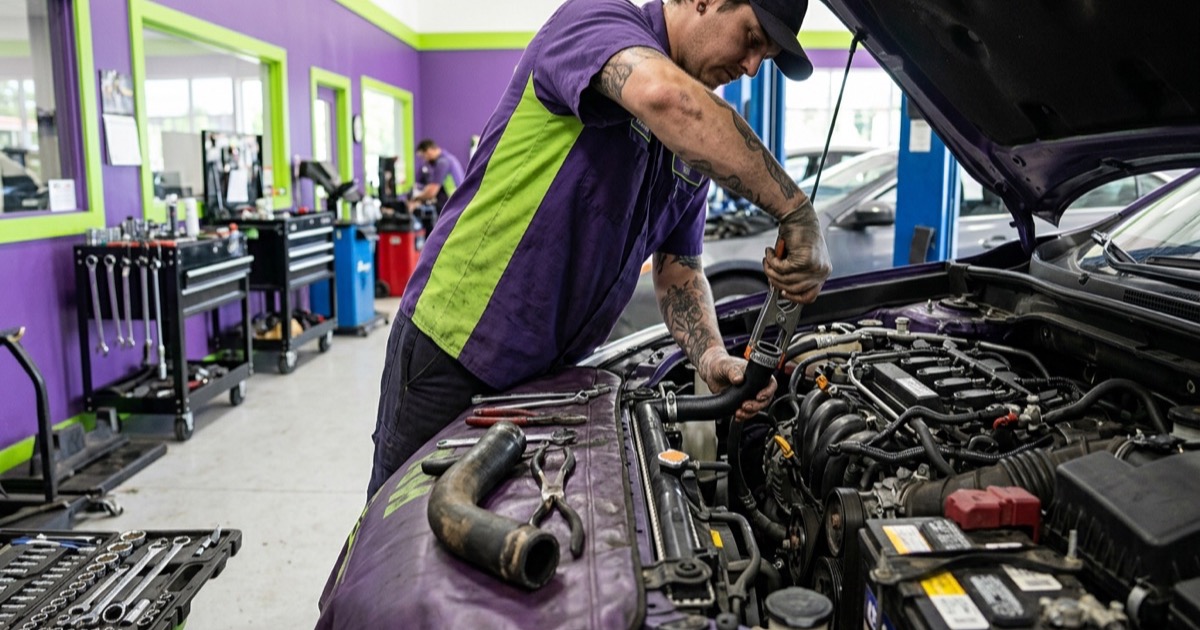
What a Radiator Hose Replacement Includes
Most cars have two main radiator hoses. The upper hose carries hot coolant from the thermostat housing to the top of the radiator. The lower hose brings cooled coolant from the radiator back to the water pump. Many engines also have smaller heater hoses and bypass hoses that do the same kind of work.
The job is mostly simple. The tech drains enough coolant to get below the hose. They loosen the clamps, twist the old hose off and clean the necks it sat on. Then the new hose and clamps go on and the system gets refilled and bled.
The price should include the hose, new clamps if needed, fresh coolant to replace what was lost, the bleed and a leak check with the engine hot.
- Let the engine cool and drain coolant below the hose level
- Remove the clamps and the old hose without cracking the plastic necks
- Clean the radiator and engine necks so the new hose seals
- Fit the new hose with new or good clamps in the right spot
- Refill with the correct coolant and bleed out trapped air
- Run the engine to full temperature and check for leaks under pressure
How to Tell If a Hose Is Bad
Hoses fail from the inside out. Heat and the coolant itself break down the rubber. Oil leaking onto a hose softens it from the outside too.
With the engine cold, squeeze each hose. A good one feels firm and springs back. A bad one feels soft, mushy or crunchy, or it stays pinched. Look for cracks, especially near the clamps, and for bulges or swelling.
Look for signs of a leak. A wet spot under the front of the car, a sweet smell after a drive, or crusty white, green or pink residue around the hose ends all point to a slow leak.
The lower hose has its own failure. It sits on the suction side of the water pump. A weak lower hose can collapse when the engine revs, which cuts off coolant flow and causes overheating with no visible leak. Many lower hoses have a spring inside to stop that.
If the engine is overheating and the hoses look fine, the cause may be a stuck thermostat, a bad water pump, a clogged radiator, a dead fan or a head gasket. Get a pressure test before you start swapping parts.
Why the Price Varies
Most single radiator hose jobs cost about $130 to $450 at an independent shop. Doing both main hoses at once costs more in parts but saves a lot of labor.
Access is the biggest swing. On many cars the upper hose is right on top and takes 30 minutes. A lower hose buried under intake parts, an air box or splash shields can take two hours.
The hose design is the second swing. A simple straight rubber hose is cheap. Molded hoses with many branches, built-in sensors or plastic quick-connect fittings cost more and can be fragile.
The extras are the third. If the plastic neck on the radiator or thermostat housing cracks during removal, that part has to be replaced too. On older cars with plastic parts that have been heat-cycled for years, a good shop will warn you before they start.
Coolant also adds cost. If the old coolant is due for a change anyway, it may make sense to do a full flush instead of just topping off.
A mobile mechanic can replace most upper hoses and many lower hoses in a driveway. They need to bring coolant and a way to catch and haul off the old fluid. Hoses that need a lift for access are better at a shop.
What Usually Gets Done at the Same Time
If one hose has failed from age, the others are close behind. Replacing both upper and lower hoses together usually makes sense on a car with original hoses and high miles. The coolant is already drained, so the second hose adds little labor.
Heater hoses are worth a look while you are there. If they are soft or cracked, they are cheap to add.
The thermostat is a fair add-on on a high-mileage car. The upper hose often connects right to its housing, so the extra labor is small.
A coolant flush is worth it if the coolant is near or past its change interval. Otherwise, a top-off with the right type is fine.
The radiator cap is cheap and worth replacing on an older car. A weak cap lets coolant boil sooner and can make a hose look like the problem.
A new radiator or water pump is only needed if it is leaking or failing on its own. A shop that adds those to every hose job without showing you a leak is upselling.
What to Do If a Hose Bursts on the Road
Watch the temperature gauge, not just the warning light. If the needle climbs past normal or you see steam, turn off the air conditioning and turn the heater on full hot. That pulls some heat out of the engine while you find a safe place to stop.
Pull over and shut the engine off. Do not keep driving to the next exit if the gauge is near the top. A few more miles on an overheated engine can warp the cylinder head or blow the head gasket. That repair can cost more than the car is worth.
Do not open the radiator cap or the coolant tank while the engine is hot. The system is under pressure and the coolant can be well above boiling. Wait at least 30 minutes.
If the split is small and near the end, a tech can sometimes trim the hose and refit it to get you home. Repair tape can slow a tiny leak for a short trip. Plain water can top it off in an emergency. Have the hose replaced and the coolant mix corrected as soon as you can.
Questions to Ask Before You Approve the Quote
A few questions will tell you if the shop is fixing the real problem and doing it right.
- Which hose is bad, and can you show me the leak, swelling or soft spot?
- Is the hose an OEM part, a molded aftermarket part or a universal hose cut to fit?
- If a plastic fitting or neck breaks, what does that part cost?
- Will you replace the clamps or reuse the factory ones?
- What coolant type are you adding, and does it match my manual?
- How will you bleed the air out after the refill?
- Should I replace the other main hose while the coolant is out?
How to Make New Hoses Last
Fix oil leaks above the hoses. Oil softens rubber fast, and a leaking valve cover gasket can ruin a new lower hose in a year.
Keep the coolant fresh. Old coolant turns acidic and attacks hoses from the inside. Changing it on schedule protects the hoses as well as the radiator and water pump.
Use good hoses. Molded hoses made to fit your engine last better than universal hoses bent to fit. A universal hose bent too tight can kink and block flow.
Place clamps correctly. The clamp should sit just behind the bead on the neck, not on top of it. Factory spring clamps keep even pressure as the hose heats and cools. Worm gear clamps can cut into the rubber if they are cranked too tight.
Check your hoses with the squeeze test at every oil change. It takes ten seconds and catches a soft hose long before it bursts.
Signs you need this repair
- Coolant leak or puddle under the front of the car
- Hose feels soft, mushy, swollen or cracked when squeezed cold
- Sweet smell after driving, or steam from under the hood
- Coolant level in the overflow tank keeps dropping
- Temperature gauge climbs higher than normal
- Crusty white, green or pink residue around hose ends or clamps
- Lower hose that collapses when the engine revs
Cost by vehicle type
| Vehicle | Typical range | Notes |
|---|---|---|
| Compact / economy car | $120 to $435 | Upper hoses on most compacts are easy to reach and cheap. Lower hoses may need an under-engine splash shield removed first. |
| Midsize sedan / small SUV | $125 to $460 | Standard job with basic tools. Many newer sedans use quick-connect plastic fittings that can crack when they are old, so a shop may suggest a new fitting or housing too. |
| Full-size truck / large SUV | $145 to $535 | Hoses are big and easy to reach on most trucks, but they cost more and the system holds more coolant. Expect the middle to upper part of the range. |
| Luxury / European | $180 to $650 | Many European cars use molded hoses with plastic fittings and many branches. Parts cost more and a scan tool bleed may be needed, so expect the top of the range. |
| Hybrid | $140 to $505 | Hybrids may have a second cooling loop for the inverter with its own hoses. Make sure the quote names which hose and which loop. |
| Electric vehicle | $145 to $530 | EV coolant hoses run to the battery, motor and charger. Parts and bleed steps are often specific to the maker, so this is dealer or specialist work. |
| Diesel / heavy duty | $175 to $635 | Diesel hoses are large and often reinforced, with more coolant to replace. Some use silicone hoses with special clamps, which cost more. |
Ranges assume national-average labor rates ($95, $140/hr) and quality aftermarket parts.
Cost by state
State ranges reflect typical independent-shop labor rates for a midsize vehicle.
Common questions
How much does it cost to replace a radiator hose?
Most single radiator hose replacements cost about $130 to $450 at an independent shop. Upper hoses are usually cheaper than lower hoses. Molded hoses on European cars and broken plastic fittings push the price higher.
Can I drive with a leaking radiator hose?
Only a very short distance, and only if the temperature gauge stays normal. A small leak can turn into a burst hose without warning. If the gauge rises or you see steam, pull over and shut the engine off to avoid head gasket damage.
Should I replace both radiator hoses at the same time?
It is often a good idea on a high-mileage car with original hoses. Both hoses aged together, and the coolant is already drained. The second hose adds parts cost but little labor.
How often should radiator hoses be replaced?
There is no fixed interval on most cars. Many hoses last 5 to 10 years or more. Check them with a squeeze test at every oil change and replace them when they feel soft, swollen or cracked.
Can I use tape or a sealant to fix a radiator hose?
Only to get home or to a shop. Repair tape can slow a small leak for a short drive, but it will not hold up to the pressure and heat for long. Replace the hose as soon as you can.
What happens if a radiator hose bursts while driving?
Coolant sprays out, the engine overheats within minutes and you will often see steam. Pull over safely and shut the engine off right away. Driving on an overheated engine can warp the head and blow the head gasket.
Can a mobile mechanic replace a radiator hose?
Yes, most upper hoses and many lower hoses can be done in a driveway. The mechanic brings coolant and hauls away the old fluid. Hoses buried deep in the engine bay or on EVs may need a shop.
Related Repair Guides
More Cooling Repair Costs
Sources and further reading
Primary sources behind this page. Federal safety, emissions and consumer-protection references, worth reading before you authorize any repair.
- fueleconomy.gov maintenance tips DOE and EPA guidance on routine maintenance that keeps the engine running at the right temperature.
- DOE Alternative Fuels Data Center: EV maintenance Federal overview of the battery coolant system and other service EVs still need.
- SAE International The engineering body behind cooling system hose and clamp standards.
Need Work Done? Get a Free Quote.
Tell us what the car is doing. A local mechanic calls you back, most requests get a call back the same day. No fee, no obligation.