What a Coolant Flush Includes
Your engine makes a lot of heat. Coolant moves that heat from the engine to the radiator, where air carries it away. The water pump keeps it moving and the thermostat decides when it flows to the radiator.
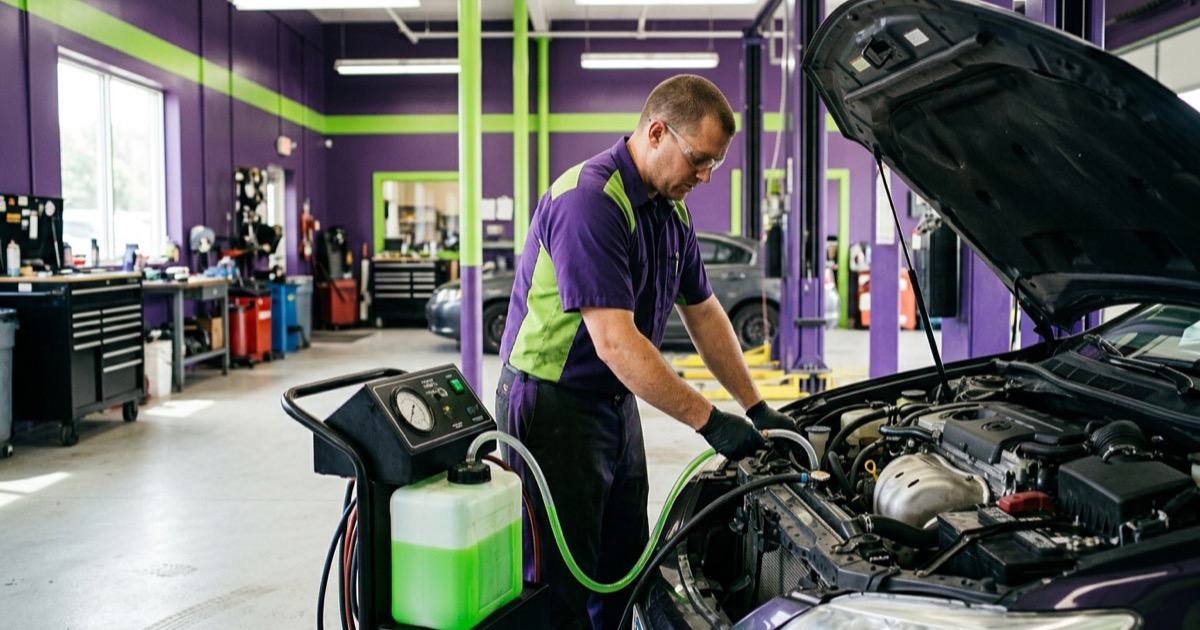
The word flush gets used for two different jobs. A drain and fill opens the radiator drain and lets the old coolant run out, then refills it with new. That often swaps out only about half the coolant, because a lot stays in the engine block and heater core. A machine flush pushes new coolant through the whole system and pushes old coolant out the other end. That replaces much more of it.
Both are fine if done right. A drain and fill done twice gets you close to a full change. What matters is the right coolant, the right mix and no air left in the system.
- Test the old coolant for strength and condition
- Drain or machine flush the old coolant out of the system
- Refill with the coolant type your engine calls for, mixed 50/50 with distilled water unless it comes premixed
- Bleed out trapped air using the bleed screws or the maker's procedure
- Run the engine to full temperature and check for leaks
- Top off the overflow tank after it cools and dispose of the old coolant properly
Why Coolant Wears Out
The antifreeze part of coolant, usually ethylene glycol, lasts a long time. The additives mixed into it do not. They coat metal parts to stop rust, protect the water pump seal and keep scale from building up.
As those additives get used up, the coolant turns acidic. It starts to eat aluminum in the radiator and cylinder heads. Rust and scale build up in the small tubes of the radiator and heater core. The water pump seal starts to weep.
That is why most makers set both a mileage and a time limit. Old green coolant was usually changed every two years or 30,000 miles. Most modern long-life coolants go five years or 100,000 miles or more for the first change. Some makers say even longer, then shorter after that. Your owner's manual or the label on the coolant tank has your number.
A shop can test the coolant with test strips or a refractometer. Some also check it with a voltmeter. A few tenths of a volt between the coolant and the engine can point to worn-out coolant or a bad ground.
Why the Price Varies
Most independent shops charge about $100 to $200 for a coolant flush. Quick lube chains often post prices in the same range. Dealers usually charge more, especially when they use their own brand of coolant.
The coolant is the first swing. Basic universal coolant is cheap. Brand-name coolant from the dealer costs more. A big engine that holds three gallons costs more to fill than a small one that holds one and a half.
The method is the second. A simple drain and fill is cheaper. A machine flush that pushes all the old coolant out costs more but gets a fuller change.
The bleed is the third. Some engines push air out on their own. Others have high spots that trap air and need a careful bleed, sometimes with a scan tool to run an electric water pump or open valves. That adds time.
A mobile mechanic can do a drain and fill in your driveway on most cars. They need a way to catch and haul off the old coolant, since it cannot go down a storm drain. Machine flushes are usually a shop job.
Getting the Coolant Type Right
This is where cheap jobs go wrong. Coolant is not all the same, and color is not a reliable guide anymore. The same color can mean different chemistry from one brand to the next.
The main types are IAT, the old green kind, OAT, often orange or red, and HOAT, a mix used by many makers in yellow, pink, blue and other colors. Each uses different additives to fight rust.
Mixing types can cut their protection or, in some cases, form sludge. The safest move is the exact type your owner's manual or coolant tank calls for. Universal coolants claim to work with all types, and many shops use them. If your car is still under warranty, use the factory spec.
Mix concentrate with distilled water, not tap water. Tap water carries minerals that leave scale in the radiator. A 50/50 mix is right for most climates. Too much antifreeze actually cools worse and can freeze at a higher temperature than a proper mix.
What Usually Gets Done at the Same Time
A coolant flush is a good time to look at the rest of the cooling system, because a failure there wipes out the benefit of new coolant.
Check the radiator hoses. Squeeze them when the engine is cool. Soft, swollen or cracked hoses should be replaced while the coolant is out anyway, which saves a second drain.
Check the radiator cap. It holds pressure that raises the boiling point. A cheap new cap on an old car is often a smart add-on.
The thermostat is a fair add-on on a car with high miles and the original part. Doing it during a flush saves the labor of draining again later.
The water pump is only worth it during a flush if it is already weeping or if it is driven by the timing belt and that belt is due. Otherwise, a new pump on a dry, quiet one is an upsell.
A pressure test is worth the small extra cost if you have been adding coolant. It finds leaks before they leave you on the side of the road.
Diagnosis First: Flushing Will Not Fix Overheating
A coolant flush is maintenance. It is not a fix for an engine that runs hot. If your temperature gauge is climbing, find out why before you pay for new coolant.
Common causes of overheating are a leak, a stuck thermostat, a weak water pump, a clogged radiator, a dead cooling fan or a head gasket that is pushing exhaust into the coolant. A pressure test, a look at the fans and a combustion gas test can sort these out.
If you are losing coolant, look for drips under the car, crusty residue on hoses and the water pump, and a sweet smell. Steam from the tailpipe or white smoke can point to a head gasket. Coolant on the passenger floor or a foggy windshield can point to a heater core.
A shop that sells a flush to fix overheating without testing first is guessing. New coolant may cover the symptom for a week and then the real problem comes back.
Questions to Ask Before You Approve the Quote
Ask these before the work starts so you know what you are paying for.
- Is this a drain and fill or a machine flush, and how much old coolant will it replace?
- What coolant type and brand are you using, and does it match my owner's manual?
- Will you mix it with distilled water or use premixed coolant?
- How will you bleed the air out of my engine?
- Did you test my old coolant, and what did it show?
- Did you check the hoses, radiator cap and water pump for leaks?
- How do you dispose of the old coolant?
Signs you need this repair
- Coolant is past the age or mileage in your owner's manual
- Coolant looks rusty, brown, cloudy or has bits floating in it
- Test strips show weak freeze protection or worn additives
- Heater blows lukewarm air even when the engine is warm
- Temperature gauge reads higher than normal on hot days or hills
- Crusty residue around the radiator, hoses or water pump
- You do not know when the coolant was last changed on a used car
Cost by vehicle type
| Vehicle | Typical range | Notes |
|---|---|---|
| Compact / economy car | $90 to $205 | Small engines hold about 5 to 7 quarts of coolant and drain easily. This is the low end of the range. |
| Midsize sedan / small SUV | $90 to $215 | A standard drain and fill or machine flush takes about an hour. Some engines need a bleed screw or a special funnel to get all the air out. |
| Full-size truck / large SUV | $105 to $245 | Big V8s and diesels hold more coolant, so fluid cost goes up. Expect the upper half of the range. |
| Luxury / European | $125 to $295 | Most European makers require their own coolant type and a strict bleed procedure, sometimes with a scan tool to run the electric water pump. Use the exact spec on the tank. |
| Hybrid | $100 to $235 | Many hybrids have two cooling loops, one for the engine and one for the inverter, each with its own interval. Ask if the quote covers one loop or both. |
| Electric vehicle | $105 to $245 | EVs use coolant for the battery and motor, often with very long intervals. Some need a scan tool to open valves and bleed the loop, so this is dealer or specialist work. |
| Diesel / heavy duty | $125 to $290 | Heavy diesels hold a lot of coolant and many need a coolant made for diesels with extra additives. Fluid cost alone can push this above the range. |
Ranges assume national-average labor rates ($95, $140/hr) and quality aftermarket parts.
Cost by state
State ranges reflect typical independent-shop labor rates for a midsize vehicle.
Common questions
How much does a coolant flush cost?
Most shops charge about $100 to $200 for a coolant flush. Dealers often charge more. Big trucks, diesels and cars that need special coolant or a scan tool bleed land at the top of the range.
How often should you flush your coolant?
It depends on the coolant. Old green coolant was every two years or 30,000 miles. Most modern long-life coolants go about five years or 100,000 miles or more. Check your owner's manual or the label on the coolant tank.
Is a coolant flush necessary or just an upsell?
It is necessary when your coolant is at its age or mileage limit, because the rust-fighting additives wear out. It is an upsell when a shop pushes it at every oil change on a car with fresh coolant. Ask them to test it and show you the result.
What is the difference between a coolant flush and a drain and fill?
A drain and fill swaps out only part of the old coolant, often about half. A machine flush pushes new coolant through the whole system and replaces much more. Both work if the right coolant is used and the air is bled out.
Can I mix different colors of coolant?
It is best not to. Color does not tell you the chemistry anymore, and mixing types can cut rust protection or form sludge. Use the exact type your manual calls for, or a universal coolant if you cannot get it.
Will a coolant flush fix my overheating?
Usually no. Overheating is often caused by a leak, a stuck thermostat, a bad water pump, a clogged radiator, a dead fan or a head gasket. Get it tested first so you fix the real problem.
Can a mobile mechanic do a coolant flush?
Yes, a mobile mechanic can do a drain and fill on most cars in your driveway. They need to catch and haul away the old coolant, since it is poison. Machine flushes and EV coolant service are usually shop jobs.
Related Repair Guides
More Cooling Repair Costs
Sources and further reading
Primary sources behind this page. Federal safety, emissions and consumer-protection references, worth reading before you authorize any repair.
- fueleconomy.gov maintenance tips DOE and EPA guidance on keeping the engine in tune, which includes a healthy cooling system.
- DOE Alternative Fuels Data Center: EV maintenance Federal overview of the battery cooling system and other service EVs still need.
- EPA: Recycling basics EPA guidance on recycling household and automotive waste, including fluids that should never go in the trash or a drain.
- SAE International The engineering body behind coolant and cooling system test standards.
Need Work Done? Get a Free Quote.
Tell us what the car is doing. A local mechanic calls you back, most requests get a call back the same day. No fee, no obligation.