Check Engine Light Flashing? What It Means and What to Do Right Now
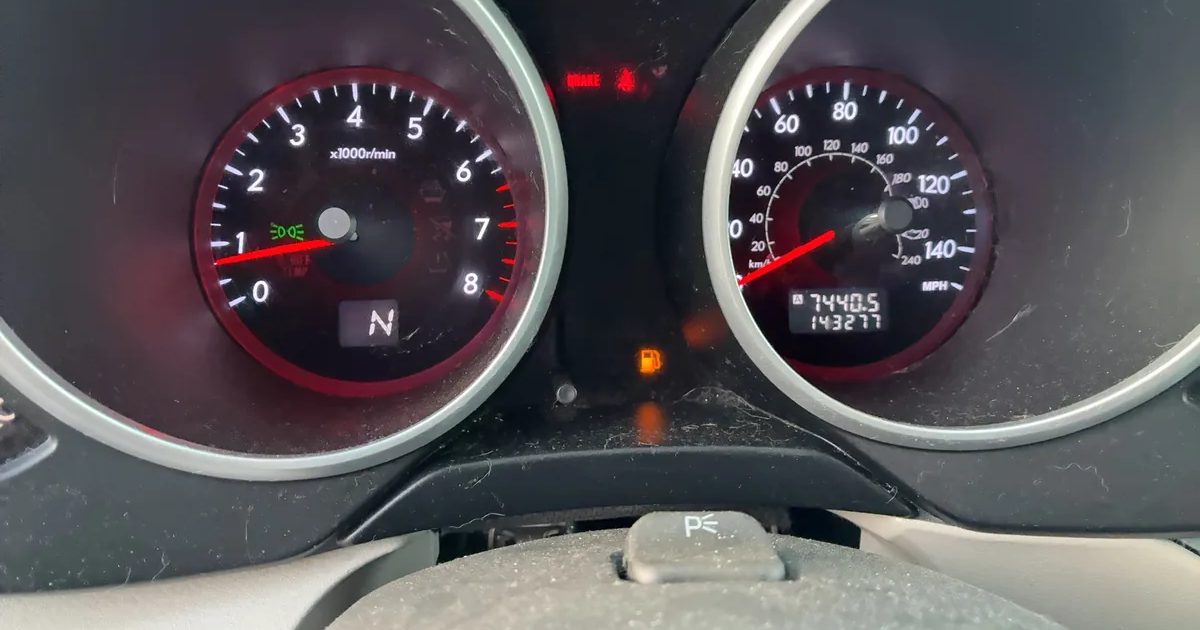
A flashing check engine light means your engine is misfiring right now, and unburned fuel is dumping into your catalytic converter, which can overheat and fail quickly if you keep driving. Stop driving as soon as you can do so safely.
Ignoring a flashing light can turn a $150 spark plug fix into a catalytic converter replacement costing $800 or more, and in rare cases it raises the risk of fire if raw fuel keeps hitting a superheated converter. Do this immediately.
- Ease off the gas. Let your speed drop and reduce the load on the engine.
- Pull over to a safe spot, such as a shoulder, parking lot, or side street away from traffic.
- Shut the engine off once stopped. Don't idle "just to see what happens."
14 min read · 13 sections
A Flashing Check Engine Light at a Glance
An active misfire can damage your catalytic converter within minutes, so the right response is to stop as soon as it's safe, not to keep going until the next exit.
- Stop immediately. Reduce speed, pull over to a safe spot, and shut off the engine as soon as you can.
- Flashing is worse than steady. A steady light means a stored fault. A flashing light means an active misfire that can damage the converter.
- Get codes before repairs. Codes like P0301 pinpoint the failed cylinder and keep you from paying for parts on a guess.
- Distance isn't the right measure. Load, speed, and duration matter more than mileage when deciding whether to drive or tow.
- Get help fast. MechanicRank lists mobile mechanics who can often diagnose and repair a misfire the same day.
What's the Difference Between a Flashing and Steady Check Engine Light?
A steady check engine light means the computer stored a fault, often something like a loose gas cap, an aging oxygen sensor, or an evaporative emissions leak. Nothing needs to happen this second. A flashing light is a different animal entirely.
Under OBD-II rules, the malfunction indicator lamp (MIL) blinks specifically to flag misfires severe enough to damage the catalytic converter. Your engine's computer tracks how often cylinders fail to fire correctly. Once the misfire rate crosses the threshold that puts the converter at risk, the ECM flashes the lamp as a direct instruction to stop now.
Think of it like pouring gasoline onto a hot barbecue grate instead of burning it in the firebox. The grate wasn't built for that kind of heat, and it warps. This is the damage chain in plain terms.
- A cylinder misfires and sends unburned fuel into the exhaust instead of burning it in the combustion chamber.
- That raw fuel reaches the catalytic converter, where the converter's own heat ignites it.
- The converter's internal substrate overheats and can melt or clog, sometimes within a very short distance of driving.
What Causes a Flashing Check Engine Light?
Misfires are behind nearly every flashing check engine light, but the root cause varies. Matching your symptoms to a likely cause helps you decide how carefully you can move the car and what to tell a technician.
Symptoms tell you a lot before a scan tool ever gets involved. Severe shaking, jerking during acceleration, or a sudden loss of power all confirm an active misfire. A raw fuel smell or visible smoke points to something more urgent, like a flooded or stuck-open injector.
If you smell raw fuel, see smoke, or notice the exhaust area getting unusually hot, shut the engine off immediately and call a tow. Don't try to drive even a short distance. These are the most common triggers.
- Worn or fouled spark plugs. They often cause a rough idle and a flashing light on cold starts or under acceleration.
- Failed ignition coils. These usually produce a sharp, single-cylinder stumble, sometimes with a distinct "miss" you can feel through the seat.
- Faulty fuel injectors. A clogged or leaking injector often causes hesitation under load and, in bad cases, a raw fuel smell.
- Low compression or internal engine damage. A worn piston ring or burnt valve tends to show up as a steady loss of power rather than a sudden jolt.
- Vacuum leaks. A cracked hose or intake gasket often causes an unstable idle that worsens at stoplights.
- Electrical or sensor faults. These are less common, but a failing crank position sensor can mimic a misfire pattern.
What to Do the Moment the Light Starts Flashing
Your first 60 seconds matter more than anything a mechanic does later.
If you own or can borrow an OBD-II scanner, pull the stored codes once you're safely stopped and note them for the shop or tow driver. Don't authorize any repair until a technician confirms the actual codes. A guess costs more than a scan. Work through these steps in order.
- Let off the gas and reduce engine load without slamming the brakes.
- Steer to the nearest safe spot. A shoulder, driveway, or parking lot beats a live traffic lane every time.
- Turn the engine off once you've stopped, rather than idling.
- Check for smoke or a fuel odor around the engine bay and undercarriage. Call 911 if you suspect fire.
- Wait 30 to 60 seconds. Consider a cautious restart only if there was no smoke or fuel smell and you need to move a short distance to real safety, like off a highway shoulder onto an exit ramp.
- Call for a tow if the light is still flashing after the restart, or if the car shakes, stalls, or loses power again.
How Do Mechanics Diagnose a Flashing Check Engine Light?
Technicians start with the same tool you might use at home, an OBD-II scanner. Reading the stored Diagnostic Trouble Codes narrows the search fast. A P0300 code means a random, multi-cylinder misfire. P0301 through P0308 point to one specific cylinder, which tells the technician exactly where to look instead of guessing across the whole engine.
Confirming the code before paying for parts is the easiest way to avoid an unnecessary replacement. If plugs or coils turn out to be the cause, a spark plug replacement typically runs $115 to $440 and an ignition coil replacement runs $100 to $390.
After reading the codes, the diagnosis usually runs like this.
- Inspect spark plugs and coils for fouling, cracking, or arcing.
- Swap a suspect coil with a known-good one from another cylinder to confirm the fault follows the part.
- Test injector spray pattern and resistance if the plugs and coils check out.
- Run a compression or leak-down test if the symptoms suggest internal engine damage rather than an ignition fault.
- Check for catalyst efficiency codes (P0420 or P0430) alongside the misfire codes. When both show up together, the misfire almost always came first and damaged the converter afterward, so the misfire gets fixed before anyone talks about replacing the converter.
Can You Drive on a Flashing Check Engine Light?
There's no universal safe mileage figure, and the conservative rule is zero additional miles beyond whatever gets you to a genuinely safe stopping spot. Real-world driving isn't always that clean, though, so a rough decision checklist helps. Distance alone isn't the right measure. Load, speed, and how long the misfire has already been active matter more than how many miles are left to your driveway.
Whatever you decide, get the codes read before you approve any repair quote. A confirmed P0301 costs nothing to check and can save hundreds in parts bought on a guess. Use these rules of thumb.
- With a flashing light but no shaking, at low speed and close to a safe spot, a very short, slow drive to that spot is possible in some situations.
- With a flashing light plus shaking, a fuel smell, or a rising temperature gauge, stop and tow. No exceptions.
- On the highway or while towing a trailer, have the car towed. Sustained load and speed damage the converter faster than city driving does.
Maintenance That Prevents a Flashing Check Engine Light
Most flashing lights trace back to neglected ignition components, so prevention is usually cheaper than the emergency. Staying ahead of plug and coil wear, along with using quality fuel, cuts your odds significantly.
- Replace copper spark plugs at the interval your manufacturer recommends. Iridium or platinum plugs often stretch to 60,000 to 100,000 miles. Check your owner's manual for your engine's exact interval.
- Replace ignition coils promptly when symptoms appear instead of waiting for failure, since one weak coil often stresses its neighbors.
- Use quality fuel and keep the fuel system clean to protect the injectors.
- Deal with a steady, non-flashing check engine light promptly. Many flashing emergencies started as an ignored steady light weeks earlier.
- Before a long trip or before towing anything heavy, have the plugs, coils, and fuel delivery checked. Load amplifies whatever weakness is already there.
Minor Misfire or Catastrophic Failure? Reading the Difference
A flashing light doesn't always mean the same level of emergency. Some flashing events come from a single lazy cylinder that a relatively inexpensive coil repair fixes. Others are the front edge of a much bigger mechanical failure. Telling them apart keeps you from either overreacting or underreacting.
A minor misfire tends to feel like a rhythmic stumble, most noticeable at idle or light acceleration, and it usually doesn't get dramatically worse the longer you drive (it's still an emergency, just a smaller one). The engine still pulls, just unevenly. You might hear a faint popping from the exhaust. Fuel economy drops noticeably, but the car still responds to the throttle predictably.
Catastrophic failure looks and feels different. Watch for a sudden, severe loss of power where the engine can barely hold highway speed. Listen for a knocking or grinding sound that wasn't there before, which often points to internal damage like a spun bearing or a bent valve rather than a simple ignition fault. Smell matters too. A sharp burning oil odor, not just fuel, suggests something is overheating internally. A temperature gauge climbing into the red alongside the flashing light is one of the clearest signs of engine damage in progress, not just a fouled plug.
Steam or thick white smoke from the tailpipe, especially with a sweet smell, often means coolant is entering the combustion chamber, a sign of a blown head gasket rather than a simple misfire. A flashing light plus white smoke plus overheating means stop the car immediately and call a tow. Driving even a quarter mile further risks turning a head gasket job into a full engine rebuild.
What to Tell a Tow Truck or Repair Shop
The information you give a tow dispatcher or service advisor shapes how fast and how correctly your car gets fixed. A vague description like "the light was blinking" wastes time on both ends.
Give them specifics, including when the light started flashing, whether it came on suddenly or built up gradually, and what the car was doing at the time (idling, accelerating, or cruising at highway speed). Mention any physical symptoms, such as shaking, a miss you could count, a fuel smell, visible smoke, or unusual sounds. If you pulled codes with a scanner, read them off exactly. A P0301 versus a P0300 changes what a technician expects to find before the car even arrives.
Tell the tow driver whether the car is drivable at all or needs to be winched onto the flatbed, since a car that's shaking badly or dragging a component shouldn't be driven onto the truck under its own power. If you're calling a mobile mechanic instead of going to a shop, describe your location precisely, including whether the car is somewhere safe for a technician to work (a level shoulder versus a live traffic lane makes a real difference to how quickly someone can get to you).
Ask upfront whether the shop or mobile service diagnoses before quoting or quotes from symptoms alone. A shop that reads codes first and quotes second will save you money over one that guesses. Ask that any quote for a catalytic converter depend on confirming the misfire is fixed first, since replacing a converter without fixing the underlying misfire just repeats the failure.
Can You Reduce Damage While Waiting for Repair?
Once the car is off and safely parked, there isn't much you can do to reverse damage already underway, but a few habits limit how much worse things get before a technician looks at it.
Don't restart the engine repeatedly to "test" whether the light stops flashing. Each restart under misfire conditions sends another dose of unburned fuel toward the converter. If you must move the car a very short distance (say, from a traffic lane to a driveway), do it once, at low RPM, and shut it off immediately after.
Fuel system cleaners and injector additives are sometimes marketed as a fix for rough running, but they won't stop an active misfire or undo converter damage that's already happening. Save that kind of product for routine maintenance after the actual problem (a coil, plug, or injector) is diagnosed and repaired.
If the car has to sit for a day or two before a tow or appointment, resist the urge to "just check if it still does it." Every extra start under a live misfire is a few more minutes of exposure for the converter. The safest plan is simple. Leave it off, note when the symptoms started, and get the codes read as soon as you can, whether with your own scanner or the shop's equipment. Waiting a day for a diagnosis is far cheaper than an extra restart that finishes off a converter that was already halfway gone.
Why Every Flashing Light Deserves Emergency Treatment
The pattern is common. A driver keeps going another 20 miles because the car "still runs fine," and a relatively minor coil repair turns into a much more expensive converter replacement plus labor. It keeps happening because a flashing light doesn't look dramatic from inside the cabin. It just looks like an annoying blink.
Treat it like a fire alarm, not a low-fuel warning. Acting in the first few minutes is what protects both your wallet and your safety.
Need a Mechanic Now? The Fastest Path to Help
Whether your car is safely stopped and drivable for a short distance or you're stuck on the shoulder wondering who to call, MechanicRank lists mobile mechanics who come to your location, often the same day.
Listings show ratings from public customer reviews, and MechanicRank's repair cost guides give you typical price ranges, so you're not negotiating blind when a technician quotes a coil, injector, or converter job. If you pulled codes with a scanner before calling, share them. It helps the technician arrive with the right parts on the first trip. Mobile availability varies by city, so confirm the lead time when you call.
Like this? Add MechanicRank to your Google sources
Owners Ask Us
Why is my check engine light flashing instead of staying on?
Your engine's computer only flashes the light when it detects an active misfire severe enough to risk the catalytic converter. A steady light means a less urgent, stored fault. Flashing means stop now.
What does a flashing check engine light mean if the car still drives fine?
Even if the car feels normal, a flashing light means a misfire is actively happening. You may not feel every misfire, especially at low RPM, but the converter damage happens regardless of how smooth the ride feels.
Is it ever okay to keep driving with a flashing check engine light?
Only far enough to reach a genuinely safe stop, ideally a mile or less at reduced speed. Highway driving, towing, or any shaking or fuel smell means you should tow instead.
What are the most common check engine light causes behind a flashing signal?
Worn spark plugs, failed ignition coils, faulty fuel injectors, and occasionally low compression from internal engine wear account for most flashing events.
How much does it cost to fix a flashing check engine light?
It depends entirely on the cause. Spark plugs run [$115 to $440](https://mechanicrank.com/repairs/spark-plug-replacement), ignition coils run [$100 to $390](https://mechanicrank.com/repairs/ignition-coil-replacement), and a full catalytic converter replacement runs $395 to $1,680 if the converter is already damaged.
Can an intermittent check engine light that flashes occasionally still be serious?
Yes. An intermittent flashing pattern often means the misfire only happens under certain conditions, like acceleration or cold starts, but the risk to the converter is the same each time it flashes.
Picked for You
Own a shop or a mobile operation?
Your free MechanicRank listing is one of the citations this article talks about. Claimed listings get an owner badge, a photo gallery, and a green star on the map.
Claim Your Free Listing →