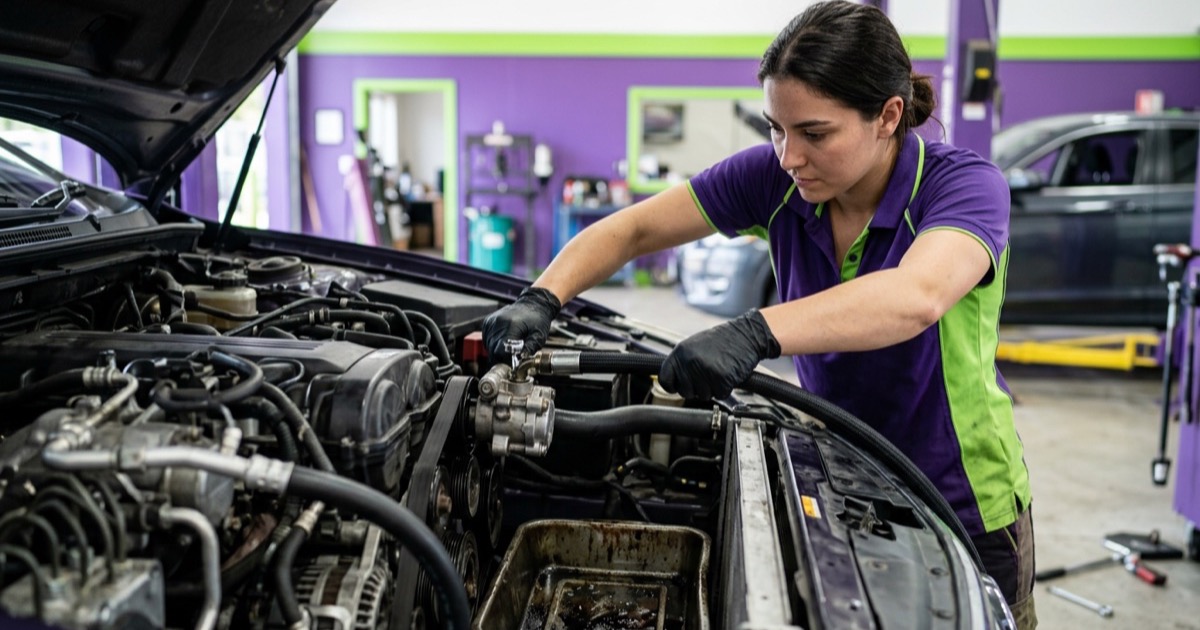
What the Job Is and What You Are Paying For
A hydraulic power steering system has three hoses or lines. The high pressure hose carries fluid from the pump to the rack or gear box at very high pressure. The return hose carries fluid back to the reservoir at low pressure. The supply hose feeds the pump from the reservoir. Many cars also have a cooler line, a metal loop that sits in front of the radiator.
The pressure hose fails most often. It is made of rubber with metal crimped ends, and heat and pressure crack the rubber near the crimps. Return and supply hoses use clamps and fail when the rubber gets old and soft.
A proper job includes draining or siphoning the fluid, removing the bad hose, installing the new one with new O rings or washers, filling with the right fluid, and bleeding the air out. The tech then checks for leaks at full lock with the engine running.
Most of the price is labor. A return hose can cost under $30. A pressure hose assembly usually costs $60 to $200 for common cars, and more for European or heavy duty trucks.
Why the Price Varies From Car to Car
Which hose leaks is the biggest factor. A return hose with clamps is often a quick job. A pressure hose with fittings at both ends and a long route is a bigger one.
Routing is next. On some cars the pressure hose runs straight from the pump to the top of the rack. On others it runs behind the engine, under the subframe or past the exhaust. Some cars need the splash shields, an engine mount or even the subframe loosened to get the hose out.
Fitting condition matters. Steel fittings can rust to the rack. A rounded fitting can turn a one hour job into two.
Parts tier changes the price. Aftermarket pressure hoses are usually a good value. Factory hoses can cost twice as much, and on some cars they are the only choice.
Dealers charge the most per hour. Independent shops and mobile mechanics usually charge less and use quality aftermarket hoses.
What Usually Gets Done at the Same Time
Hose jobs have a few useful add ons and a few common upsells.
Worth it almost every time is a power steering fluid flush or at least a full drain and fill. The system is already open, and old fluid holds dirt and wear metal.
Worth it if the other hoses are old, soft or seeping is replacing the return hose too. It is cheap and often shares the same work area.
Worth it on cars with a cooler loop is checking the cooler line. Rusty cooler lines leak and are cheap to replace while the system is open.
Worth checking is the pump. If it whines even with full fluid, it may have been damaged by running low.
Worth cleaning is the area under the leak, especially the exhaust. That way a new leak is easy to spot, and old fluid stops smoking.
Usually an upsell is a new rack or pump when the only problem is a wet hose. Fix the hose, clean it up and watch it for a week.
- Power steering fluid flush or drain and fill: yes
- Return hose if old or seeping: yes, it is cheap
- Cooler line if rusty or wet: yes
- Pump: only if it whines with full fluid or tests weak
- Rack or pump for a hose only leak: usually skip
Make Sure It Is Really the Hose
Power steering fluid runs downhill and gets blown around by the fan, so the wet spot is not always the leak.
The first check is the fluid level and color. A low reservoir means fluid is going somewhere. Fluid is usually red, amber or clear and feels oily.
The crimped ends of the pressure hose are the classic spot. Look for wet, dirty buildup around the metal crimp. Run the engine and turn the wheel while a helper watches. A pressure hose leak often gets worse with the wheel turned.
Other parts leak in the same area. The pump shaft seal, the reservoir, the rack seals and the O rings at hose fittings can all look like a hose leak. A fitting that only needs a new O ring is much cheaper than a new hose.
If the fluid is on the exhaust, under the car near the front wheels, or inside the rack boots, check the rack seals before you replace hoses.
A good shop cleans the area, adds UV dye if needed, and checks again after a short drive.
Questions to Ask Before You Approve the Quote
These questions help you pay only for the hose that actually leaks.
- Which hose is leaking, pressure, return or cooler line?
- Can you show me the wet spot or send a photo?
- Is the leak at the hose itself or just a fitting O ring?
- Is the new hose aftermarket or factory?
- Does the price include fluid, new O rings and bleeding the system?
- What fluid type will you use, and does it match my manual?
- Did you check the pump and rack for leaks too?
- What is the warranty on the hose and the labor?
Can a Mobile Mechanic Do It?
Yes, for many cars. Return hoses and pressure hoses with good access are common driveway jobs for a mobile mechanic with hand tools, flare nut wrenches and a fluid pump.
Hoses that run under the subframe or behind the engine on V6 cars are still possible on jack stands, but they take longer and are easier on a lift.
Bleeding the system is simple on most cars. You turn the wheel lock to lock with the engine off and then on, and top off the fluid until the bubbles stop.
Ask the mobile tech to bring the right fluid for your car and a drain pan big enough to catch it all.
How to Make a New Hose Last
A quality power steering hose often lasts 80,000 to 120,000 miles. Heat and pressure are what age it.
Keep the fluid full and clean. Low fluid makes the pump run hot, and hot fluid ages the hoses faster.
Use the correct fluid. Some cars use ATF, some use a specific power steering fluid, and some European cars use a special green or yellow fluid. Mixing types can swell or harden the rubber.
Make sure the hose is clipped and routed exactly like the old one. A hose that touches the exhaust or rubs on a bracket will wear through.
Avoid holding the wheel at full lock for more than a few seconds. That is the moment of highest pressure in the system.
Signs you need this repair
- Reddish or amber fluid dripping near the front of the engine
- Power steering fluid level that keeps going down
- Whining or groaning noise when turning the wheel
- Steering that feels heavy, especially when parking
- Burning smell or light smoke after fluid drips on the exhaust
- Wet, dirty buildup around a hose fitting or crimp
- Foamy or bubbly power steering fluid in the reservoir
Cost by vehicle type
| Vehicle | Typical range | Notes |
|---|---|---|
| Compact / economy car | $140 to $560 | Many newer compacts have electric steering and no hoses at all. Older compacts with hydraulic steering usually have short hoses with fair access, often about an hour of work. |
| Midsize sedan / small SUV | $145 to $600 | Midsize V6 cars often route the pressure hose behind the engine to a rack low in the back, which can mean two hours or more. Some hoses include a cooler loop in front of the radiator. |
| Full-size truck / large SUV | $165 to $700 | Trucks with hydraulic steering usually have good access to the gear box from above. Trucks with a hydraulic brake booster have extra hoses to the booster, and those can leak too. |
| Luxury / European | $205 to $855 | European hoses often come as one long assembly with built in sensors or brackets, and many are only sold as factory parts. Plan on the top of the parts range. |
| Hybrid | $160 to $660 | Most hybrids use electric power steering and have no hoses. A few older hybrids use an electric pump with hydraulic hoses, which are serviced like a gas car's. |
| Electric vehicle | Electric cars use electric power steering with no pump, hoses or fluid, so there is no power steering hose to replace. | |
| Diesel / heavy duty | $200 to $830 | Heavy duty trucks run higher steering pressure, and many share the pump with a hydraulic brake booster. Hoses are larger and cost more, and a leak can affect both steering and braking feel. |
Ranges assume national-average labor rates ($95, $140/hr) and quality aftermarket parts.
Cost by state
State ranges reflect typical independent-shop labor rates for a midsize vehicle.
Common questions
How much does it cost to replace a power steering hose?
Most drivers pay about $150 to $500 at an independent shop or mobile mechanic. A return hose sits at the low end. A pressure hose on a V6 or a European car sits at the high end, and a dealer costs more.
Can I drive with a leaking power steering hose?
For a short time, if it is a slow seep and you keep the fluid full. Check the level every few days. If fluid is dripping on the exhaust, the steering goes heavy or the pump whines, get it fixed right away.
Which power steering hose leaks most often?
The high pressure hose, especially at the metal crimps near each end. It carries the highest pressure and sits close to engine heat.
Can I use a regular hose and clamps on a power steering pressure line?
No. The pressure line carries far more pressure than a clamp can hold. Only a proper pressure hose with crimped fittings is safe. Clamped hoses are fine only on the low pressure return side.
How long does it take to replace a power steering hose?
About one to two and a half hours on most cars. A return hose can take under an hour. A pressure hose routed behind the engine can take two hours or more.
Will power steering stop leak fix a leaking hose?
Usually not. Stop leak swells rubber seals inside the pump and rack, but it does not seal a cracked hose or a leaking crimp. Replace the hose.
Is a power steering hose worth fixing on an old car?
Yes, almost always. It is one of the cheaper steering repairs, and it protects the pump and rack from running dry. Those parts cost far more to replace.
Related Repair Guides
Sources and further reading
Primary sources behind this page. Federal safety, emissions and consumer-protection references, worth reading before you authorize any repair.
- EPA household hazardous waste How to dispose of used automotive fluids like power steering fluid safely.
- fueleconomy.gov maintenance guide DOE and EPA guidance on routine vehicle maintenance and keeping systems in good shape.
- AFDC electric vehicles Department of Energy overview of electric vehicles, which use electric steering with no hydraulic hoses.
Need Work Done? Get a Free Quote.
Tell us what the car is doing. A local mechanic calls you back, most requests get a call back the same day. No fee, no obligation.