What the Service Is and What You Are Paying For
Hydraulic power steering uses a belt driven pump to push fluid into the steering rack or gearbox. That pressure is what makes the wheel easy to turn. The fluid also cools and lubricates the pump, the rack seals and the valves.
Over time the fluid breaks down from heat and picks up tiny bits of metal from the pump and rubber from the hoses and seals. Fresh fluid is pink, red, amber or clear depending on type. Old fluid turns brown or black and can smell burnt.
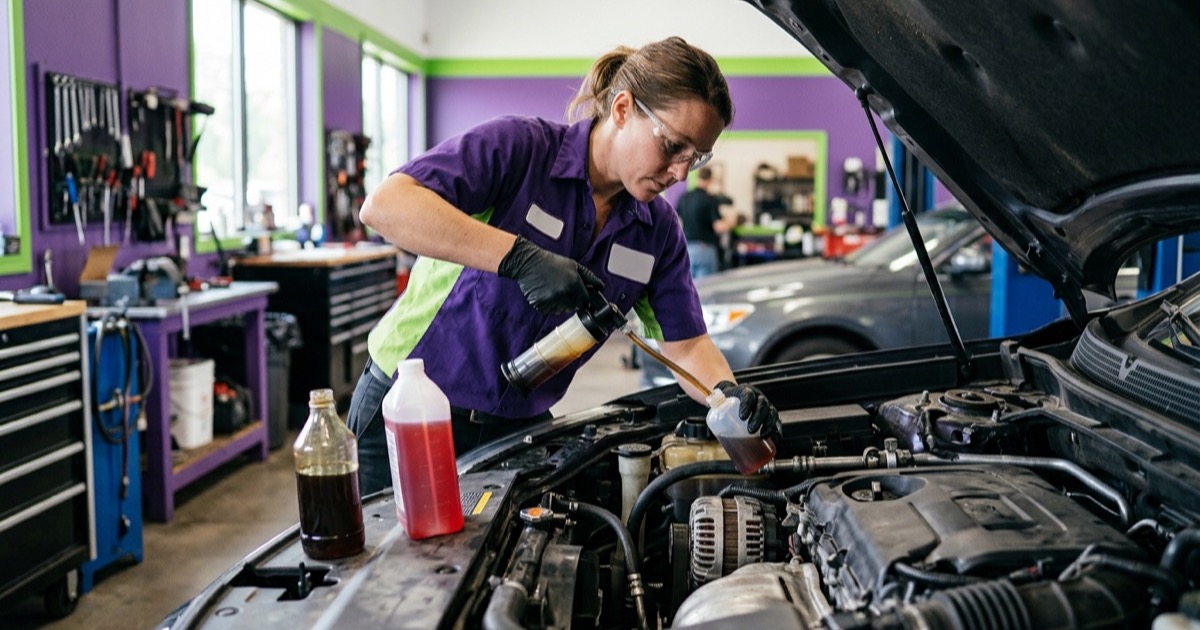
A true flush pushes out nearly all of the old fluid. The usual method is to disconnect the return hose from the reservoir, run it into a catch container, and pour fresh fluid into the reservoir while the engine runs and the wheel turns slowly lock to lock. When the fluid coming out runs clean, the hose goes back on and the system is bled of air.
Some shops do a drain and fill instead. They suck the fluid out of the reservoir and refill it, which changes only about a third of the total. Doing that two or three times over a few weeks gets similar results. Both are fair if the price matches the work.
The price is mostly a half hour to an hour of labor plus one to two quarts of fluid.
Check First: Does Your Car Even Have Power Steering Fluid?
This is the most important thing on this page. Many cars on the road today have no power steering fluid at all.
Electric power steering, often shortened to EPS, uses an electric motor on the steering column or the rack. There is no pump, no hoses and no reservoir. Most new compacts, midsize cars, hybrids and all EVs use it.
To check, open the hood and look for a small reservoir with a cap marked with a steering wheel symbol or the words power steering. If you cannot find one, check your owner's manual. If it lists no power steering fluid, you do not need this service.
If a shop recommends a power steering flush on a car that has electric steering, that shop is either careless or padding the bill. Ask them to show you the reservoir.
Why the Price Varies
This is a low cost service, so the swings are small.
Fluid type matters. Basic power steering fluid or ATF costs a few dollars a quart. Special synthetic fluids for European cars and some Japanese models cost more, sometimes $20 or more per liter.
System size matters. Trucks, vans and diesels with cooler lines or hydro boost brakes hold more fluid and take longer to flush.
The method matters. A machine flush or a full hose flush costs more than a reservoir drain and fill. Ask which one you are getting.
Then comes the shop. Dealers often charge $150 or more. Quick lube chains and independents commonly charge about $70 to $150. Mobile mechanics can do it in a driveway, often for the lower part of that range.
What Usually Gets Done at the Same Time
A flush is a good chance to look over the whole steering system. Some checks are worth paying for. Some add ons are not.
Worth it every time is a quick look at the hoses. The high pressure hose and the return hose crack and seep with age. A leaking hose will undo a fresh flush fast.
Worth checking is the serpentine belt. It drives the power steering pump, and a worn belt can slip and cause a squeal when you turn the wheel.
Worth it if dirty is cleaning or replacing the reservoir screen. Some reservoirs have a built in filter screen that clogs with debris and starves the pump.
Usually an upsell is a power steering stop leak or conditioner added on top of the flush. If there is a leak, fix the hose or seal. If there is no leak, fresh fluid is all you need.
- Inspect high pressure and return hoses for leaks or cracks
- Check the serpentine belt for wear and glazing
- Clean or replace the reservoir if its screen is clogged
- Look for wet spots on the rack boots or gearbox
- Stop leak additive: usually skip
When a Flush Will Not Fix the Problem
A flush is maintenance. It does not repair parts that are already worn out.
If the pump whines or groans, check the fluid level and look for air bubbles or foam in the reservoir. Low fluid from a leak is the most common cause. A flush can quiet a pump that was noisy from dirty or foamy fluid, but a pump with worn bearings or vanes will stay loud.
If the steering is stiff only when cold, old fluid can be part of it, and a flush may help. If it is stiff all the time, the pump, belt or rack may be worn.
If you see red or amber fluid under the front of the car, that is a leak. The usual sources are hoses, the pump shaft seal or the rack seals. Fix the leak first, then flush and fill.
If your steering wanders or clunks, that is a suspension or steering linkage problem like tie rods or ball joints. Fluid has nothing to do with it.
Questions to Ask Before You Approve the Service
A flush is cheap, which makes it easy to add to an oil change without thinking. Ask these first.
- Does my car have hydraulic power steering, or is it electric?
- What does my owner's manual say about power steering fluid service?
- Is this a full flush or a reservoir drain and fill?
- What fluid are you using, and does it match the type my car calls for?
- Can you show me the old fluid compared to new?
- Did you see any leaks on the hoses, pump or rack?
- Will you bleed the air out after the service?
Can a Mobile Mechanic Do It?
Yes. This is an easy driveway job. Everything happens under the hood, and the car only needs the engine running and the wheel turning. A mobile mechanic can do a full flush in 30 to 45 minutes.
The tech will bring a catch container and take the old fluid for recycling. Used power steering fluid is a petroleum product and should go to a used oil recycler, not the trash or a storm drain.
If the flush turns up a leaking hose, many mobile techs can replace that too, on the same visit.
Signs you need this repair
- Power steering fluid is dark brown or black instead of clear, pink or amber
- Fluid smells burnt
- Whining or groaning when you turn the wheel, especially when cold
- Steering feels heavier than it used to on cold mornings
- Foam or bubbles in the power steering reservoir
- Car has over 75,000 miles and the fluid has never been changed
Cost by vehicle type
| Vehicle | Typical range | Notes |
|---|---|---|
| Compact / economy car | $60 to $160 | Many compacts built in the last ten to fifteen years use electric power steering with no fluid. If yours has a power steering reservoir, the flush is quick and cheap, often near the bottom of the range. |
| Midsize sedan / small SUV | $60 to $165 | Midsize sedans are split between hydraulic and electric systems depending on year and engine. Some use electro hydraulic pumps that still use fluid. Check your owner's manual or look for a reservoir under the hood. |
| Full-size truck / large SUV | $70 to $190 | Most trucks still use hydraulic steering, especially heavy duty models. The system holds more fluid and often has a cooler line, so a flush uses more fluid and lands mid range. |
| Luxury / European | $85 to $230 | Many European cars call for a specific synthetic fluid, often green or a special type, and using the wrong one can damage seals. Expect the top of the range on parts. |
| Hybrid | $70 to $185 | Most hybrids use electric power steering with no fluid. If a shop quotes a power steering flush on a hybrid, ask them to show you the reservoir. |
| Electric vehicle | Electric cars use electric power steering with a motor on the rack or column, so there is no power steering fluid to flush. | |
| Diesel / heavy duty | $85 to $225 | Heavy duty diesel trucks often run the power steering and sometimes a hydro boost brake booster off the same pump. The flush covers both and takes more fluid, so expect the upper end of the range. |
Ranges assume national-average labor rates ($95, $140/hr) and quality aftermarket parts.
Cost by state
State ranges reflect typical independent-shop labor rates for a midsize vehicle.
Common questions
How much does a power steering fluid flush cost?
Most drivers pay about $70 to $160 at an independent shop, quick lube or mobile mechanic. Dealers often charge more. Trucks, diesels and cars that need special synthetic fluid sit at the upper end.
Is a power steering flush necessary?
It depends on your car. Some makers list a fluid change interval, and many do not. If your fluid is dark or smells burnt, a flush is cheap insurance for the pump and rack. If your car has electric power steering, it is not needed at all.
How often should power steering fluid be changed?
Follow your owner's manual first. When the manual is silent, many mechanics suggest checking it every oil change and changing it when it turns dark, often somewhere around 50,000 to 100,000 miles.
Can a power steering flush cause problems?
Rarely, if done right. The real risks are using the wrong fluid type and leaving air in the system, which can make the pump whine. On a very old system with weak seals, fresh fluid can sometimes reveal a seep that was already there.
Will a power steering flush fix a whining pump?
Sometimes. If the noise comes from dirty, foamy or low fluid, a flush and proper bleed can quiet it. If the pump bearings or vanes are worn, the whine stays and the pump needs replacement.
Can I use transmission fluid in my power steering?
Only if your owner's manual or reservoir cap says to. Many older Ford, GM and Chrysler systems use ATF. Many Honda, European and newer cars use a specific power steering fluid, and the wrong one can damage seals.
Do electric cars need a power steering flush?
No. Electric cars use electric power steering with a motor instead of a hydraulic pump, so there is no fluid to change.
Related Repair Guides
Sources and further reading
Primary sources behind this page. Federal safety, emissions and consumer-protection references, worth reading before you authorize any repair.
- fueleconomy.gov maintenance guide DOE and EPA guidance on following the maintenance schedule in your owner's manual.
- EPA used oil management and recycling How petroleum based fluids like used power steering fluid should be recycled instead of dumped.
- ASE certified technicians Look for ASE certified steering and suspension technicians before you approve a service.
Need Work Done? Get a Free Quote.
Tell us what the car is doing. A local mechanic calls you back, most requests get a call back the same day. No fee, no obligation.