What Flat Tire Repair Costs
Shops that post a flat repair price online charge a median of $40. Across the 44 independent shop websites we found with a posted price, the middle half sit between $25 and $65. That is far less than a new tire, which is why a repair is the first thing to ask about when you pick up a nail. The prices were posted on shop websites in October 2026, and chains and dealers are left out.
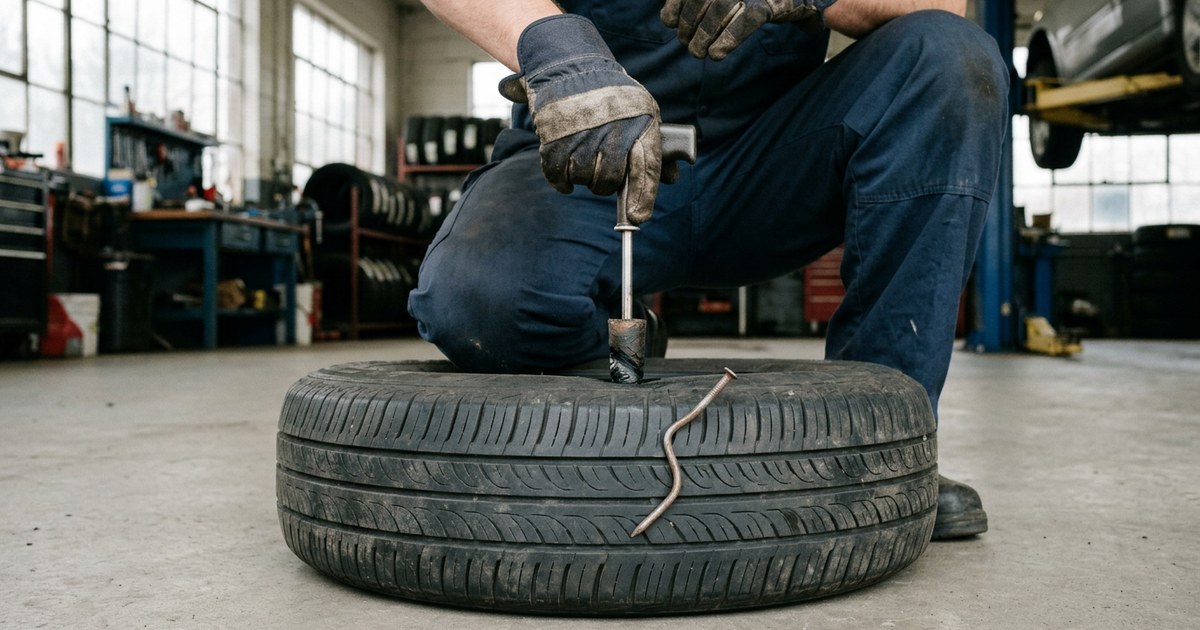
A flat repair is the work of finding the leak, taking the tire off the wheel, fixing the hole from the inside, putting the tire back on and balancing it. A good shop also checks the inside of the tire for damage. That inspection is part of what you pay for, because a tire that looks fine outside can be damaged inside from driving on it low.
What affects the price? The shop's rates, the size of the tire and whether the visit includes balancing all play a part. Some shops fix a flat for a low price to win your tire business later. Others charge more and include a free recheck. Mobile tire services come to you, and they usually add a fee for the visit, so ask for the total before you book.
Not every flat can be repaired, and in that case the real cost is a new tire. A puncture in the tread can usually be fixed. Damage to the sidewall or the edge of the tread usually cannot, and neither can a tire that was driven flat for any distance. A tech will tell you which case you have.
If you have a road hazard warranty from when you bought the tires, a repair or replacement may be covered. Ask the shop to check before you pay.
Can Your Tire Be Repaired
Whether a tire can be fixed depends on where the damage is and how big it is. The safe zone is the tread, the flat part of the tire that touches the road. A small puncture there, from a nail or a screw, can usually be repaired. The sidewall is the curved side of the tire, and it flexes all the time, so a repair there is not considered safe. The same goes for the shoulder, where the tread meets the sidewall. A tire with damage in these areas needs to be replaced.
Size matters too. A small, clean puncture can be repaired. A large hole, a long cut or a tear cannot. Several punctures close together may also be too much. The tire maker and industry groups set limits, and a good shop follows them.
How the tire was driven matters as much. A tire that has been driven on while flat often has damage to the inner liner and the sidewall that you cannot see from outside. That is why a shop takes the tire off the wheel to look inside. If the inside shows damage, the tire should be replaced and not patched.
The method matters too. A plug pushed in from the outside is a temporary fix. The accepted repair is a patch with a plug, applied from the inside, which seals the liner and fills the hole. Ask the shop how it repairs flats. A shop that only plugs from the outside, without taking the tire off the wheel, is giving you a quick fix and not a full repair.
Other things can rule out a repair. A tire that is very worn, old or damaged by age is better replaced. Run flat tires have their own rules, and some makers say not to repair them. A tech can look up the guidance for your tire.
What Goes Wrong With Flat Tire Repair
Of 23,409 public shop reviews we counted, 3,005 name tires or alignment, and 15.6 percent of those are 1 or 2 stars. Across all reviews that share is 11.2 percent, so tire work goes badly more often than the average repair. These reviews cover flats, new tires, rotations and alignments together, and they make up 12.8 percent of everything we counted.
The complaints repeat. The first is the quick plug from the outside that leaks again days later. The second is a tire that was replaced when it could have been fixed, or the other way around, a tire that was patched when it should have been replaced. The third is a surprise on the bill, where a cheap posted repair price grows with fees for balancing, valve stems or disposal. The fourth is a wait that runs long, with a car tied up for hours over a small job.
Owners talk about tires a lot in public. In Reddit threads about tires, the median dollar figure people mention is $1,100. For many, a flat is a fear of a new set of tires.
There are a few plain ways to protect yourself. Ask the shop where the damage is and why the tire can or cannot be repaired. Ask them to show you the hole and the inside of the tire. Ask how they plan to repair it, and whether the tire is balanced after. Ask for the total before the work starts.
And ask about a recheck. A good shop will check the repair again if the tire loses air in the next days. If you keep losing air after a repair, go back right away and do not just keep adding air.
Why Prices Vary and How to Read a Quote
The spread from $25 to $65 for a flat repair comes down to a few things. The first is the shop. Shops that post a labor rate charge a median of $129 an hour across 207 shops, and a shop with higher overhead will charge more even for a short job. The second is the tire. Larger, low profile and run flat tires take more care and more time. The third is what the price includes. Some quotes cover the patch alone, and others add balancing, a valve stem or a recheck.
Read the quote with a few questions in mind. Does the price include taking the tire off the wheel? Does it include a patch with a plug from the inside, or only a plug from the outside? Is balancing included? Is there a fee for disposal or shop supplies? A clear shop answers each of these without fuss.
Watch out for a very low price that covers only a quick plug. It may be fine as a short term fix, but it is not the same job as a full repair. If you plan to keep the tire for a long time, the full repair is worth the added cost.
A mobile service is a different case. A tech who comes to you will charge for the trip, and may not be able to dismount the tire at your driveway. Ask whether the mobile tech does a full repair from the inside or a plug, and ask for the total with the visit fee.
Also ask whether the shop will repair a tire you did not buy there. Many will, and some do it for a lower price if you buy tires later. And check your roadside plan, your tire warranty and your insurance. Many cover a flat tire visit and cost you nothing.
What to Do When You Get a Flat
If you feel a flat while driving, stay calm. Hold the wheel firmly, ease off the gas and do not brake hard. Let the car slow down and steer to a safe spot well off the road, such as a parking lot or a wide shoulder. Turn on your hazard lights.
Check the damage. If the tire is still holding some air and a shop is close, a slow drive straight there may be safe. If it is flat, do not keep driving. A short distance is enough to wreck a tire that could have been saved, and it can damage the wheel as well. Put on the spare, use the sealant and inflator if your car has one, or call for help.
If you change the tire yourself, use the jack points in your owner's manual and do not get under the car. Loosen the lug nuts before you lift, tighten them in a star pattern when the wheel is back on and check them again after a short drive. A compact spare is only for short trips at low speed, so get the real tire fixed soon.
A sealant kit is a short term fix. After you use one, tell the shop. The sealant can make a repair harder, and the tech needs to know. Many shops will still fix the tire, but some will charge a little more for cleanup.
Once the tire is off, ask the shop to check the other tires too. If one picked up a nail, the others may have as well. Check your pressure each month against the sticker on the door jamb, since a tire that is low is more likely to fail.
Keep a pressure gauge and your roadside plan number in the car. They make the next flat much easier.
Signs you need this repair
- Tire that keeps losing air
- Visible nail or screw in the tread
- Low tire pressure light that comes on again after filling
- Hissing sound from a tire
- Tire that looks low or bulging on the sidewall
- Car pulling to one side
- Thumping noise as the tire turns
- Tire that is flat in the morning
More Questions Drivers Ask
Is it better to plug or patch a tire?
A patch with a plug, applied from the inside with the tire off the wheel, is the accepted repair. A plug alone from the outside is a short term fix. Ask the shop which they use, and have the inside of the tire checked for damage.
Can a tire be repaired more than once?
Sometimes. A tire can be repaired again if the new holes are in the tread, are small and are not too close to each other or to an earlier repair. A tech will check. When damage piles up in one area, replacement is the safer choice.
Why does my tire keep losing air after a repair?
The repair may have been a plug from the outside that did not seal, or there may be a second leak at the valve stem, the bead or a bent wheel. Go back to the shop right away. A good shop will find the source and fix it.
Should I replace one tire or all four after a flat?
If the damaged tire can be repaired, you only need that one. If it must be replaced, check the tread depth on the others. On all wheel drive cars, tires that differ a lot in wear can strain the drivetrain, so ask your shop or check your manual.
Related Repair Guides
More Maintenance Repair Costs
Sources and further reading
Primary sources behind this page. Federal safety, emissions and consumer-protection references, worth reading before you authorize any repair.
- NHTSA tire safety information Federal guidance on tire pressure, condition and safe use.
- FTC auto repair basics Your rights on estimates, authorization and disputed repair bills.
Need Work Done? Get a Free Quote.
Tell us what the car is doing. A local mechanic calls you back, most requests get a call back the same day. No fee, no obligation.