How Long Does a Full Car Diagnostic Take? The Scan Is the Fast Part
 By Anthony LimpertASE Master Automobile Technician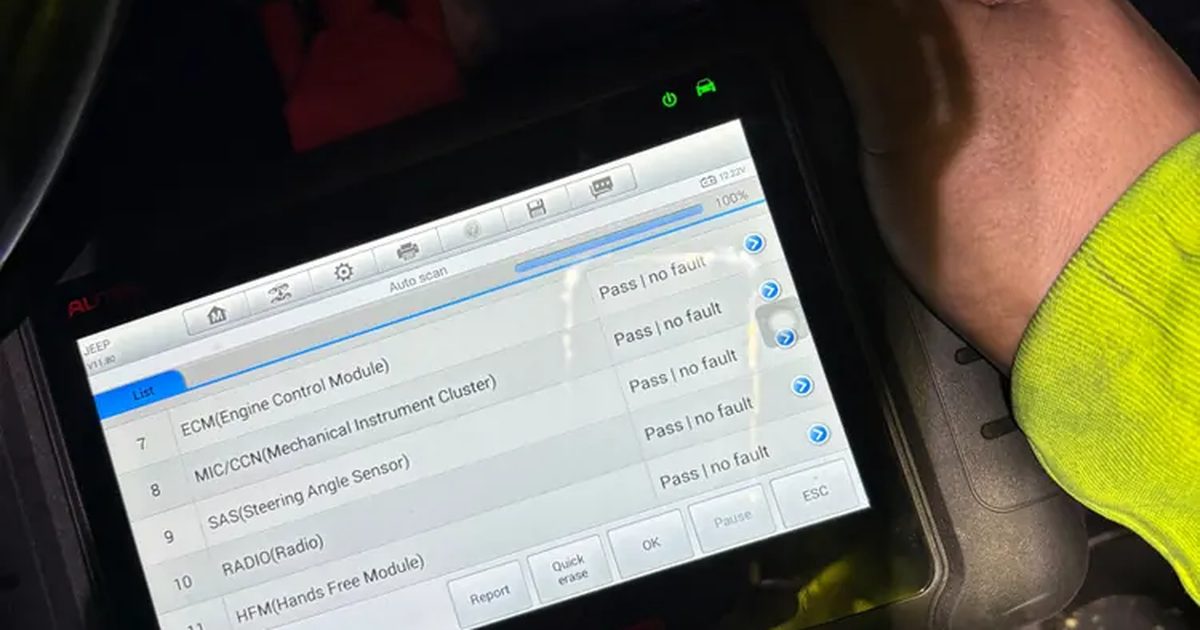
Reading the codes off your car takes a few minutes. A full diagnostic, where a mechanic finds the actual cause, usually takes 30 minutes to an hour and a half. Hard problems take 2 to 4 hours, and a problem that only shows up now and then can stretch over a few days.
We run a repair shop in San Jacinto and Hemet, California, and we ran more than 500 diagnostic calls in the last 12 months. We also list 44,275 shops and mechanics on MechanicRank. Below is how long each kind of diagnostic really takes, why the scan is the fast part, and how to keep your bill to one hour instead of four.
9 min read · 15 sections
The Short Version
- A code read takes under a minute once the tool is plugged in. AutoZone says so about its own free scan.
- A basic diagnostic takes about 30 to 60 minutes. That is the time a tech spends testing, not just reading.
- Misfires, lean codes, electrical faults and leaks can take 2 to 4 hours.
- Time in the shop is not time on your car. Your car may wait in line for a day before anyone starts.
- Diagnostic time is billed like labor. Approve a set number of hours, and ask for a call before they go past it.
How Long Each Kind of Diagnostic Takes
Most pages online mash two different jobs into one word. A code read and a diagnosis are not the same thing. Here is how the clock runs for each, with who says so.
| Kind of Check | Hands On Time | What Happens | Source |
|---|---|---|---|
| Free code read at a parts store | Under a minute once plugged in | A reader pulls stored codes and prints a report. Nothing gets tested. | AutoZone |
| Scan at a shop | A few minutes | The tech reads codes, freeze frame data and every module in the car. | Rydell |
| Basic diagnostic | 30 to 60 minutes | Scan, live data, a look under the hood and simple tests on the likely parts. | Firestone |
| Standard diagnostic | 1 to 1.5 hours | The usual full diagnostic on a common problem. | J.D. Power |
| Advanced diagnostic | 2 to 4 hours | Smoke tests, compression and leak down tests, wiring checks, sometimes parts removed to see in. | J.D. Power |
| A problem that comes and goes | Hours, often over more than one day | The tech has to make the problem happen again before it can be found. | Our own shop experience |
The numbers line up across the big names. Rydell, a car dealer, says a full engine diagnostic runs from a half hour to a couple of hours. In the UK, the RAC tells drivers to expect up to 90 minutes. Firestone says most tests take 30 to 60 minutes. Nobody serious says five minutes, because five minutes only buys you the codes.
Why the Scan Is Fast and the Diagnosis Is Not
A trouble code does not name a broken part. It names a system that is out of range. The code tells us where to start looking. The testing tells us what to replace.
Here are two jobs from our own shop records that show why the second part takes the time.
- A 2021 Jeep Wrangler with four codes. It showed a lean code, a misfire code and two oxygen sensor codes. A parts swapper would have bought sensors. The real problem was the lean condition, and the other three codes followed from it. Reading the codes took minutes. Sorting out which code came first is the slow part.
- A 2010 Chevy Equinox with four timing codes. Two crank and cam correlation codes and two cam timing codes. That looks like four problems. All four came down to one worn timing chain. Swapping sensors first would have cost money and fixed nothing.

That is the whole point of paying for a diagnostic. You are buying the hour that stops you from paying for parts the car never needed. Our catalytic converter cost guide calls that hour the best value in the whole job, because a lazy oxygen sensor or a small exhaust leak can look just like a dead converter.
What Makes a Diagnostic Take Longer
When a shop says it needs more time, it is almost always one of these. None of them are a red flag by themselves. Ask which one it is.
- The problem comes and goes. A stall that only happens on hot days, or a light that clears itself, has to be caught in the act. That can mean a long road test or keeping the car overnight.
- There is more than one code. Each one has to be sorted into cause or side effect. Four codes can be one problem or four.
- It is electrical. A short or a drain means tracing wires and testing circuits one at a time. Battery drains often need the car to sit so the modules go to sleep.
- It is inside the engine. Compression, leak down and smoke tests need set up time and a cool or warm engine, depending on the test.
- Parts are in the way. Some sensors and leaks sit behind trim, under the intake or on top of the gas tank. Our EVAP leak repair guide shows why a smoke test is the only fast way to find a small fuel vapor leak.
- It needs maker software. Some modules can only be tested or set up with a dealer level tool. Not every shop has it.
- Someone worked on it before. A car that has been to two other shops may have new parts that are wrong, loose plugs or codes that were cleared. That all has to be undone first.

Hands On Time Is Not Time in the Shop
This is where most of the anger comes from. A shop may need one hour on your car and still keep it for two days.
Most shops work in line. Your car gets checked in, then waits for a tech who can take it. Then there may be a wait for you to approve the next step, then a wait for parts. Only the hands on part should show up on your bill.
So ask two questions when you drop it off. When will a tech start on it? And how many hours of diagnostic time are you approving? If the answers are "tomorrow" and "one hour", you know what you are paying for and when to expect a call.
What a Diagnostic Costs, Hour by Hour
Diagnostic time is labor. Most shops bill it by the hour or as a flat fee that covers about an hour. The FTC says plainly that many repair shops charge for diagnostic time, and it tells you to ask if that fee still applies when you take the car somewhere else for the repair.
Here is what our own records show. From September 2025 to September 2026, Supercanic ran 504 diagnostic calls. Half of those diagnostic invoices landed between $125 and $175. Our labor rate is $150 an hour, so most diagnostics we bill come out to about one hour of work.
| Diagnostic Time | At $100 an Hour | At $150 an Hour | At $200 an Hour |
|---|---|---|---|
| 30 minutes | $50 | $75 | $100 |
| 1 hour | $100 | $150 | $200 |
| 1.5 hours | $150 | $225 | $300 |
| 2 hours | $200 | $300 | $400 |
| 4 hours | $400 | $600 | $800 |
- 30 minutes$75
- 1 hour$150
- 1.5 hours$225
- 2 hours$300
- 4 hours$600
Worked example from the table above. Your shop may charge more or less an hour.
That table is plain math, not a quote. Labor rates change a lot by city and by shop type. Some shops credit the fee toward the repair if you let them do it. Ask before they start, not after.
Your Rights Before the Clock Starts
You never have to give a shop an open tab.
The FTC tells drivers to get a written estimate, and to make sure it says the shop will call you before going over a set amount of time or money. Put a number on the diagnostic. "One hour, then call me" is a fair thing to say.
In California the law goes further. Business and Professions Code section 9884.9 says the shop must give you a written estimate for labor and parts, and that no work can be done and no charges can build up before you say go. If the shop needs more than the estimate, it has to get your OK first. If you give that OK by phone, the shop has to write down the date, the time, who said yes and the new total.
So if a diagnostic ran four hours and you approved one, ask to see where you approved the other three.
Can a Free Code Read Save You Time?
Yes, as a first step. AutoZone says its free Fix Finder scan often takes less than a minute once the reader is plugged in, and that every one of its more than 6,200 US stores offers it during business hours. You walk out with the codes in hand.
Just know what you have. A code read tells you which system set the light. It does not test a single part. The parts store will happily sell you the part the code points at, and that is how people buy an oxygen sensor for a vacuum leak.
Use the free read to decide how urgent it is and to give your mechanic a head start. If the light is flashing, skip the parts store and read what a flashing check engine light means first. A flashing light usually means a misfire that can hurt the catalytic converter.
One Ranking Guide Gets This Wrong
One of the top results for this question says many mechanics recommend a diagnostic test every season, four times a year. We would not.
A scan reads stored faults. If there is no light, no noise, no smell and no change in how the car drives, there is usually nothing stored to read. Four paid scans a year on a healthy car is money better spent on oil changes and brake checks.
The times a diagnostic is worth it are simple. A warning light, a new noise, a smell, a leak, a shake, a car that will not start, or a used car you are about to buy.
How to Make Your Diagnostic Faster and Cheaper
The tech is trying to find the problem as fast as they can. You can help a lot. Most of this takes two minutes.
- Write down when it happens. Cold or hot, at what speed, turning or straight, braking or not. This is the biggest time saver there is.
- Take a photo of the dash while the light or message is on. Some messages clear on restart.
- Bring any codes you already pulled, with the date. Do not clear them first. Cleared codes erase the clues.
- Say what was done recently. A new battery, a recent oil change or a part you put in yourself all matter.
- Tell them if it comes and goes. That changes the plan from a quick test to a road test.
- Answer your phone. A car that waits half a day for your yes is a car that sits in line again.
- Approve a set amount. One hour to start, then a call. That keeps the clock honest.
Is a Mobile Diagnostic Faster?
Often, yes, for the wait. A mobile mechanic comes to your car, so there is no line and no tow. The hands on time is about the same, because the tests are the same.
Where a mobile visit falls short is anything that needs a lift or a part pulled deep in the car. A good mobile mechanic will tell you that early and write down what they found so the next shop does not start from zero. See how much a mobile mechanic costs for typical visit fees.
What We Charge at Our Own Shop
We post our prices. Here are ours at Supercanic, the shop in San Jacinto and Hemet, California, that runs MechanicRank.
- A basic diagnostic is $150. That covers no starts, simple electrical problems, battery and charging checks, and a check engine light with no driving symptoms.
- An advanced diagnostic is $225. That covers compression, leak down and smoke tests, and engine problems you can feel when you drive.
- Labor is $150 an hour. Nights from 10pm to 6am are $300 an hour.
- We tell you what we found and give you an estimate before any repair starts.
Find a Diagnostic Shop Near You
MechanicRank lists 44,275 repair shops and mechanics in 6,434 cities. Every listing shows the shop's phone, reviews and hours, and the phone rings the shop direct.
Search your ZIP code to find a shop near you. Before you call, read our list of questions to ask a mechanic, and ask how many hours of diagnostic time the shop plans to start with.
Sources
We opened each of these on October 12, 2026.
- AutoZone, free Fix Finder service
- Rydell, about engine diagnostics
- Firestone Complete Auto Care, vehicle diagnostics testing
- J.D. Power, how long does a car diagnostic test take (April 21, 2023)
- RAC, what is a car diagnostic test (July 30, 2026)
- Meineke, car diagnostic test
- Federal Trade Commission, auto repair basics
- California Business and Professions Code section 9884.9
- Supercanic job records, September 2025 to September 2026, for the diagnostic call count, invoice range and the two job examples
- MechanicRank repair cost guides for the catalytic converter, EVAP leak repair and fuel pump
Frequently asked questions
How long does a full car diagnostic take?
Most take 30 minutes to an hour and a half of hands on time. Hard problems like misfires, leaks and electrical faults can take 2 to 4 hours. A problem that comes and goes can take longer, because the tech has to make it happen again.
How long does a car diagnostic take at AutoZone?
AutoZone says its free Fix Finder scan often takes less than a minute once the reader is plugged in. That is a code read, not a full diagnostic. It tells you which system set the light, but it does not test any parts.
Why does a car diagnostic take so long?
Because the code only says where to start. The tech then has to test wiring, pressures and parts to prove what failed. More than one code, a problem that comes and goes, or parts in the way all add time.
Will a diagnostic test tell me what's wrong with my car?
A full diagnostic should. A code read alone will not. Firestone says plainly that more testing may be needed to confirm the exact cause. Ask the shop to tell you what they tested and what they found, not just the code.
How much should a car diagnostic cost?
Most shops charge about one hour of labor. At our shop that is $150 for a basic diagnostic and $225 for an advanced one, and half of our diagnostic invoices over the past year landed between $125 and $175.
Is it normal for a mechanic to take 3 days to diagnose a car?
It can be, if the shop is booked or the problem comes and goes. But three days in the shop should not mean three days of billed time. Ask when a tech started on it and how many hours you are paying for.
Does the car have to be on to run a diagnostic?
The key has to be on to read codes. Many tests need the engine running, and some need a road test. A car that will not start can still be tested. The tech just follows a no start plan instead.
Keep reading
Own a shop or a mobile operation?
Your free MechanicRank listing is one of the citations this article talks about. Claimed listings get an owner badge, a photo gallery, and a green star on the map.
Claim Your Free Listing →