Does Idling Your Car Charge the Battery? The Amp Math
 By Anthony LimpertASE Master Automobile Technician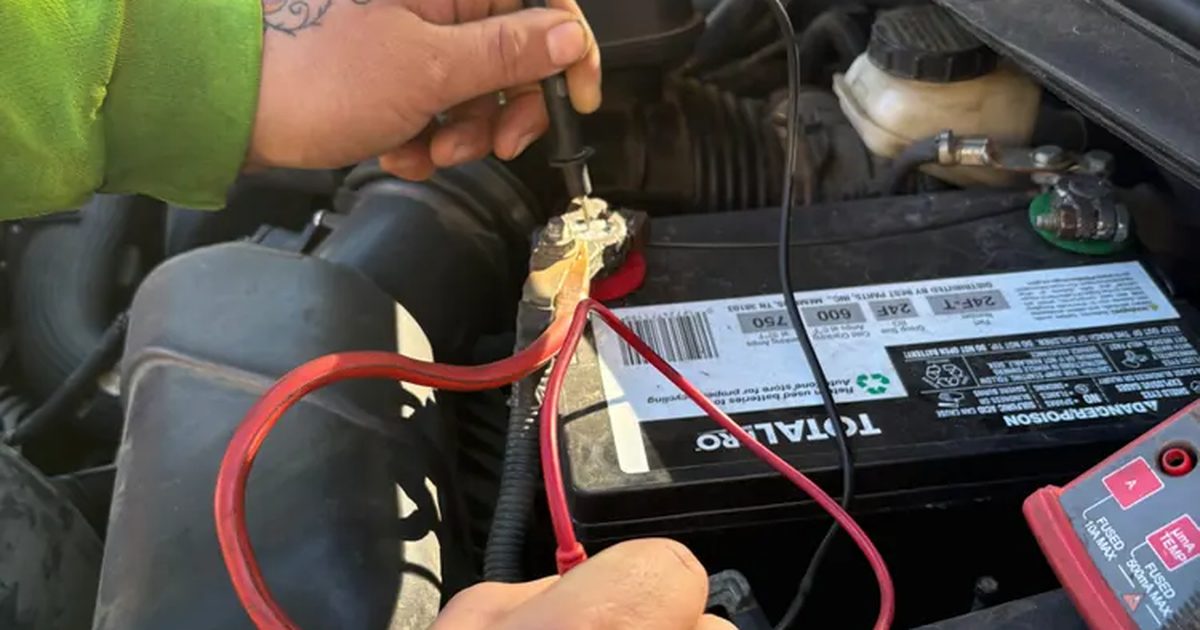
Yes, idling your car charges the battery. But only by whatever the alternator makes after the car takes its share, and at idle that share can be most of it. A slightly low battery may improve after 30 to 60 minutes of idling, per AutoZone. A dead one usually will not.
We fix a lot of no starts. We run a repair shop in San Jacinto and Hemet, California, and we list 44,275 shops and mechanics on MechanicRank. The idle question comes up every week, usually from someone who let the car run in the driveway for an hour and still needed a jump the next morning. Every page that ranks for this says idling is slow. None of them shows you why in amps, or what the hour costs in gas. This one does.
9 min read · 15 sections
The Short Version
- Idling does charge the battery, slowly. Most alternators make about 30 to 50 amps at idle, per AUTODOC.
- The running engine uses a big piece of that. Ignition, injectors, fuel pump and computers draw 35 to 50 amps at idle with the lights and accessories off, per AA1Car.
- Turn on the fan, the rear defogger and the headlights and the extra can drop to zero. Then the battery is not charging at all.
- About 30 minutes of highway driving recharges most batteries, per Batteries Plus. Driving beats idling every time.
- If the battery is dead, old, or dies again after a full charge, idling will not fix it. Test it. A new battery runs about $150 to $390 installed in our battery replacement guide.
Why Idling Charges So Slowly
The alternator is a small generator spun by the engine belt. The faster the engine turns, the more current it makes. At idle the engine turns slowly, so the alternator makes the least it ever will. AutoZone compares it to filling a pool with a garden hose instead of a fire hydrant.
Here is the part the other pages skip. The alternator does not send all of that current to the battery. It feeds the car first. The battery only gets what is left over. So the real question is not "does idling charge the battery." It is "how many amps are left over at idle." On a lot of cars, with a few things switched on, the answer is close to none.

What Each Switch Costs You at Idle
These are the common loads from AA1Car's electrical load list, next to the 30 to 50 amps AUTODOC gives for a typical alternator at idle. Your car will be different. The point is the size of each one.
| What Is On | Typical Draw | Can You Turn It Off? |
|---|---|---|
| Engine running (ignition, injectors, fuel pump, computers) | 35 to 50 amps | No |
| Heater or AC blower fan | 2 to 30 amps, by fan speed | Yes |
| Rear window defogger | 10 to 20 amps | Yes |
| Halogen headlights, both beams | 17 to 19 amps | Yes, when it is safe |
| Halogen low beams only | 8 to 9 amps | Yes, when it is safe |
| Heated seats | 3 to 4 amps per seat | Yes |
| AC compressor clutch | 2.5 to 5 amps | Yes |
| Big aftermarket stereo, 500 watts | 13 to 30 amps | Yes |
Now do the math on a worked example. Say your alternator makes 50 amps at idle, the top of the AUTODOC range. The engine takes 35 amps, the low end of the AA1Car range. That leaves 15 amps for the battery.
Turn on the low beams and the fan on high and that 15 is gone. Add the rear defogger on a cold morning and the battery is now helping run the car, not charging. AUTODOC says the same thing. Heavy loads at idle can mean a net drain on the battery. That is how people idle for an hour and still need a jump.
How Long to Idle: The Amp Math
A battery holds charge in amp hours. Take a worked example. A 60 amp hour battery sits at half charge, so it needs about 30 amp hours back. Divide what it needs by the spare amps and you get the hours.
| Spare Amps Going to the Battery | Hours to Put Back 30 Amp Hours | What That Looks Like |
|---|---|---|
| 15 amps | About 2 hours | Idle with everything off, on a strong alternator |
| 10 amps | About 3 hours | Idle with a few things on |
| 5 amps | About 6 hours | Idle with the fan and lights on |
| 0 amps or less | Never | Idle with the fan, lights and defogger on |
Worked example. Real charging takes longer, because a battery takes current slower as it fills.
- 15 spare ampsAbout 2 hours
- 10 spare ampsAbout 3 hours
- 5 spare ampsAbout 6 hours
Worked example from the table above. With 0 spare amps the battery never gains. Real charging takes longer as the battery fills.
That table matches what the top pages say in words. AutoZone says 30 to 60 minutes of idling may help a slightly drained battery, and that a badly drained one often will not come back on idle alone. Batteries Plus says a dead battery can take several hours at idle. AUTODOC says 30 minutes to 2 hours at idle rarely gets a deeply drained battery past 20 to 50 percent.
One more catch on newer cars. AUTODOC notes that smart charging systems may hold back or limit charging at idle to save fuel. So a 2020s car can charge even less at idle than an older one.
What an Hour of Idling Costs in Gas
The U.S. Department of Energy lists idle fuel use from an Argonne National Laboratory worksheet, with no AC or fan running. A compact sedan with a 2.0 liter engine burns about 0.16 gallons an hour. A large sedan with a 4.6 liter engine burns about 0.39. Here is what two hours of idle, the best case in the table above, costs at AAA's average prices on October 11, 2026.
| Car | Gallons in 2 Hours | At the U.S. Average, $4.36 | At the California Average, $6.31 |
|---|---|---|---|
| Compact sedan, 2.0 liter | 0.32 | About $1.39 | About $2.02 |
| Large sedan, 4.6 liter | 0.78 | About $3.40 | About $4.92 |
Gallons times AAA's regular gas average for October 11, 2026. Running the AC or fan burns more, and leaves less for the battery.
A couple of dollars is not the real cost. The real cost is the two hours, and the morning you find out it did not work. AutoZone and AUTODOC both add that long idling is hard on the engine, from carbon buildup to oil that gets dirty faster.
Better Ways to Charge the Battery
- Drive it. About 30 minutes at highway speed recharges most batteries, per Batteries Plus. They say the engine needs about 1,000 RPM to charge well, and 55 mph or more charges faster. AutoZone says a 10 to 15 minute drive can add more than 30 minutes of idling.
- Use a plug in charger. A smart charger or battery maintainer brings the battery all the way up with the engine off. Match it to your battery type. An AGM battery needs an AGM setting. Our AGM vs flooded battery guide covers the difference.
- If you must idle, turn everything off. Fan, lights, defogger, seat heaters, stereo. Every amp you shut off goes to the battery instead.
- Skip the short trips. Lots of five minute errands drain the battery more than they refill it. Batteries Plus suggests one 30 minute highway drive a week if you mostly drive short hops.
- Get it tested. AutoZone and Batteries Plus both offer free battery tests, and any shop can test one. A test tells you if the battery can still hold a charge at all.
Read the Battery Before You Idle
A basic multimeter answers the question in one minute. Check the battery with the engine off, after it has rested, then again with the engine running.
| Reading | What It Means | Source |
|---|---|---|
| 12.6 to 12.7 volts, engine off | Fully charged | AUTODOC |
| About 12.1 volts, engine off | About half charged | Batteries Plus |
| About 11.6 volts, engine off | Close to dead | Batteries Plus |
| 13.5 to 14.5 volts, engine running | The alternator is charging | AUTODOC |
| Under 13.5 volts, engine running | The charging system may not be keeping up | AUTODOC |
Let the car sit 15 to 30 minutes with the engine off before the resting reading, per AUTODOC. Your owner's manual spec wins over any chart.
If the running number is good but the battery keeps dying, the battery is the suspect. If the running number is low, or the headlights get brighter when you rev the engine, look at the alternator. Our alternator replacement guide puts that job at about $275 to $800 installed.
When Idling Will Not Save the Battery
- It is fully dead. You need a jump or a charger just to start the engine. After that, idle charging is too slow to bring it all the way back.
- It is old. Car batteries usually last three to five years, per Batteries Plus. An old battery takes charge slowly and may not hold it.
- It dies again after a good charge. Something is draining it with the car off, or the battery has failed. Idling only hides it for a day.
- The car sat for weeks. Batteries Plus says a battery that is not used can go from full to dead in a little under two months.
- The battery light is on while you drive. That points to the charging system, not the battery. Get it checked before it strands you.

What We See in Real Reviews
We went through the 14,697 customer review excerpts on MechanicRank listings on October 11, 2026. 295 of them mention a battery and 162 mention an alternator. In 26 reviews people bring up both, and a lot of those tell the same story. The driver guessed wrong. They thought it was the alternator and it was only the battery, or they put in a new battery and the real problem was the alternator.
That is the case for a test over a guess. A shop can check the battery, the starter and the charging system in one visit. It costs less than buying the wrong part. It also matters at scale. AAA answered about 7 million battery calls out of more than 27 million roadside calls in 2024.
Two Safety Rules
- Never idle in a garage. The CDC says never run a car or truck in a garage attached to a house, even with the door open. Carbon monoxide has no smell.
- Do not leave it running on the street. In California, Vehicle Code 22515 says you have to set the brakes and stop the engine before you leave a car unattended on a highway. Other states have their own rules.
Our Take
Idling is a stopgap, not a charger. If the car started on a jump and you have nowhere to drive, idling with everything off for 30 to 60 minutes is better than nothing. Then drive it, or put it on a charger that night.
If you are idling the car every week to keep it alive, the battery or the charging system is telling you something. A battery test beats another hour in the driveway. If the car will not start at all, start with our car won't start at home guide.
What We Charge at Our Own Shop
We post our prices. Here are ours at Supercanic, the shop in San Jacinto and Hemet, California, that runs MechanicRank.
- Labor is $150 an hour.
- Nights from 10pm to 6am are $300 an hour.
- Labor carries a 90 day or 5,000 mile warranty. Parts carry the maker's warranty, 1 to 3 years.
Find a Mechanic Near You
MechanicRank lists 44,275 repair shops and mechanics in 6,434 cities. Every listing shows the shop's phone, reviews and hours, and the phone rings the shop direct.
Search your ZIP code for a shop near you, or see what a mobile mechanic costs if the car will not leave the driveway.
Sources
We opened each of these on October 11, 2026.
- AutoZone, will idling charge a car battery
- Batteries Plus, how long to drive to charge a car battery, updated April 3, 2024
- AUTODOC, will a car battery charge at idle, updated May 12, 2025
- AA1Car, electrical amp loads by Larry Carley
- U.S. Department of Energy, Fact #861, idle fuel consumption for selected vehicles (archived copy)
- AAA, California and U.S. gas price averages for October 11, 2026
- AAA Newsroom, roadside calls in 2024, April 1, 2025
- CDC, carbon monoxide poisoning basics
- California Vehicle Code section 22515
- MechanicRank, our own count of customer review excerpts on our listings, and our repair cost guides built from parts prices, standard labor times and $95 to $140 an hour labor
Frequently asked questions
Does idling your car charge the battery?
Yes, but slowly. The alternator makes the least current at idle and the running engine uses much of it. A slightly low battery may recover in 30 to 60 minutes. A dead battery needs a drive or a charger.
How long should I let my car idle to charge the battery?
For a slightly low battery, 30 to 60 minutes with everything switched off, per AutoZone. A half drained battery can take two hours or more at idle. A 30 minute highway drive does more.
Does revving the engine charge the battery faster?
A little, because the alternator makes more current at higher RPM. Batteries Plus says about 1,000 RPM is needed to charge well. Driving does the same job without sitting in park revving the engine.
Is it better to drive or idle to charge a car battery?
Drive. Batteries Plus says about 30 minutes at highway speed recharges most batteries, and AutoZone says a 10 to 15 minute drive can beat 30 minutes of idling.
Can idling drain the battery instead?
Yes. If the fan, lights, defogger and other loads use more than the alternator makes at idle, the battery makes up the difference and loses charge.
How much gas does idling use?
About 0.16 gallons an hour for a compact sedan and about 0.39 for a large sedan with no AC on, per the Department of Energy. Two hours is about $1.39 to $3.40 at the U.S. average on October 11, 2026.
How do I know if it is the battery or the alternator?
Check the voltage. About 12.6 volts with the engine off and 13.5 to 14.5 volts with it running is normal. A low running number points to the alternator. A good running number with a battery that keeps dying points to the battery.
Keep reading
Own a shop or a mobile operation?
Your free MechanicRank listing is one of the citations this article talks about. Claimed listings get an owner badge, a photo gallery, and a green star on the map.
Claim Your Free Listing →