The Mechanic's Guide to Winning Google's Map Pack (Backed by 3,808 Real Listings)
14 min read · 12 sections
Why you should listen to us
Most articles about mechanic SEO are written by marketing agencies that have never ranked a mechanic. This one is different. We operate mobile mechanic businesses in Riverside County, California — real vans, real customers, real Google Business Profiles that rank. We also run MechanicRank, a directory of 3,808 independent mechanics across 6,644 cities in 51 states. That means everything below comes from two places: what worked on our own businesses, and what the data across thousands of listings shows.
In brief. Ranking a mechanic on Google in 2026 is not about tricks. It is about winning the map pack with your Google Business Profile, stacking real reviews faster than the shop down the street, and having a website that answers a stranded driver's three questions in five seconds. Everything else is supporting cast.
Where mechanic customers actually click
Type "mobile mechanic near me" into your phone right now. What loads first? Ads, then the map with three businesses, then the regular results. That three-business map — the local pack — is where most mechanic customers stop scrolling. A driver with a dead car is not reading page two. They call one of the three names on the map, and if nobody answers, they call the next one.
That changes how you spend your effort. The classic SEO advice — blog posts, backlinks, domain authority — matters, but it is the second game. The first game is the map pack, and the map pack is driven by three things Google has been consistent about for years: relevance (do you do what the searcher asked for), distance (are you close to them), and prominence (do reviews and citations show you are a real, trusted business). Win those and you can outrank shops with websites ten times fancier than yours.
Step 1: Treat your Google Business Profile like your storefront
Your Google Business Profile (GBP) is not a listing. It is your storefront, your first impression, and for many customers the only page of yours they will ever see. Across our directory, the mechanics who dominate their cities all have the same GBP fundamentals locked down:
Pick the right primary category. "Mechanic," "Auto repair shop," and "Mobile mechanic" are different categories and Google treats them differently. Your primary category should match your highest-value search — for most mobile operators that is exactly "Mobile mechanic." Add secondary categories for everything else you genuinely do.
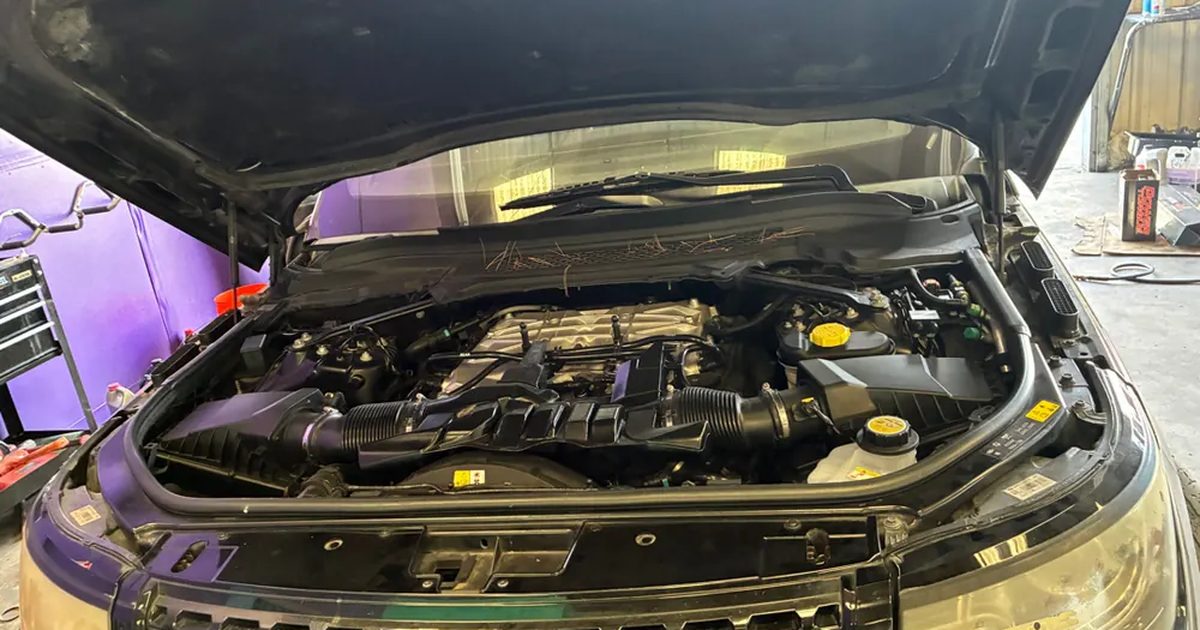
Fill every field. Services, service area, hours, attributes, photos. Google rewards complete profiles, and customers reward them more. Post real photos of real jobs — an engine bay mid-repair beats a stock photo of a wrench every time.
Know the hidden-address tradeoff. Mobile mechanics without a shop can hide their address and set a service area. That is the right call for home-based businesses — but understand what it costs: 30% of the mechanics in our directory are hidden-address service-area businesses, and they are measurably harder to pin on a map, harder to cite consistently, and in our experience they fight harder for map-pack positions outside their home ZIP. If you have any legitimate commercial address, use it.
Step 2: Reviews — velocity beats volume
This is what 47,672 listings tell us about reviews. The average mechanic rating is 4.61 stars — customers grade generously in this trade. 17% of mechanics have fewer than ten reviews. And 10,123 businesses in our data have a perfect 5.0 rating that does them almost no good, because a 5.0 from six reviews convinces nobody and ranks behind a 4.8 from two hundred.
The pattern we see at the top of every city: the winners are not the mechanics with perfect scores, they are the ones with recent, steady reviews. Google's own guidance and every experiment we have run point the same direction — a review this week beats five reviews from 2023. That is velocity, and it is the single most controllable ranking lever a mechanic has.
How to build velocity without being weird about it: ask at the moment of relief. The customer whose car just started after three days dead in the driveway wants to help you. Hand them your review link before you leave — a QR card in your van or a text with the direct link. Reply to every review, good and bad, because replies signal an active business to Google and to the next customer reading them. And never buy reviews: fake-review sweeps hit mechanics hard, and a filtered profile is worse than a thin one.
Step 3: A website that answers three questions in five seconds
42% of the mechanics in our directory — 19,914 businesses — have no website at all. If that is you, understand what it means: you are invisible in the organic results, your GBP has nowhere to send people, and Google has one less signal that you are a real business. The bar to clear is low, and that is the opportunity.
A stranded driver visiting your site has three questions. Do you fix my problem? Are you near me? How do I call you right now? Your homepage should answer all three above the fold on a phone: what you do and where in the headline, a phone number that is a tap-to-call button, and proof — your rating, your reviews, your certifications — right below. Every service you offer deserves its own page with its own headline, because "brake repair near me" and "mobile diagnostics" are different searches you can win separately.
What you do not need: a $10,000 site, animations, a chatbot, or a blog you will never update. Fast, mobile-first, click-to-call, service pages, city pages. That is the whole recipe. Our own city pages rank with exact-match headings like "Mobile Mechanic Hemet" — simple beats clever.
Step 4: Local pages that match how people search
People do not search "quality automotive service solutions." They search "mobile mechanic hemet" and "mechanic that comes to you san jacinto." Your pages should say exactly those words, in the title tag, in the H1, and naturally in the copy.
The pattern that works for us: one page per city you genuinely serve, titled "Mobile Mechanic {City}, {State}" with same-day and near-me phrasing in the copy, your service list, and real proof local to that city if you have it. Genuinely is the key word — ten thin pages for cities you have never worked in is doorway-page territory and Google filters it. Three strong pages for cities where you actually wrench beat thirty empty ones.
While you are at it, kill the jargon. Write at the level your customer reads, name the streets and neighborhoods you cover, and mention the freeway exits. Local words are local relevance.
Step 5: Citations and directories — consistency is the whole game
A citation is any place your business name, address, and phone number appear — directories, maps apps, the Chamber of Commerce, a supplier's dealer locator. Google cross-references them to decide whether you are real and where you really are. Two rules cover 90% of citation strategy:
First, be everywhere your customers might look: Google, Apple Maps, Bing Places, Yelp, Facebook, and the industry directories that actually get traffic. Second — and this is where mechanics bleed rankings — be identical everywhere. Same business name, same phone number, same address format, character for character. We have watched a mechanic's map ranking sag because half his citations said "LLC" and half didn't, with two different tracking numbers scattered across old listings. Pick one canonical name, address, and phone, write it in a note on your phone, and paste it exactly, every time. If your Google Business Profile shows one number, every directory should show that number.
And claim your listings — an unclaimed listing is a citation you don't control. (Yes, that includes your free MechanicRank listing: claiming it gets you a verified badge, a photo gallery, and a green star on our map, and takes about five minutes.)
Step 6: Schema markup — speak Google's native language
Schema is code that tells Google exactly what your pages mean instead of making it guess. For a mechanic, the one that matters is AutoRepair structured data: your name, phone, address, hours, service area, and reviews, marked up in JSON-LD on your homepage. It takes fifteen minutes, most competitors skip it, and it makes you eligible for rich results — the star ratings and detail panels that make a search listing twice as clickable.
{
  "@context": "https://schema.org",
  "@type": "AutoRepair",
  "name": "Hemet Mobile Mechanic",
  "telephone": "(951) 474-1277",
  "areaServed": "Hemet, CA",
  "url": "https://example.com",
  "openingHours": "Mo-Sa 07:00-19:00",
  "aggregateRating": {
    "@type": "AggregateRating",
    "ratingValue": "4.9",
    "reviewCount": "212"
  }
}
Step 7: Speed and the technical basics
Your customer is on a phone, possibly on a roadside with two bars of signal. A page that takes eight seconds to load loses them before it renders. The fixes are boring and effective: compress your images (a photo straight off your phone is ten times larger than it needs to be), skip the page builders stuffed with plugins, and test your site on your own phone using cellular data — not shop Wi-Fi.
The rest of technical SEO for a mechanic site is a short checklist, not a career: an XML sitemap submitted in Google Search Console, one version of your domain (https, with or without www — pick one), no broken links, and every page reachable within two clicks of the homepage. If an agency is charging you monthly for "ongoing technical optimization" on a ten-page mechanic site, ask exactly what they did last month.
Step 8: Measure what rings the phone
Two free tools tell you almost everything. Google Search Console shows which searches you appear for and which pages earn clicks. Your GBP performance tab shows calls, direction requests, and website taps straight from the profile. Watch those monthly and you will know whether any of this is working without paying for a dashboard.
One warning from the citation trenches: call-tracking numbers are useful for measuring ads, but never let one replace your real number on your Google Business Profile or your citations. Mismatched numbers quietly corrode the NAP consistency you built in Step 5. Track ads with tracking numbers; keep your organic presence on your one true number.
The 30-day plan
You do not need to do everything at once. Do this, in order:
- Week 1 — Claim and complete your Google Business Profile: right primary category, every field filled, ten real job photos, services listed.
- Week 1 — Write your canonical name-address-phone in one note. Fix your GBP to match it exactly.
- Week 2 — Set up your review ask: direct review link, QR card for the van, a text template. Ask every happy customer at the moment of relief.
- Week 2 — Claim every major listing you can find — Google, Apple, Bing, Yelp, Facebook, industry directories — and make the NAP identical on each.
- Week 3 — Launch or fix your website: tap-to-call above the fold, one page per real service, "Mobile Mechanic {Your City}" title and H1.
- Week 3 — Add AutoRepair schema to the homepage. Submit your sitemap in Search Console.
- Week 4 — Add a city page for each city you genuinely serve. Reply to every review you have ever received.
- Week 4 — Check Search Console and GBP insights. Write down your calls-per-week number — that is your baseline to beat next month.
Bottom line
The mechanics at the top of Google in your city are not there because of a secret. They picked the right categories, they ask for reviews every single day, their name and number are identical everywhere on the internet, and their website answers a panicked driver in five seconds. Every one of those is a decision, not a budget.
Start with the map pack. Stack reviews with velocity. Keep your citations identical. The rest is patience — local rankings move in weeks and months, not days. And if you want the shortcut version of Step 5, your free listing is already waiting to be claimed.
Picked for You
Own a shop or a mobile operation?
Your free MechanicRank listing is one of the citations this article talks about. Claimed listings get an owner badge, a photo gallery, and a green star on the map.
Claim Your Free Listing →